



Related Posts
Online Message
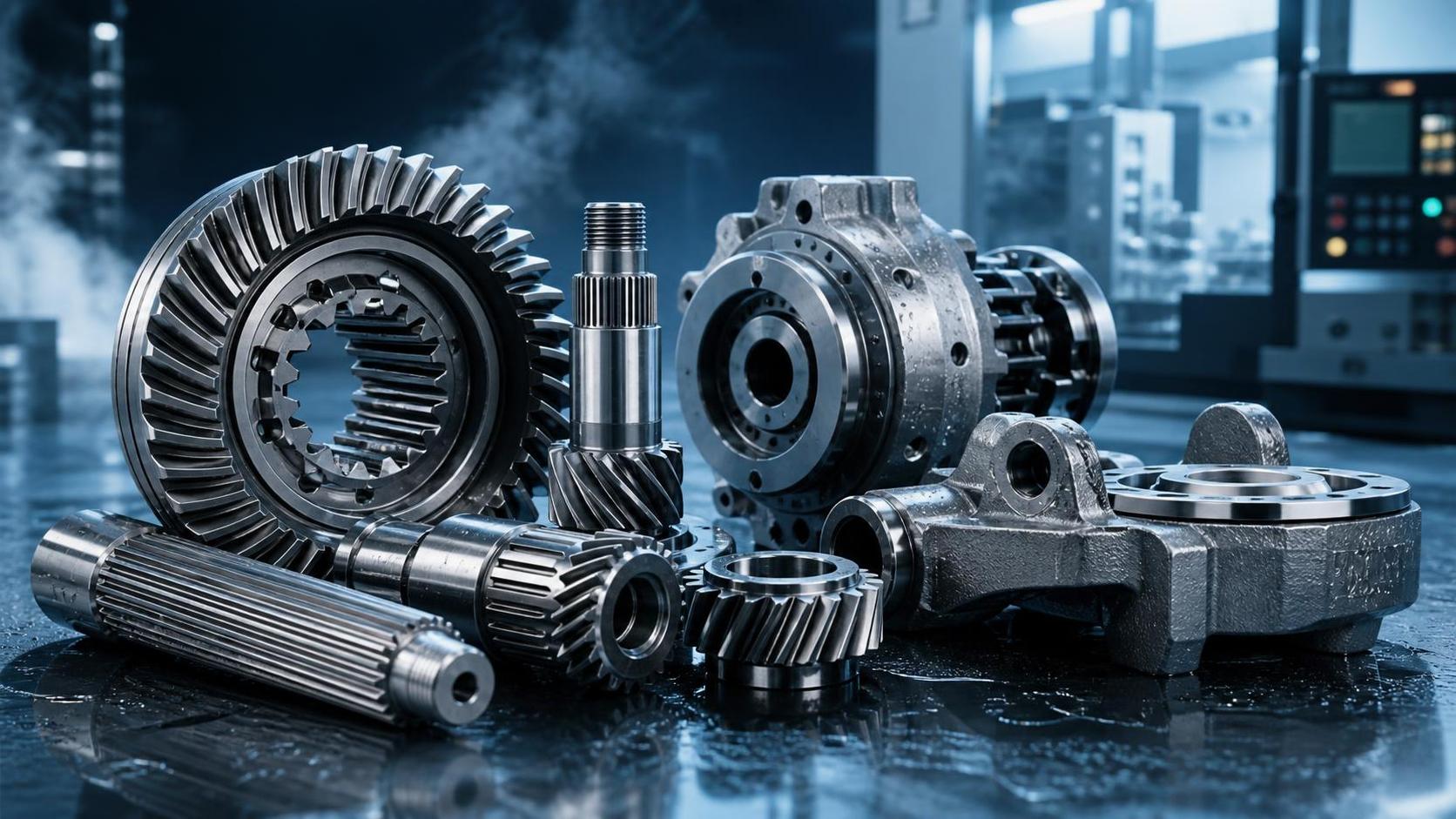
Where does failure risk really come from in harsh automotive control environments?
When automotive control parts fail in the field, the root cause is often blamed on electronics or software first. In practice, the mechanical side is just as critical. Heat cycles, vibration, impact loads, moisture, contamination, and long duty hours all work against dimensional stability and repeatable motion. Once a gear, shaft, spline, or transmission-related forged part drifts out of tolerance, the control system starts losing accuracy even if the logic itself is still correct.
For decision-makers, this matters because failure risk is not only a design issue. It is also a manufacturing consistency issue. In demanding operating conditions, reliable automotive control depends on three things holding together at the same time: material stability, precision machining, and process discipline from lot to lot.
That is why supplier capability deserves a closer look than a simple price comparison. A component may meet drawing requirements in a sample run and still create trouble later if forging quality, machining control, or inspection depth is uneven.
Which components deserve the most attention when reducing automotive control risk?
Focus first on the parts that transfer motion, torque, or positional accuracy. In control-related assemblies, small mechanical deviations can lead to larger system-level problems over time.
- Precision forgings that serve as the base for further machining
- Gears and bevel gears that must maintain stable meshing under load
- Transmission shafts and spline shafts where alignment and wear resistance affect signal-to-action consistency
- Reducer, planetary, and spiral gear parts used in compact, high-load assemblies
These are the parts where a seemingly minor variation in material flow, geometry, surface condition, or machining accuracy can turn into noise, backlash, accelerated wear, or control lag. If your application works in dust, low-temperature starts, heavy stop-and-go cycles, or long-haul service, those risks become more visible much faster.
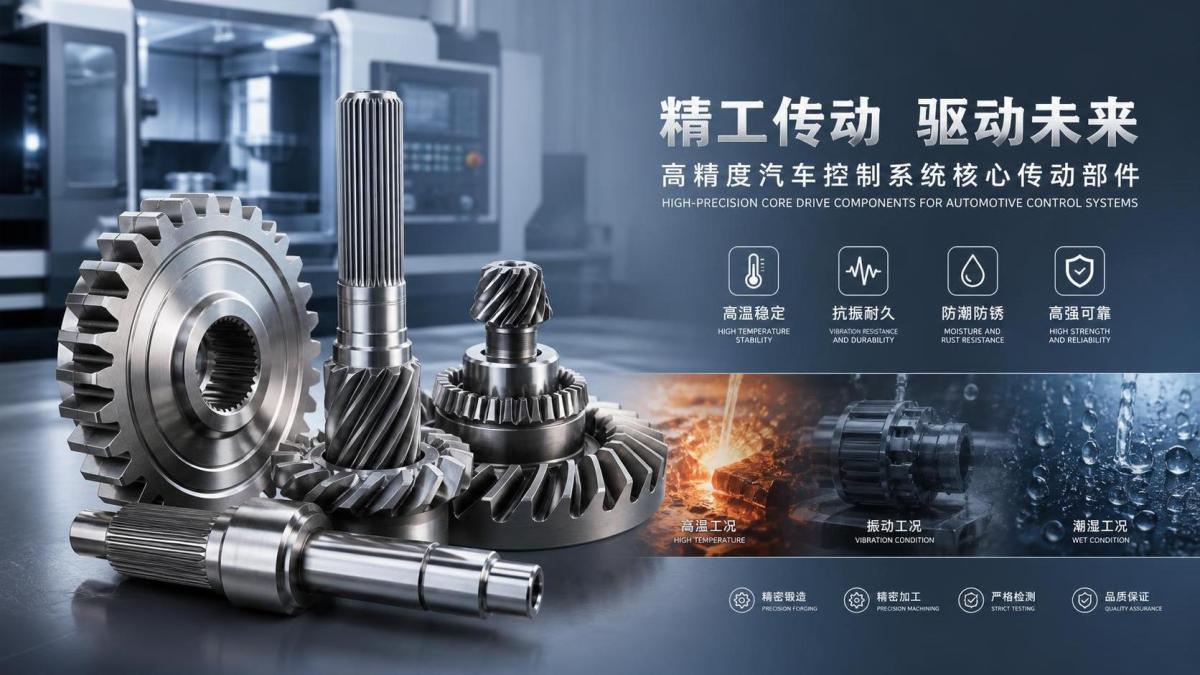
Is forging quality really that important for automotive control reliability?
Yes. It has a direct effect on how stable the part remains after machining and during use. A forged blank with better material utilization and a closer-to-final shape usually gives the machining process a stronger starting point. That reduces excess cutting, helps preserve structural integrity, and lowers the chance of variability caused by inconsistent stock removal.
For a company evaluating supply options, the question is not simply whether a supplier can forge the part. The better question is whether the forging process supports precision finishing with repeatable results. Liaocheng Jiucheng Auto Parts focuses on precision forging and mechanical processing for high-end automotive gears and related transmission parts. That combination matters because control reliability is usually improved when forging and downstream machining are treated as one continuous quality chain instead of two disconnected steps.
There is also a cost angle here. Precision-forged parts designed for no or less turning can reduce material waste and unnecessary processing. That does not just improve efficiency on paper. It can also reduce the opportunities for dimensional drift introduced by extra handling and rework.
How can a buyer tell whether a supplier is built for harsh-condition applications?
Start with manufacturing structure, not sales language. A supplier for automotive control-related parts should be able to show that forging, machining, and inspection are organized to support stable output.
In this case, Jiucheng’s setup is relevant: it has a dedicated precision forging workshop and a mechanical processing workshop, along with engineering and quality personnel. That does not replace project-specific qualification, but it is the kind of operating base a buyer should expect when failure risk needs to be controlled upstream rather than corrected after shipment.
What should procurement and engineering ask for before approving a part for automotive control use?
Ask for the documents and checkpoints that explain how the part will stay consistent, not just what the part is supposed to look like at the end.
- The latest drawing revision and any critical dimensions tied to motion accuracy, fit, or torque transfer
- The material grade and the corresponding process route from blank to finished part
- Inspection points for dimensions most likely to affect backlash, alignment, or wear
- A clear description of which operations are forged, machined, or finished in later stages
- Lot traceability rules, especially if the part will be used across multiple vehicle programs or service environments
One common purchasing mistake is to focus on unit price and final dimensions only. That leaves too much uncertainty around how the dimensions are achieved. In harsh-condition automotive control applications, process route matters. Two suppliers may quote the same drawing, yet the one with better process stability is often the one that protects uptime and warranty performance later.
What usually goes wrong when cost reduction is handled too aggressively?
The problem is not cost reduction itself. The problem is cutting the wrong part of the process. Buyers sometimes remove machining margin control, reduce inspection depth, or switch to less disciplined upstream processing while expecting the same control performance in service.
That tradeoff often shows up later as:
- Premature wear in mating parts
- More variation between production lots
- Assembly fit issues that were not obvious in prototype quantities
- Higher rework or sorting cost at the OEM or tier supplier level
A stronger approach is to cut waste where it does not weaken the part. Jiucheng emphasizes precision-forged products that reduce raw material use, lower turning demand, and improve production efficiency. That is a meaningful distinction. Saving material and electricity through process design is very different from saving money by loosening control over the part features that determine service life.
Does production scale affect reliability, or is it only about technical capability?
Scale matters when it supports repeatability. An automotive control component might pass evaluation in a small batch and still become risky in ongoing supply if the supplier cannot maintain the same process under routine production pressure.
What you want to see is controlled capacity, not simply a larger footprint. A factory with defined workshop functions, enough inspection personnel, and a clear production flow is usually better positioned to hold dimensional consistency over time. Jiucheng’s facility includes both a precision forging workshop and a mechanical processing workshop, with quality inspectors and engineering support on staff. For a buyer, that is useful because reliability in harsh operating conditions depends on everyday execution, not a one-time technical demonstration.
How should decision-makers weigh energy efficiency and material savings against failure risk?
Treat efficiency gains as valuable only when they come from a stable process. In metal parts for automotive control, lower waste is a good sign if it comes from near-net shaping, better material utilization, and reduced unnecessary cutting. It becomes a bad sign when it comes from skipped controls or underprocessed parts.
Jiucheng states that its precision-forged products improve material utilization compared with traditional processes and reduce overall production cost and electricity use. For a purchasing or operations leader, the practical question is this: do those savings come from process capability that also protects consistency? If the answer is yes, efficiency and reliability can support each other. If the savings depend on a narrower process window than the supplier can actually hold, the risk will surface sooner or later in the field.
What are the most common warning signs before an automotive control part becomes a field problem?
The early warnings are usually operational, not dramatic. Watch for recurring dimensional adjustments during incoming inspection, unusual variation in assembly fit, noise changes during test runs, or higher dependence on manual correction during production. Those are signs that the part may be within nominal range on paper but unstable in practice.
Another warning sign is inconsistent response when the same part is used across different operating conditions. A component that behaves acceptably in normal conditions but becomes noisy, rough, or less precise under heat, load, or contamination is telling you that the manufacturing margin may be too tight for the real application.
When that happens, the next step is not a broad supplier complaint. Review the dimensions and contact surfaces most closely tied to transmitted motion, then compare results by production lot and processing route. That usually gives a faster answer than rechecking every feature equally.
If you need to lower risk now, what is the most practical decision rule?
Choose automotive control component suppliers the way you would choose a process partner, not a catalog source. In harsh operating conditions, the safer option is usually the supplier that can connect forging quality, machining precision, inspection discipline, and production efficiency into one repeatable system.
If a part is critical to motion accuracy or torque transfer, ask one simple question before approval: What in this supplier’s process makes the part stay stable after machining and through service? If the answer is clear, specific, and supported by how the factory is organized, you are much closer to reducing failure risk in a way that holds up beyond the first batch.
Please give us a message