



Related Posts
Online Message
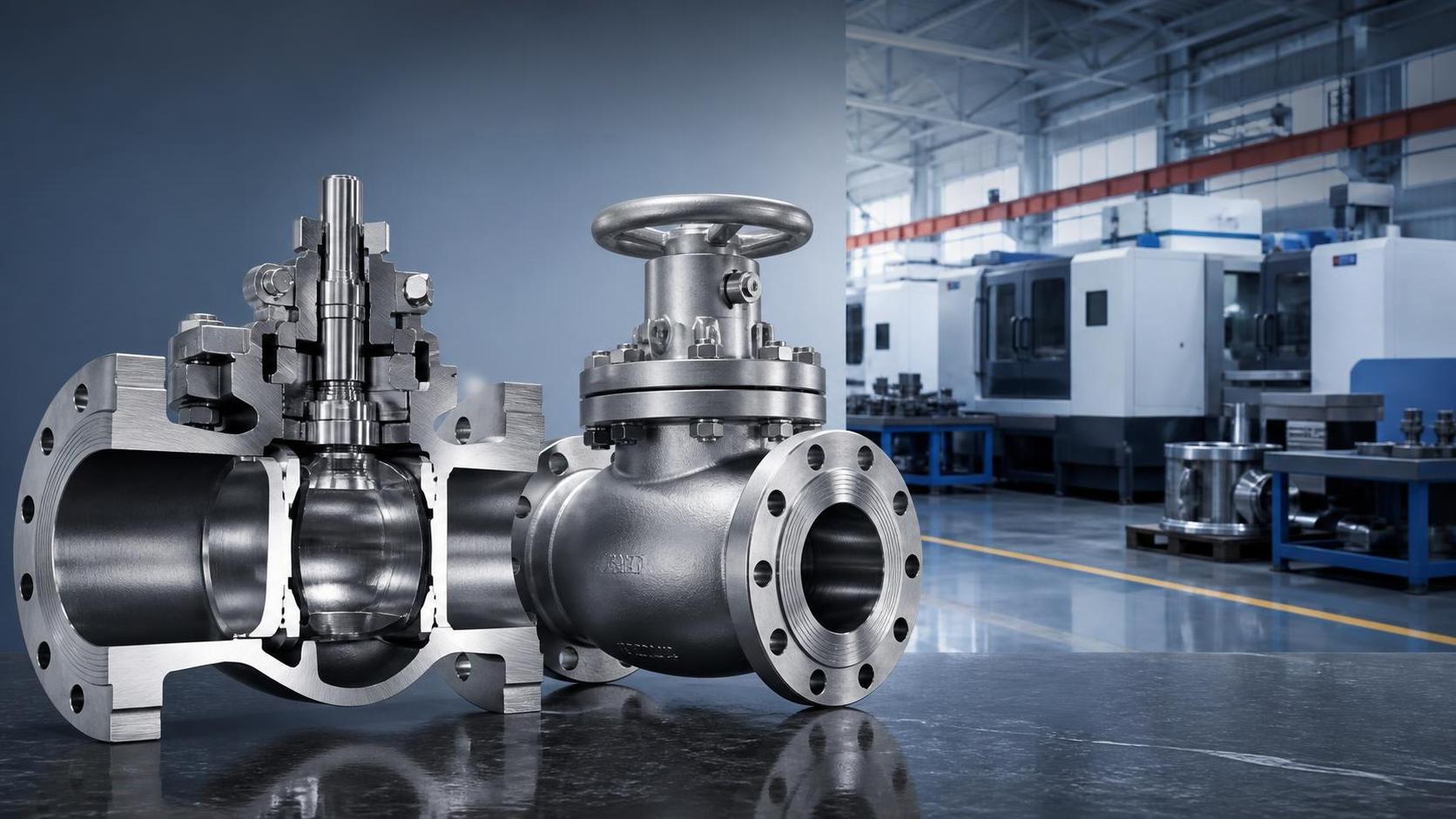
Why does valve body design have such a strong effect on leakage and service life?
Because the valve body is not just a housing. It is the part that holds pressure, keeps sealing surfaces in position, manages flow paths, and absorbs thermal and mechanical loads over time. When that structure is designed well, seals stay compressed within their intended range, mating parts remain aligned, and the system runs with fewer leaks and fewer unplanned shutdowns. When it is designed poorly, even a good seal material can fail early.
For decision-makers, this usually shows up in practical ways: rising maintenance hours, oil or fluid loss, repeated re-torque work, unstable pressure, or short replacement cycles. In industrial systems, the real question is rarely whether a valve body can work on day one. The question is whether it can keep sealing after pressure cycling, temperature swings, vibration, contamination, and long operating hours. That is where body design, forging quality, and machining accuracy start to matter.
Which parts of a valve body design matter most for sealing performance?
Three areas deserve attention first: the sealing interface, the structural stiffness of the body, and the flow passage layout.
The sealing interface includes the flatness, roundness, surface finish, and dimensional stability of the areas where gaskets, O-rings, seats, or threaded connections do their job. If these surfaces are inconsistent, sealing load becomes uneven. One area gets over-compressed, another barely contacts, and leakage starts there.
Structural stiffness is often underestimated. A valve body that deforms under pressure or bolt load can shift sealing geometry by a small amount, but small is enough to create a leak path. This is especially relevant in larger industrial assemblies or systems exposed to cyclic loading.
Flow passage layout matters because turbulence, dead zones, and sharp internal transitions can accelerate erosion and create local pressure concentration. Over time, those conditions damage the body itself or increase stress around seal locations.
Is material choice as important as geometry?
Yes, and in many projects the two should be evaluated together. Geometry controls how loads move through the valve body, while material determines how the body responds to those loads over time.
A body material needs enough strength, toughness, and dimensional stability for the intended pressure, temperature, and media. If the material is too soft, sealing surfaces may wear or deform. If it is too brittle for the operating condition, cracking risk goes up. Corrosive media add another layer: once corrosion starts at sealing faces or threaded areas, even minor damage can shorten service life quickly.
This is one reason forged components are often preferred in demanding industrial applications. Good forging practice can support a denser, more stable base structure than less controlled methods, which helps downstream machining and long-term sealing reliability. A manufacturer with both forging and machining capability is often in a better position to control that chain from raw material to final sealing surface.
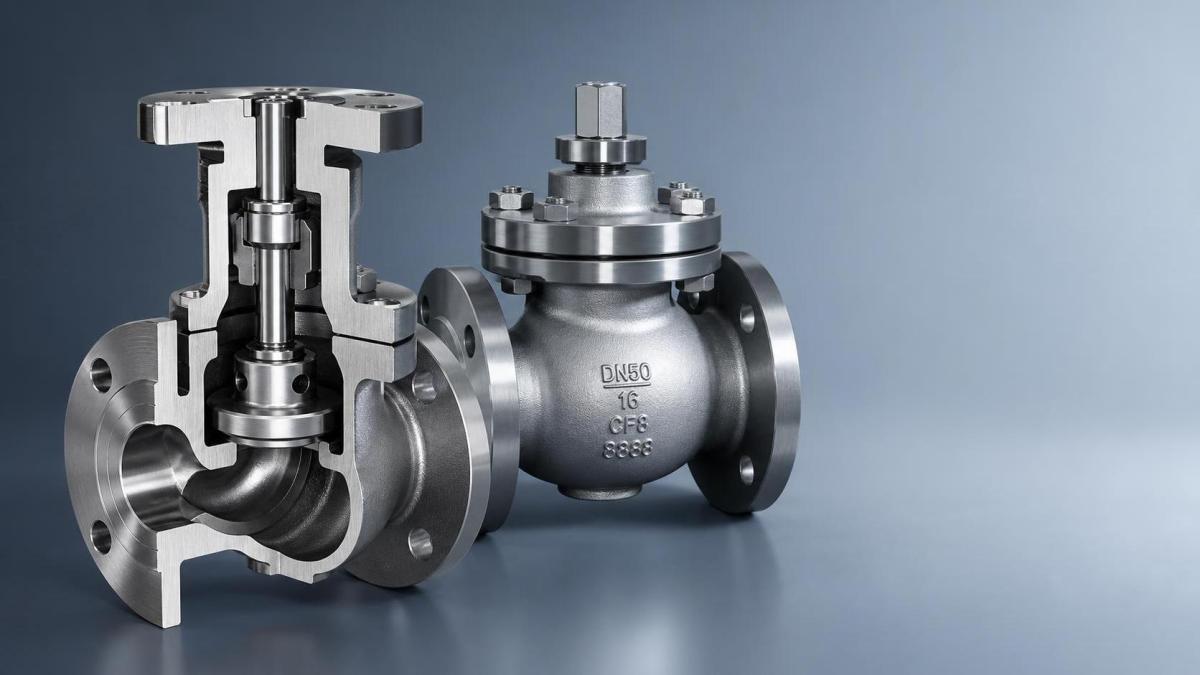
What role do forging precision and machining accuracy play in a valve body?
They affect sealing more directly than many buyers expect. Forging precision influences the consistency of the blank: grain flow, shape allowance, and how much corrective machining is needed later. If the forged base is unstable or irregular, machining has to remove more material, which can increase variation and reduce control over critical features.
Machining accuracy then determines whether the finished valve body actually matches the sealing design. Concentricity, perpendicularity, bore accuracy, thread quality, and sealing face flatness all feed into leak prevention. A valve body can have an acceptable drawing on paper and still perform poorly if these features drift in production.
For procurement and technical teams, this means the supplier discussion should go beyond material grade. Ask how the manufacturer controls forging consistency, machining sequence, inspection points, and dimensional repeatability on the features that affect sealing. Those process details are where service life is often won or lost.
How can you tell whether a valve body design is likely to fail early?
Early failure risk usually leaves clues before field installation. Watch for designs with very thin wall sections near pressure zones, sharp internal corners, weak transitions between bores and ports, or sealing areas placed too close to stress concentration points. These features do not guarantee failure, but they reduce margin.
Another warning sign is a design that depends on perfect assembly to compensate for weak structure. If the body only seals well when tightening force is distributed in a narrow window, the design may be too sensitive for real operating conditions.
On the documentation side, check whether the drawing clearly identifies critical sealing dimensions, geometric tolerances, surface finish requirements, and inspection methods. If those items are vague, production variation tends to move straight into field performance.
What should a buyer review before approving a valve body supplier?
A good review is more useful than a long review. Focus on the controls that directly affect sealing and life:
- Material traceability for the base stock or forging input
- Process capability for forging and precision machining
- Inspection records for sealing faces, bores, threads, and alignment features
- Control of surface defects, burrs, scale, and edge condition
- Clarity of drawings and revision management
- Capacity to handle repeat orders without dimensional drift
If the supplier also serves sectors with high mechanical demands, such as automotive gear systems, wind power gearboxes, marine parts, or other precision-forged mechanical components, that can be relevant. It suggests they are used to controlling material use, process efficiency, and dimensional discipline. What matters, though, is whether those capabilities are applied to the valve body features that govern sealing.
Are leaks usually caused by the seal itself, or by the valve body around it?
In practice, both are involved, but the valve body is often the underlying cause. A damaged O-ring is easy to blame because it is visible and replaceable. What gets missed is why it failed. If the groove geometry is off, the surface finish is rough, the face is not flat, or the body moves too much under load, the replacement seal may fail the same way.
This is why repeated seal replacement without body inspection usually turns into recurring downtime. If a system sees the same leak location again and again, inspect the surrounding metal first: groove dimensions, local wear, thread integrity, clamp load distribution, and deformation marks. A seal problem that keeps returning is often a body design or manufacturing problem in disguise.
What are the most common design mistakes that shorten valve body life?
A few mistakes come up repeatedly in industrial service:
Most of these problems are expensive because they are not obvious at incoming inspection. They show up later, under pressure, and usually when the system is already in service.
Does a better valve body design always cost more?
Not necessarily. A stronger design may increase unit cost in some cases, especially if it requires tighter machining control or a more suitable material. But the cheaper body is rarely the lower-cost choice if it drives leakage, scrap, energy loss, fluid loss, or maintenance shutdowns.
There is also a manufacturing-side advantage to better design. Precision forging and near-net-shape processing can reduce unnecessary material removal, improve consistency, and lower waste. In companies built around forging and mechanical processing, that often supports a more stable balance between performance and production cost. The point is not to buy the most expensive body. It is to buy a design that keeps sealing reliability without forcing extra downstream correction.
What questions should management ask during a technical review?
You do not need to turn a sourcing meeting into a lecture on valve theory. A few pointed questions are enough:
- Which dimensions on this valve body are critical to sealing, and how are they inspected?
- What part of the process controls deformation risk: forging design, machining sequence, or assembly load path?
- Where are the likely stress concentration areas, and what was done to reduce them?
- What changes in service condition would shorten life fastest: pressure cycling, temperature variation, contaminated media, or vibration?
- If leakage occurs in the field, what dimensional or surface checks should be done first?
These questions quickly show whether the supplier understands the valve body as a sealing component, not just a machined metal part.
When should you redesign the valve body instead of just replacing seals?
Redesign becomes the better option when the same failure repeats under normal service conditions, when leakage starts soon after maintenance, or when inspection shows wear or distortion in the metal around the sealing area. Another trigger is a system change: higher pressure, different media, more thermal cycling, or a longer maintenance interval than the original design was built for.
At that point, replacing seals is just restoring a weak design to the same weak baseline. The better move is to review the body geometry, the load path, the material, and the production method together. That is where service life improvements usually come from.
What is the most practical rule for choosing a valve body for long service life?
Choose the valve body that gives you control, not just supply. Control over material quality, forging consistency, machining accuracy, sealing features, and inspection records. If you can clearly trace how the part is made and how the critical surfaces are verified, you are in a much better position to predict sealing performance and maintenance cost. In industrial systems, long life usually starts long before installation. It starts with a valve body design that stays stable under real operating load, and a manufacturing process disciplined enough to reproduce that design every time.
Please give us a message