



Related Posts
Online Message
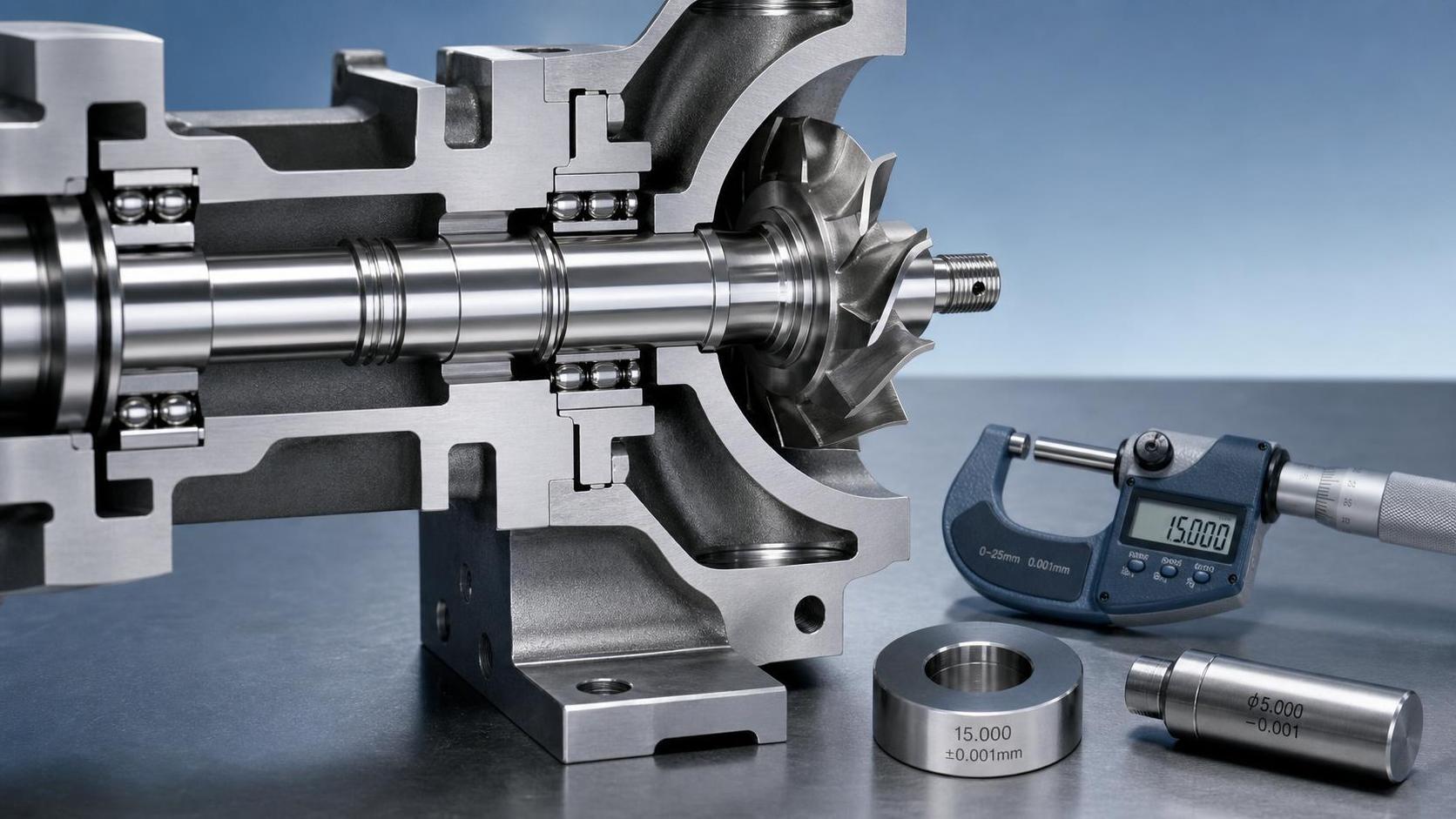
When Pump Shaft Material Choice Stops Being a Catalog Decision
A pump shaft that runs quietly at moderate speed in clean water can fail surprisingly fast when the same geometry is moved into a corrosive medium, a hot washdown area, or a high-speed duty cycle with frequent starts and stops. That is usually where procurement teams discover that shaft selection is not really about the shaft alone. Material grade, forging integrity, machining allowance, straightness, surface finish, and tolerance stack-up all decide whether the rotor stays stable or begins to wear bearings, chew seals, and drift out of alignment.
For high-speed and corrosive applications, the question is not simply “Which pump shaft material is strongest?” Strength matters, but it does not answer corrosion pitting at the seal track, galling at fits, or runout growth after heat treatment. In many industrial projects, the more expensive failure is not shaft fracture. It is a shaft that remains intact while causing vibration, leakage, premature bearing replacement, and repeated shutdowns.
That is why experienced manufacturers put material selection and tolerance control into the same conversation. Liaocheng Jiucheng Auto Parts, with its background in precision forging and machining for transmission shafts, spline shafts, gears, wind power gearbox parts, and marine components, works from that logic. In shaft production, a forged blank with stable grain flow and controlled material use is only the start; the final service result still depends on how accurately the shaft is machined, how consistently fits are held, and whether the part is being prepared for corrosive liquid exposure, high rotational speed, or both at once.
Corrosion changes the failure pattern before it changes the drawing
In chemical transfer pumps, marine service equipment, and process lines with aggressive cleaning agents, the shaft often fails first at the surface, not in the core. A buyer may still be looking at nominal diameter, tensile properties, or a familiar stainless designation, while the real field issue starts at the seal contact area or the shoulder where liquid residue stays trapped. Once pitting begins in those zones, seal wear accelerates, and the repair cycle becomes much shorter than expected.
This is where material choice becomes conditional rather than generic. Stainless steel is often the default direction for corrosive duty, but not every stainless grade behaves the same in chloride-rich, acidic, or intermittently wet conditions. A shaft exposed to splash, vapor, and shutdown condensation may need a different selection logic than one fully immersed in a stable process fluid. If the medium contains solids, the decision gets harder, because abrasion and corrosion act together. Surface damage then opens a faster path for corrosion to propagate.
In those situations, buyers should not treat hardness and corrosion resistance as separate boxes to tick. A material that resists chemical attack but loses dimensional stability under high-speed loading may still become a problem part. Likewise, a hard shaft with marginal corrosion resistance can quickly damage the seal area even if the shaft body looks acceptable during inspection.
A useful shop-floor question is simple: where will the shaft surface actually be stressed in service? On many pump assemblies, the highest practical risk is concentrated at three points:
- the seal running surface, where finish and corrosion pitting directly affect leakage;
- the bearing fit area, where tolerance drift can produce micro-movement and fretting;
- the coupling or impeller interface, where torque transmission and assembly accuracy meet.
If those zones are not defined clearly during selection, the shaft can be “material compliant” on paper and still unsuitable in operation.
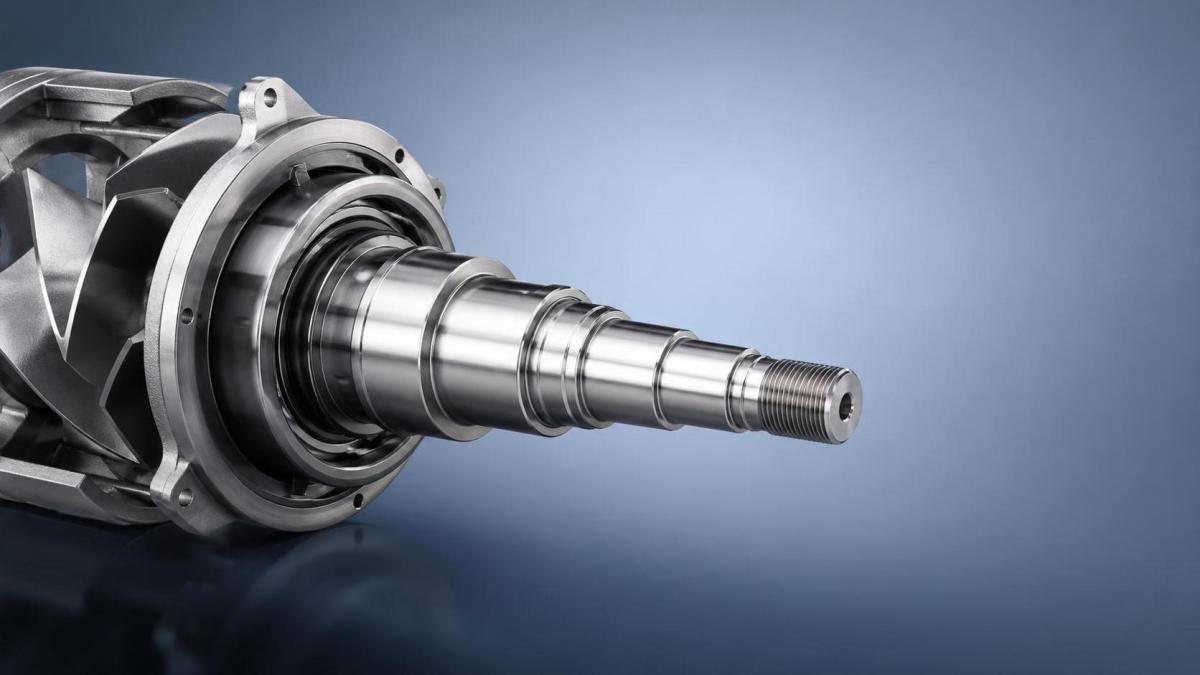
High speed makes tolerance more expensive than raw material
Once pump speed rises, tolerance stops being a finishing detail. It becomes a major reliability factor. At higher RPM, even a small increase in runout, concentricity error, or imbalance can produce a vibration signature that looks like a bearing issue or an installation problem. Teams then replace bearings, seals, or couplings while the shaft geometry remains the real source of instability.
This is especially common when shafts are made from forged blanks but post-forging machining control is inconsistent. Forging brings clear advantages in material utilization and structural continuity, and Jiucheng’s production model is built around that efficiency, including reduced waste and lower comprehensive production cost compared with traditional routes. But in high-speed pump service, forging quality only pays off if the subsequent turning, grinding, and fit control preserve axis stability and dimensional repeatability.
The tolerance discussion should therefore focus less on isolated numbers and more on fit relationships. A shaft journal that meets its own diameter tolerance but does not match the real bearing or sleeve condition in the assembly may still create thermal growth problems, difficult installation, or looseness after several cycles. Buyers often ask for “tight tolerance” without specifying whether the operational risk is seal leakage, bearing creep, impeller positioning error, or vibration at startup. Those are not the same problem, and they do not always call for the same tolerance priorities.
What changes between a water-service shaft and a corrosive process shaft
The difference is not just material grade. The manufacturing route and inspection emphasis usually shift as well.
That last row is where many projects become costly. Corrosion-resistant material alone does not rescue a shaft with poor straightness or unstable heat-treatment distortion. At the same time, very accurate machining cannot compensate for a material that degrades in the actual chemical environment. The selection process has to deal with both.
Why forged shaft quality matters before machining even starts
For pump shafts that see fluctuating load, coupling torque, and sustained rotation, base material uniformity matters more than many buyers expect. A forged shaft blank generally offers better control over structure than a loosely managed stock-removal route from unsuitable raw material, especially when the component must carry torque and keep dimensional stability after multiple machining steps. Jiucheng’s specialization in precision forging for gear and shaft components is relevant here because pump shafts share the same manufacturing challenge seen in transmission parts: the customer is not buying a shape, but a shape that must remain stable under load and after processing.
This becomes practical when you look at downstream operations. If the forged blank is close to final form and material flow is well controlled, machining allowance can be managed more consistently, which helps maintain better coaxiality and reduces unnecessary stock removal. The company’s emphasis on near-net or reduced-turning precision forgings is useful in this context. Higher material utilization and lower energy use are operational advantages, but for the end user the more important point is that a better starting blank can support steadier machining quality when the shaft has several critical diameters and shoulders that must line up correctly.
Questions that usually reveal the right shaft solution
The fastest way to avoid a bad decision is to ask better technical questions early. In pump shaft sourcing, several questions tend to separate a workable specification from a risky one:
- Is the shaft exposed to the process medium continuously, intermittently, or mainly at seal leakage points?
- Does the assembly run at constant speed, variable frequency, or frequent start-stop duty?
- Which fit zones are most sensitive in service: bearings, sleeves, mechanical seals, impeller hub, or coupling end?
- Will the shaft be serviced on-site with limited alignment capability, or in a controlled maintenance workshop?
- Is the current failure mode corrosion, wear, vibration, or difficulty holding tolerance over time?
These questions matter because they change the manufacturing emphasis. A site struggling with seal leakage may need more attention on surface finish and corrosion behavior at the seal track. A site fighting repeated vibration alarms may need tighter control on runout, journal relationships, and shaft straightness after final processing. The drawing may look nearly identical in both cases, but the production and inspection priorities should not be identical.
Installation reality often overrides theoretical selection
One more point is easy to miss during procurement: some pump shafts are technically suitable but operationally inconvenient. A highly corrosion-resistant shaft may still create maintenance trouble if its fit condition makes disassembly difficult in field environments with basic tools and tight shutdown windows. In marine and industrial plant work, maintenance access can be limited, and replacement often has to happen under time pressure. That is why tolerance decisions should account not only for ideal assembly, but also for the actual maintenance practice at the customer’s site.
This is where an experienced machining supplier becomes more valuable than a trader with a material list. A manufacturer used to precision shaft and gear work is more likely to understand how small dimensional choices affect assembly force, alignment retention, and post-service repeatability. Jiucheng’s mixed capability in forging and machining is relevant because it allows the part to be judged as a process chain rather than a single operation.
What buyers should verify before placing a pump shaft order
Before finalizing a pump shaft for high-speed or corrosive duty, the safest approach is to verify four things in one package: material suitability for the real medium, tolerance requirements tied to the actual mating parts, manufacturing route from blank to finish, and inspection points that reflect the likely failure mode. If any of those pieces are handled in isolation, the shaft may still pass incoming inspection and disappoint in service.
A good specification is usually less about adding more words to the drawing and more about clarifying where failure has occurred before, which surfaces are critical, and how the pump actually operates at the site. Once those details are clear, material and tolerance decisions become much easier to defend. That is the point where a pump shaft stops being a generic machined part and becomes a component matched to the operating reality it will face.
Please give us a message