



Related Posts
Online Message
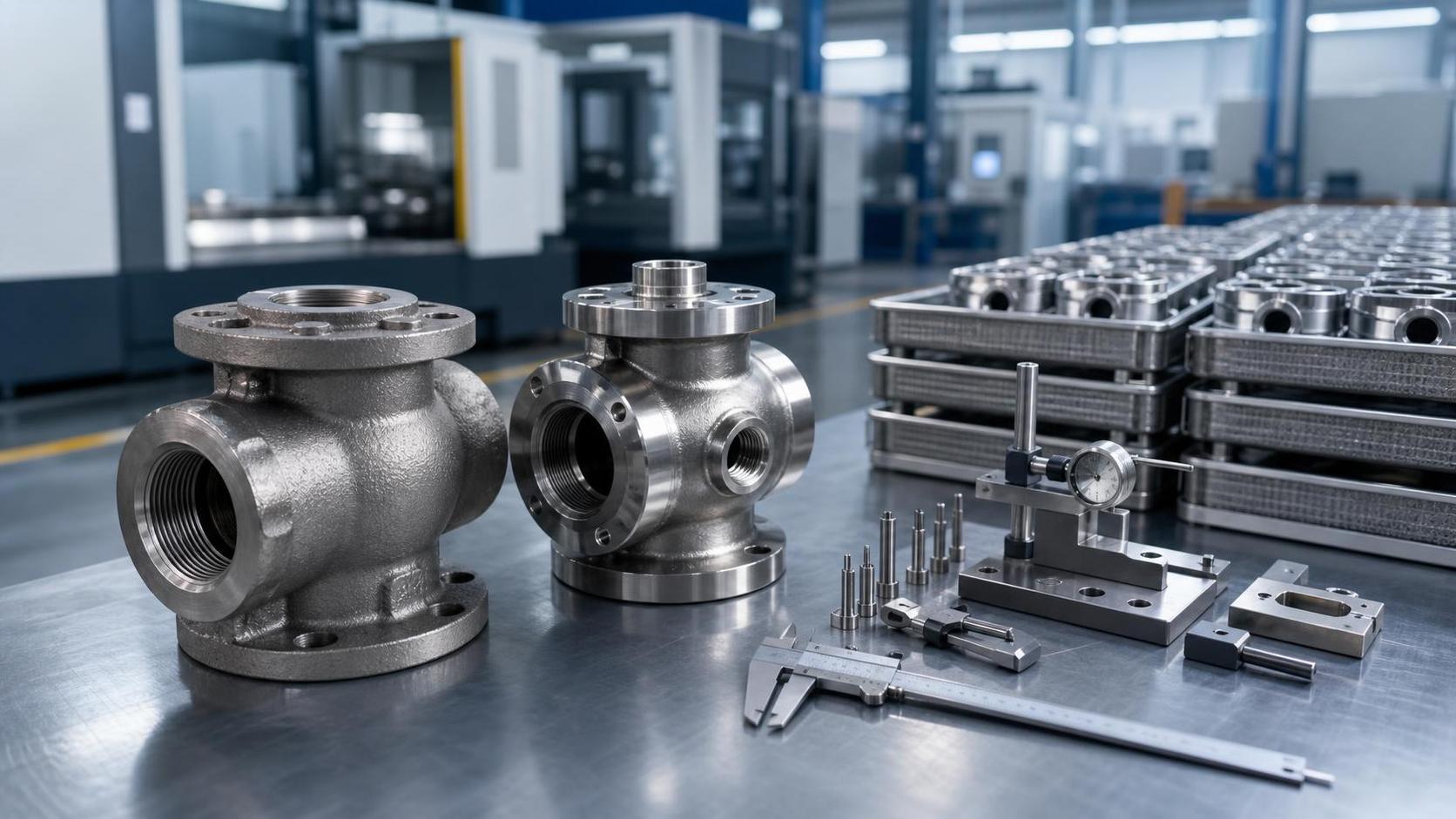
Start with the three failure points that cost buyers the most
When a valve body order goes wrong, the problem usually shows up in one of three places: the casting is unstable, the machining does not hold what the drawing really needs, or the quoted lead time turns out to be a sales promise rather than a production commitment. Price matters, but in purchasing work, the cheapest quote often becomes the most expensive batch once scrap, line stoppage, sorting, and rework are counted.
A good sourcing checklist for a valve body should help you screen suppliers before trial orders, not after defects appear. The practical way to do that is to review casting quality first, then machining accuracy, then delivery control. In that order, you catch most of the hidden cost drivers early.
Check whether the supplier understands the casting before talking about unit price
For valve body sourcing, the casting is the base. If the blank is inconsistent, machining can only hide part of the problem, and sometimes it makes the problem more expensive. Buyers should ask to review the drawing together with the blank condition, not as two separate topics.
- Look at wall thickness transitions. Big changes in section thickness are where shrinkage, porosity, and distortion tend to appear. You do not need a foundry lecture here. You need to know whether the supplier has already identified those locations and how they plan to control them.
- Ask which surfaces are left as-cast and which become functional machined surfaces. This tells you immediately whether the process plan matches the part’s actual sealing, mounting, and fluid-control requirements.
- Review the raw casting allowance. Too little allowance leaves no room to clean up distortion or surface defects. Too much allowance adds cycle time, tool wear, and cost without improving quality.
- Do not skip material traceability. You want to know how heats or batches are identified from incoming material through finished parts, especially if your valve body goes into a regulated or safety-sensitive assembly.
A common purchasing mistake is comparing quotes from suppliers who are not quoting the same manufacturing reality. One may price a rough casting that still needs aggressive machining and sorting. Another may quote a more stable blank with better yield and less downstream risk. The unit price gap can look large on paper and disappear completely on the shop floor.
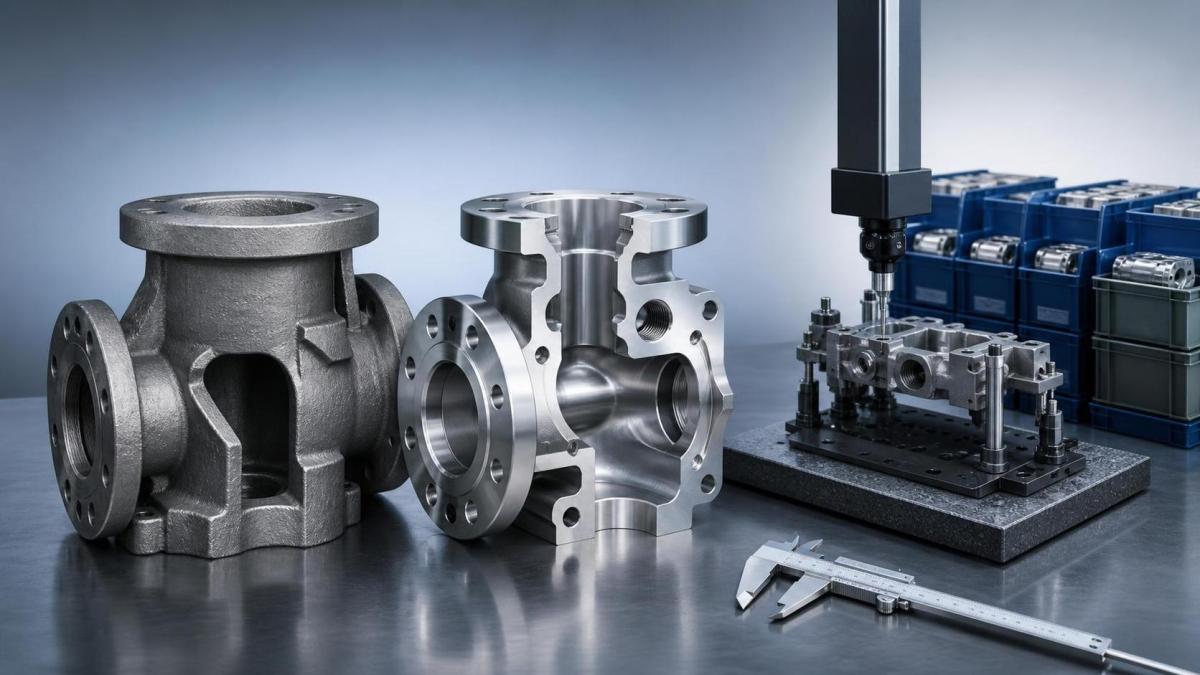
Ask for evidence of casting consistency, not just sample acceptance
A single acceptable sample does not prove process stability. Buyers should ask how the supplier controls variation across batches, cavities, and production runs. This matters more than whether one hand-picked piece looked fine during the first review.
Useful questions include:
- How are critical casting defects defined internally?
- Which surfaces or internal zones are checked during incoming or in-process inspection?
- What happens when a casting batch shows dimensional drift before machining starts?
- Are nonconforming castings reworked, downgraded, or scrapped, and who approves that decision?
You are not looking for perfect language. You are looking for process discipline. If the supplier can explain how they separate acceptable variation from risk, that is a good sign. If every answer comes back as “we inspect everything,” dig deeper. Full inspection sounds reassuring, but it usually means the process is not stable enough to trust on its own.
Read the drawing like a cost map
Not every dimension on a valve body carries the same purchasing risk. Some features drive assembly fit, hydraulic performance, sealing, or valve movement. Others are routine. If you do not separate the two, suppliers will either overquote the easy areas or under-control the important ones.
Before RFQ comparison, mark the drawing in three groups:
- Critical-to-function dimensions: bore positions, sealing faces, valve spool related features, flatness and perpendicularity where leakage or sticking could result.
- Critical-to-assembly dimensions: bolt patterns, locating faces, interface surfaces, and thread quality where installation problems show up first.
- General dimensions: features that should be within drawing limits but do not control product performance directly.
Then ask the supplier how those critical features will be machined and measured. If they cannot clearly connect the drawing to the process route, the quotation is still at the trading level, not the manufacturing level.
Verify machining accuracy through process capability, not confidence
Many machining issues on valve body projects come from datum strategy, fixture design, and tool access, not from the machine model listed in a brochure. A supplier may have capable equipment and still struggle with position tolerances, concentricity, or surface finish if the process sequence is weak.
What to check:
This part of the review helps you separate suppliers that can make parts from suppliers that can hold a process over repeat orders.
Pay attention to burr control, cleanliness, and edge condition
Buyers sometimes focus so much on dimensions that they miss the defects operators complain about first. Burrs in oil passages, chips trapped in cavities, rough thread starts, and uncontrolled edge breaks can create assembly issues even when the inspection report looks acceptable. For a valve body, internal cleanliness is not a cosmetic issue. It affects function.
During supplier review, ask how passages are cleaned after machining, how cross-holes are deburred, and what standard is used for edge finishing on critical ports and sealing faces. If the answer is vague, expect extra sorting or washing at your end.
Test the lead time structure, not just the promised ship date
A quoted lead time for a valve body usually combines several clocks: casting preparation, rough machining, finish machining, inspection, packaging, and shipping. If one stage is outsourced or capacity is shared with other products, the risk goes up quickly.
Ask the supplier to break lead time into stages. Not because you need every minute of the routing, but because stage visibility tells you whether the timeline is real. A supplier who can explain where queue time sits is far more reliable than one who offers a short total lead time with no breakdown.
- For new parts, separate sample lead time from mass production lead time. Tooling, first-article approval, and program adjustment often stretch the first order.
- Check capacity during your peak season, not theirs. A supplier may look available now and become overloaded when your own schedule tightens.
- Ask what causes schedule slips most often. Casting bottlenecks, fixture changes, machine availability, and inspection backlog each call for a different mitigation plan.
Compare suppliers on total procurement cost
For purchasing teams, the real comparison is not quote versus quote. It is total cost versus total risk. A valve body sourced at a lower piece price may still cost more if it needs incoming sorting, delayed payment claims, emergency freight, or repeated dimensional discussion with engineering.
A simple internal comparison sheet should include:
- Quoted piece price
- Tooling or fixture cost, if any
- Expected yield loss or incoming inspection burden
- Packaging and transportation method
- Response speed for quality issues
- Lead time stability over repeat releases
This is where experienced buyers usually make better decisions than purely price-driven RFQ rounds. They know that supplier management time is also a cost, even if it does not appear on the PO.
Use a trial order to expose weak control points
If the supplier passes the document review, move to a controlled trial order. Keep the batch large enough to reveal variation, but small enough to contain risk. The purpose is not only to qualify the part. It is to watch how the supplier handles deviation, communication, and correction.
During the trial phase, review first-piece approval speed, dimensional consistency across the batch, packaging discipline, and whether the inspection records match the actual parts received. This is also the point where you learn if the supplier escalates problems early or ships first and explains later. That difference matters more than polished sales language.
What to lock down before releasing regular orders
Before you move from approval to regular purchasing, make sure five things are clearly fixed in the commercial and technical file: the latest drawing revision, the agreed raw casting condition, the list of critical dimensions and inspection points, the packaging standard, and the lead time definition from order release to shipment. If any of these stay loose, future quality arguments usually turn into responsibility arguments.
The cleanest way to source a valve body is straightforward: screen the casting process first, verify machining control against the real functional dimensions, then pressure-test the lead time with a trial order and stage breakdown. Buyers who follow that sequence usually avoid the two expensive outcomes nobody wants to explain later: parts that technically shipped but cannot be assembled, and parts that are acceptable but arrive too late to matter.
Please give us a message