



Related Posts
Online Message
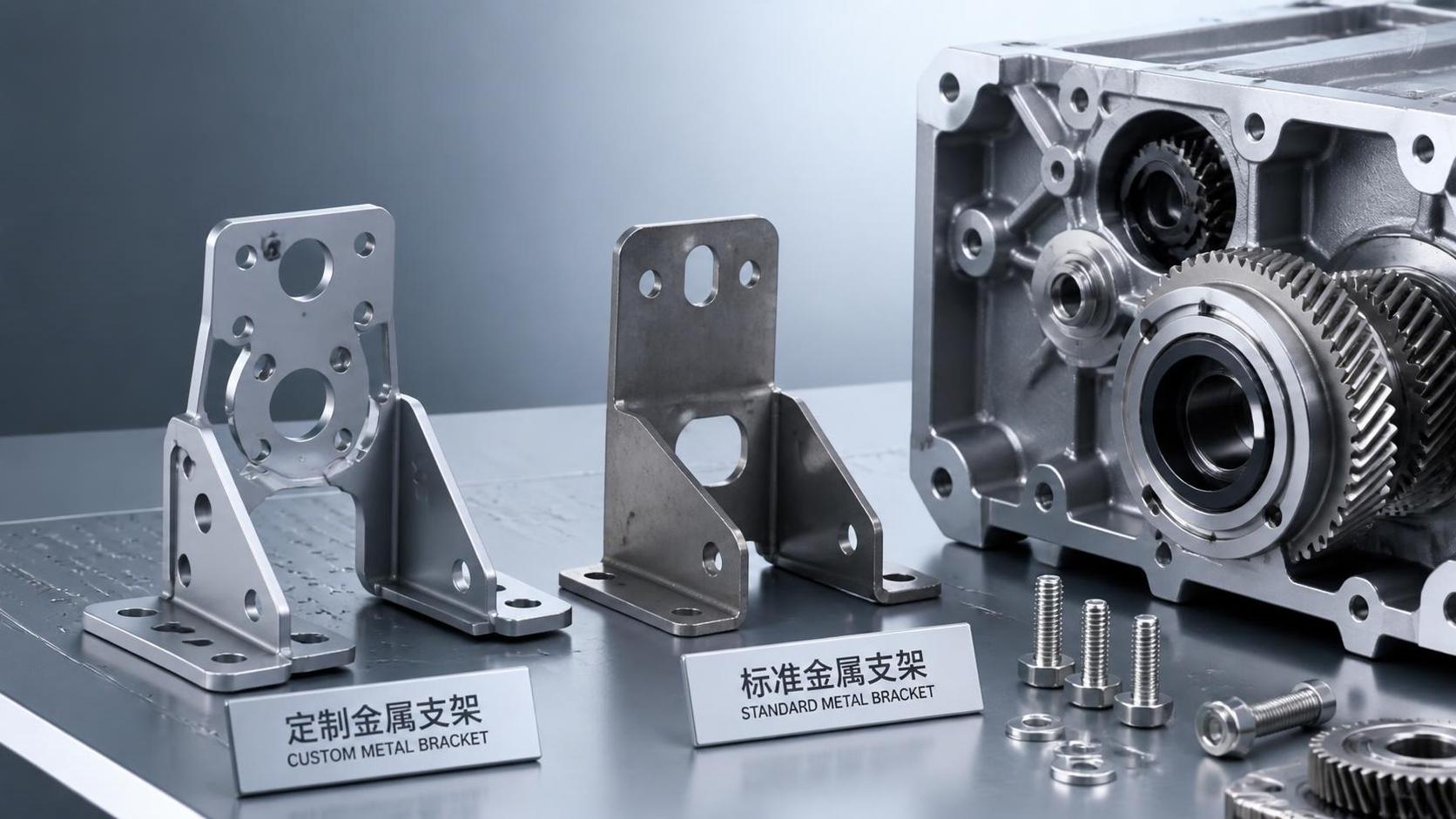
Start with the cost that actually hurts: assembly, not piece price
A standard metal part often looks cheaper on the RFQ sheet. That is where many buying decisions go wrong.
If a bracket forces extra drilling, shimming, slotting, welding, manual alignment, or repeated fit checks on the line, the low unit price disappears fast. Custom brackets lower total assembly cost when they remove work from downstream operations. That is the real test. Not whether the part itself is cheaper, but whether the full build becomes faster, cleaner, and more repeatable.
For decision-makers buying parts for vehicles, gear systems, machinery, or other precision assemblies, the question is simple: does a custom bracket save enough labor, scrap, and quality trouble to justify the higher development effort? In many cases, yes. But only under the right conditions.
Use this checklist before choosing custom brackets over standard metal parts
The fastest way to make a bad sourcing decision is to compare only material thickness, weight, and quoted price. A better method is to walk the part through the assembly process and ask where cost is really created.
1. Check whether the bracket can eliminate secondary machining
This is usually the first place custom brackets win.
If your current standard part arrives as a near-generic shape and your team must machine final holes, trim edges, open slots, or add locating features afterward, you are paying for the same geometry twice. Once in the purchased part, then again in your own process.
A custom bracket makes sense when the supplier can produce a near-net or closer-to-final form that reduces turning, milling, drilling, or fixture time. In forged or precision-processed parts, this can be especially valuable because material utilization and dimensional consistency affect both cost and throughput.
- How many post-purchase machining steps does the standard part need?
- Which of those steps exist only because the part was not designed for your assembly?
- Does the custom design remove those operations entirely or just reduce them?
If the answer is “we still need most of the same finishing work,” the custom route is weaker than it looks.
2. Map the labor minutes at the assembly station
A bracket that installs in 40 seconds instead of 3 minutes can beat a lower-priced standard part without any heroics.
Look closely at what operators actually do. Do they rotate the part to find the correct orientation? Do they use temporary clamps? Are they nudging holes into position with pry bars or punches? Is one hand holding the bracket while the other starts fasteners? Those are all signals that the part is “cheap” only on paper.
Custom brackets earn their keep when they add self-locating edges, clearer datum references, better access for tools, or a geometry that can only be installed one way. Small design decisions matter here more than buyers sometimes expect.
3. Watch for tolerance stack-up, not just single-part tolerance
One of the most expensive mistakes in bracket sourcing is approving a part that meets drawing tolerance but still causes poor fit in the final assembly.
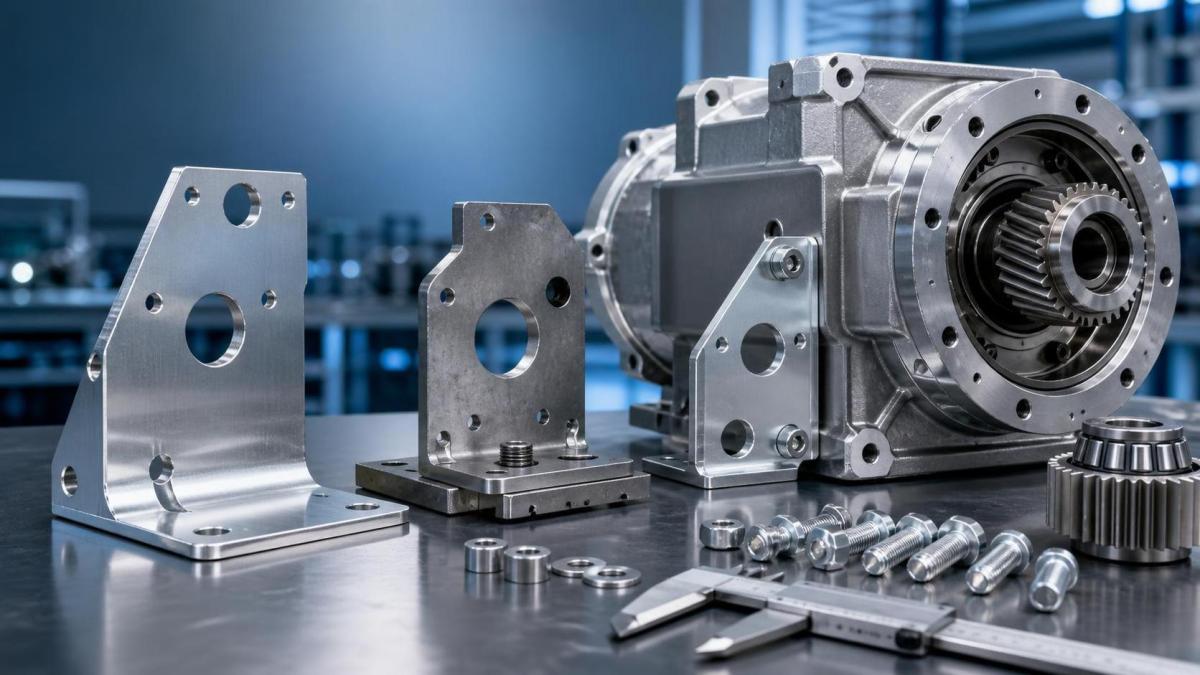
Standard metal parts often come from broad-use designs. They may be acceptable dimensionally, yet awkward when paired with housings, shafts, covers, or gear-related components that have tight positional relationships. A custom bracket can be designed around the full tolerance chain instead of one isolated drawing.
This matters most when the bracket controls alignment, load path, mounting angle, or clearance to moving parts.
Ask for this review before sourcing:
- Which dimensions are assembly-critical rather than merely manufacturable?
- Which holes or faces are true locating features?
- What variation in the mating parts is already known from production?
If those questions are not answered early, cost will show up later as rework, selective assembly, or unexplained field complaints.
4. Compare material usage, not just material grade
Buyers often focus on steel grade and miss the bigger question: how much material becomes waste before the part reaches final shape?
Custom brackets can lower cost when the manufacturing route improves material utilization and avoids excessive stock removal. This is one reason custom parts perform well in operations that already use forging and controlled machining for precision components. Less scrap, less cutting, and less energy in processing can outweigh the convenience of buying a catalog part.
Do not reduce this check to “custom equals less waste.” That is not always true. A custom design with unnecessary thickness, decorative geometry, or difficult transitions can just as easily add waste and raise tooling burden.
5. Separate prototype logic from production logic
For low volume, urgent builds, standard metal parts often win because they are available now and avoid tooling lead time. For stable programs, that logic often expires.
A custom bracket tends to lower assembly cost better when all of the following are true:
If your program is still changing every few weeks, a standard part may be the smarter temporary choice even if it is inefficient.
6. Check whether the bracket can combine functions
This is an underused cost lever.
A custom bracket can sometimes replace multiple standard parts: a spacer plus a mount, a support plus a locator, a bracket plus a reinforcement plate. Part consolidation reduces purchasing lines, incoming inspection burden, storage complexity, and assembly touches.
The mistake here is obvious once you have seen it a few times: teams combine functions on paper but create a part that is harder to machine, inspect, or install. Consolidation works when the geometry stays manufacturable and the added function removes real process steps.
7. Price the quality risk, not only the drawing
Decision-makers usually budget direct costs well. Indirect quality costs are where surprises hide.
If a standard bracket creates inconsistent torque seating, poor hole alignment, unstable support, or variable contact surfaces, your quality team will see it before finance does. Scrap, line stoppage, abnormal inspection effort, and containment activity all come from parts that technically exist but do not behave consistently in production.
Custom brackets lower assembly cost better when they reduce variation at the source. That usually means tighter control of the features that matter to fit and function, not tighter control everywhere.
8. Audit the supplier’s process fit for the bracket you actually need
This is where procurement and engineering need to stay in the same room.
A custom part is only cost-effective if the supplier has a process route that matches the geometry, tolerance, and volume. In precision manufacturing, that may include forging, controlled machining, and inspection resources aligned with repeat production rather than job-shop improvisation.
When you review a supplier, ask for evidence in operational terms:
- Can they produce a close-to-final shape, or will the “custom” part still require heavy downstream machining?
- Do they have enough inspection capacity for critical dimensions, especially locating features?
- Is their workshop set up for repeatability at your expected volume, not just sample making?
- Can they support design-for-manufacturing discussion early, before the drawing is frozen?
For buyers in gear, drivetrain, or industrial machinery programs, this matters because adjacent parts often already demand tighter process discipline. A bracket sourced casually can become the weak link in an otherwise controlled assembly.
9. Do one honest landed-cost comparison
Not a quote comparison. A landed-cost comparison.
Use the same structure for both options:
- Part price
- Tooling or development cost
- Post-purchase machining
- Assembly labor time
- Fixtures, shims, and auxiliary hardware
- Scrap and rework exposure
- Inspection effort
- Inventory complexity and part count
If custom brackets win in only one box, be careful. If they reduce cost in four or five boxes at once, the decision gets much easier.
Where buyers usually make the wrong call
A few patterns show up again and again:
- Choosing a standard part because it is available immediately, then keeping it in production long after launch.
- Approving a custom bracket based on geometry alone without checking tool access and assembly handling.
- Overengineering the part and adding features that do not remove labor or risk.
- Ignoring the cost of downstream adjustments because they sit in another department’s budget.
The right comparison is rarely standard versus custom in the abstract. It is standard plus all the workarounds versus custom plus all the up-front discipline.
A practical decision rule
Choose custom brackets when the part can be made close to final form, installation time is currently being wasted, fit is affecting quality, and production volume is stable enough to absorb development cost. Stay with standard metal parts when demand is uncertain, the design is still moving, or the custom version does not materially reduce labor, machining, or variation.
If you need a disciplined way to decide, start in this order: measure assembly time, list secondary operations, identify the true locating features, then ask suppliers how they would manufacture the bracket for repeat production. That sequence will tell you very quickly whether a custom bracket is a cost-saving component or just a more expensive drawing.
Please give us a message