



Related Posts
Online Message
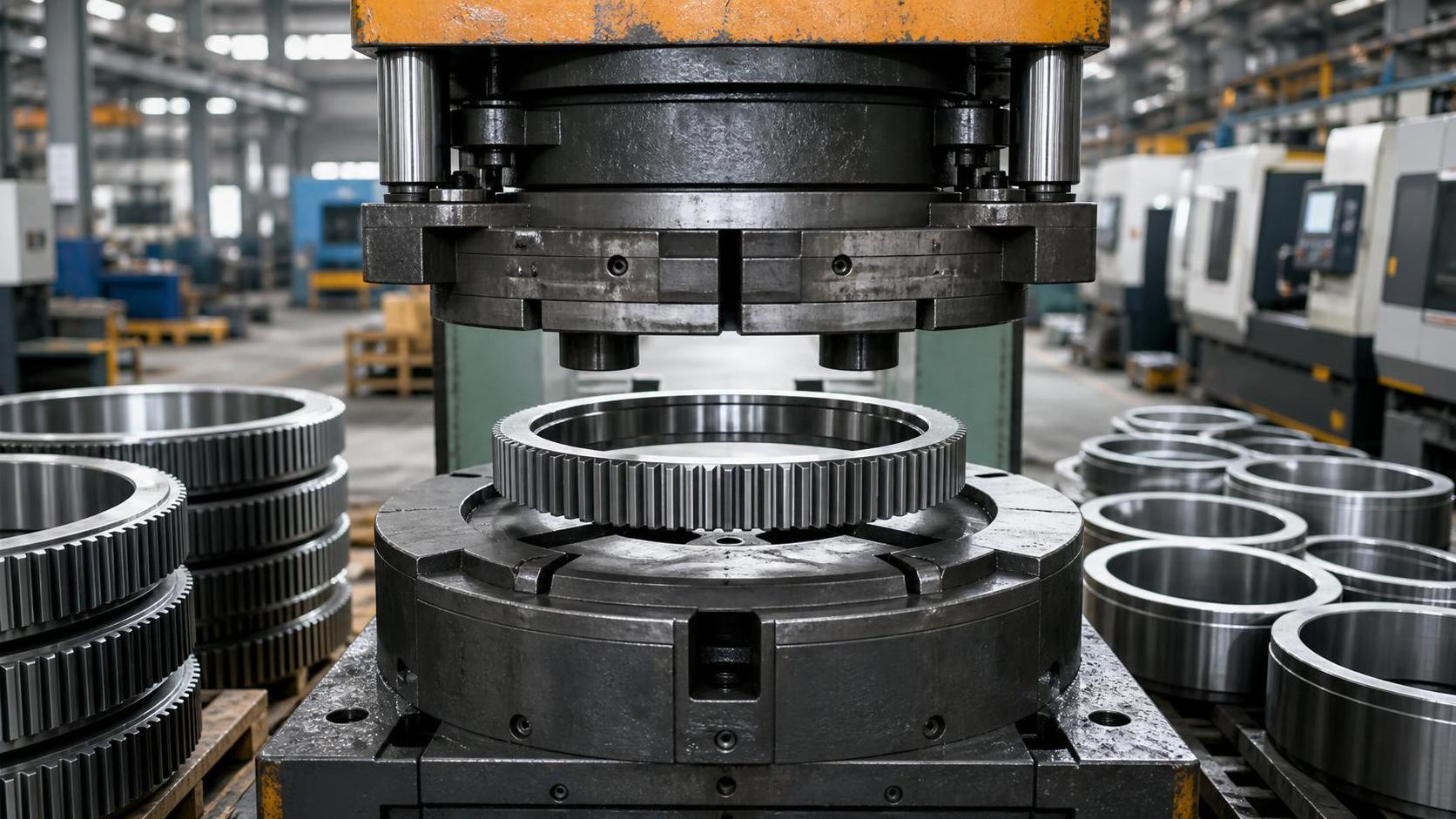
For finance decision-makers, Closed Die Forged Rings require more than a unit-price comparison. The purchase request may show a noticeable tooling charge beside a part price that appears higher than a machined alternative. Yet that initial view can hide the more important question: what will the component cost over the full production life?
Tooling investment should be assessed against expected production volume, steel yield, machining allowance, scrap exposure, inspection burden, and the financial impact of inconsistent parts. In automotive drivetrains, wind power gearboxes, marine transmissions, and industrial reducers, a forged ring is often not a simple commodity. It may become a load-bearing, torque-transmitting element whose dimensional stability affects downstream operations and field reliability.
The right approval decision is therefore not “Is the die expensive?” It is “At what volume does the die create a lower and more controllable total cost?”
The Cost Conversation Starts with the Production Forecast
Closed-die forging uses shaped dies to form heated metal into a near-net geometry. For rings, this can include profiles with shoulders, hubs, flanges, gear blanks, reinforcing sections, or non-uniform cross-sections. The process requires dedicated tooling, and that is the central financial hurdle: the die cost is paid before the economies of repeat production are fully realized.
A low-volume program may not absorb that investment efficiently. If the annual demand is uncertain, design changes are still likely, or only a small number of service parts is required, open-die forging, bar stock machining, rolled ring processing, or a hybrid route may provide more flexibility. In those situations, paying for a complex die too early can turn a technically attractive method into an avoidable capital expense.
At moderate and high volumes, the equation changes. Once the tooling cost is spread across a stable run, each additional part benefits from repeatable forming, reduced material removal, and shorter machining cycles. The break-even point is not universal because it depends on part geometry, alloy grade, tolerance requirements, die complexity, and the cost of the existing process. Still, the logic is universal: fixed tooling cost decreases per part as output rises, while variable savings accumulate.
Finance teams should ask procurement and engineering for three volume scenarios rather than one forecast: a conservative case, an expected case, and an upside case. A tooling decision that only works under the most optimistic demand forecast is fragile. One that remains justified at the conservative volume is more resilient.
Use Total Landed Manufacturing Cost, Not Piece Price Alone
The quoted price of a forged ring is only one line in the business case. A practical evaluation should include the costs that occur before, during, and after the forging operation:
- Tooling and engineering: die design, manufacture, trial runs, process development, and the expected maintenance or replacement cycle.
- Raw material consumption: billet weight, flash allowance, machining allowance, crop loss, and recoverable scrap value.
- Conversion cost: heating, forging, trimming, heat treatment, shot blasting, machining, inspection, packaging, and logistics.
- Downstream processing: turning time, tool wear, fixturing, deburring, gear cutting preparation, and balancing where required.
- Quality-related cost: dimensional variation, rework, sorting, nonconformance handling, production interruptions, and customer claims risk.
- Working-capital effects: batch size, lead time, inventory exposure, and the cost of holding safety stock for an unstable supply route.
This wider view is especially important when a ring begins as a heavy machined blank. A lower raw blank price can be misleading if much of the purchased steel becomes chips. Closed-die forging can place material closer to the finished form, lowering the amount that must be removed later. The economic gain is not simply lower steel consumption; it can also mean fewer machine hours, less cutting-tool consumption, lower chip handling, and more capacity available for other parts.
For a finance reviewer, material yield deserves particular attention. In precision forging applications, a well-designed process can substantially reduce waste compared with a traditional cut-from-solid route. Liaocheng Jiucheng Auto Parts Co., Ltd. reports that its precision-forged products are designed for no-turning or reduced-turning production, with material utilization stated as up to 50% higher than conventional processes and comprehensive production cost reduced by up to 20% in suitable applications. Such figures should be validated against the specific drawing and annual volume, but they point to the categories of savings worth testing in a quotation review.
A Simple Break-Even Model for Closed Die Forged Rings
Decision-makers do not need an elaborate financial model to identify whether the proposal is commercially plausible. They do need a model that separates one-time cost from recurring cost.
The basic calculation is:
Break-even volume = Total incremental tooling cost ÷ Variable cost saving per ring
The variable cost saving per ring should include the difference in material use, machining time, consumable wear, handling, and expected quality loss. If the forged route has a higher variable cost but produces a more reliable component, the model should also capture the value of reducing failure-related risk, provided that the assumptions are documented rather than guessed.
Consider a simplified comparison. A machined ring blank may require more steel and several additional turning operations. A closed-die forged version carries a one-time die investment but reduces the weight of incoming material and leaves less stock for machining. If the recurring saving is meaningful, the tooling may be recovered within the first planned production period. If annual demand is too small to reach that point before a redesign or platform phase-out, the investment should be reconsidered.
The useful outcome is not a single “yes” or “no.” It is a decision range: below a stated volume, use the flexible route; above that volume, approve closed-die tooling; in the middle range, negotiate shared tooling, staged releases, or a die concept that accommodates a family of related sizes.
Where the Financial Case Is Usually Strongest
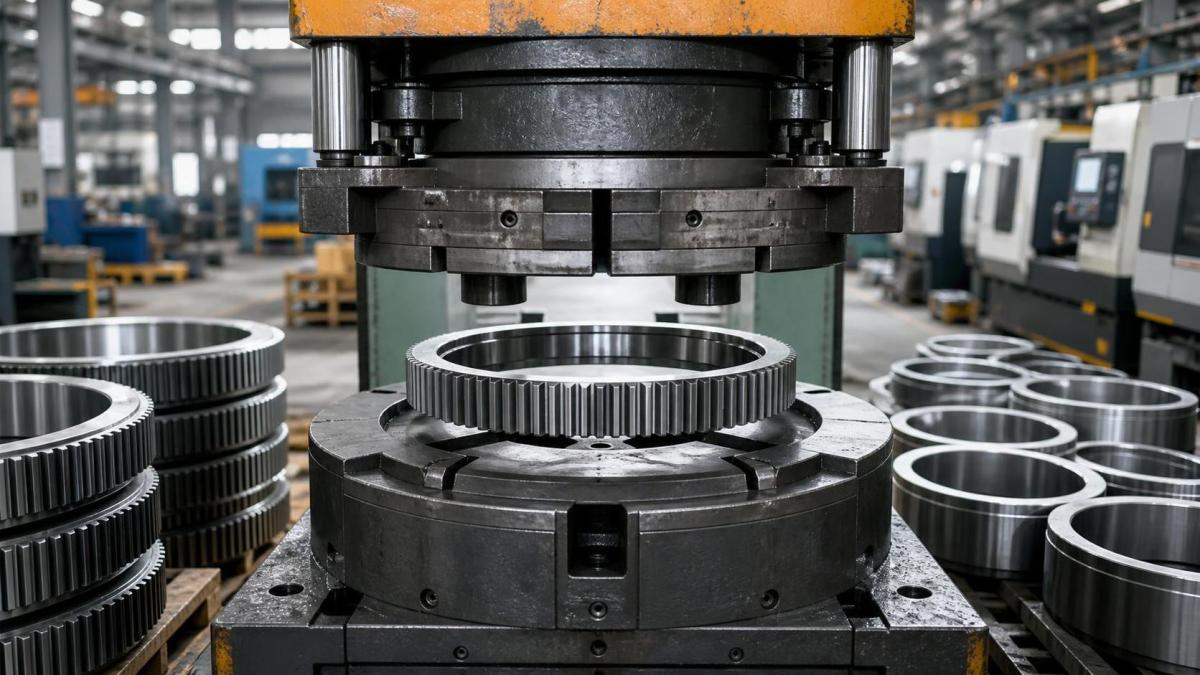
Closed Die Forged Rings tend to make the most economic sense when the component has recurring demand and a geometry that creates expensive machining from bar or rough stock. Gear rings, transmission components, reducer parts, spline-related blanks, and shaped sections used in automotive or wind power assemblies are common examples. These parts often have enough material volume and enough downstream processing to make near-net shaping financially relevant.
The case strengthens when the part has demanding mechanical requirements. Forging can support favorable grain flow aligned with the part’s form, an advantage that may matter for fatigue resistance and load-bearing performance. Finance teams should not attempt to price metallurgical behavior in isolation, but they should ask engineering whether the forged route reduces the likelihood of expensive material upgrades, oversize safety margins, or repeated inspection controls.
Repeatability is another economic lever. A mature die process can reduce variation between batches, simplifying machining setup and supporting predictable yield. This becomes more valuable when the ring feeds a tightly scheduled assembly line. A small saving on each blank can disappear quickly if inconsistent dimensions cause line-side delays, urgent sorting, or premium freight.
Special geometries deserve their own review. Components with irregular profiles may be poor candidates for a generic ring route, but they can be suitable for dedicated dies when demand is sufficient. For buyers evaluating geometry-driven manufacturing options, Special-shaped forgings can be considered alongside conventional ring blanks to determine whether material placement and machining allowance can be improved before the part reaches the machine shop.
Tooling Risk Is Real—Manage It Instead of Ignoring It
Approving tooling does not mean accepting an unmanaged fixed cost. The most common financial mistakes occur when the tooling scope is vague. A quote may mention “die cost” without clarifying whether it includes design, simulation, trial forging, trim dies, calibration tooling, inspection gauges, spare inserts, or later maintenance.
Before approval, request a tooling register that identifies each item, ownership, expected service life, maintenance responsibility, and storage arrangements. The supply agreement should also state what happens if the product drawing changes. A minor tolerance adjustment may be manageable; a major profile change may require a new die set. That distinction affects both budgeting and program risk.
It is equally important to confirm who owns the tooling after payment. For strategic components, customer-owned tooling with supplier-managed storage is often preferable, provided that access, transfer conditions, and maintenance records are clearly defined. This is not merely a legal detail. It protects continuity if sourcing strategy changes later.
Tooling amortization also needs a deliberate method. Some buyers prefer to pay the die cost upfront to obtain the lowest recurring piece price. Others spread it across a defined number of parts, which reduces initial approval pressure but can make comparisons less transparent. Neither approach is automatically better. The key is to avoid comparing an amortized forged price with an unamortized machined price.
Questions That Improve a Supplier Comparison
When quotations arrive from several forging suppliers, the lowest number may reflect a different scope rather than a better process. A stronger comparison asks each supplier to respond to the same technical and commercial questions:
- What is the assumed annual volume and batch size?
- What material grade, incoming billet weight, and yield rate are assumed?
- How much machining allowance remains after forging?
- Which operations are included: heat treatment, trimming, machining, testing, dimensional inspection, and packaging?
- What die life is expected, and what events trigger maintenance or replacement charges?
- Can the supplier provide samples or dimensional capability evidence before full-volume release?
- How will traceability and quality records be managed for critical transmission or gear applications?
Supplier capability matters because the savings assumed in the model depend on process control. A producer that combines forging and mechanical processing can often coordinate the relationship between forging allowance and final machining requirements more effectively than separate vendors working from disconnected assumptions.
Liaocheng Jiucheng Auto Parts Co., Ltd., established in 2015, operates both a precision forging workshop and a mechanical processing workshop within its 8,000-square-meter facility. Its work includes automotive gears, wind power gearbox parts, marine and mechanical gear components, as well as transmission shafts and spline shafts. For a purchaser, the relevance is practical: the supplier can evaluate the forging route with the finishing process in mind, rather than treating the forged blank as the end of its responsibility.
Do Not Underestimate Energy and Capacity Effects
Energy savings are often treated as a secondary sustainability metric, but they can have direct financial value in energy-intensive metalworking. Less machining means fewer spindle hours and lower electricity demand. Reduced material removal also reduces the need to purchase, transport, store, and recycle excess steel. These savings may be modest per piece, yet meaningful across a long-running platform.
Jiucheng states that its precision forging approach can save more than 30% of electricity compared with traditional processes in appropriate production conditions. This should not be used as a blanket assumption for every ring design. It should be tested through process routing and energy estimates for the exact part. Still, it highlights why capital approval should consider resource use alongside part price.
Capacity is another overlooked benefit. If closed-die forging removes several minutes of machining from every ring, the machine shop may gain enough capacity to postpone an equipment purchase, reduce subcontracting, or support a production ramp without additional shifts. That value belongs in the business case, even if it does not appear on the forged component invoice.
Approval Should Be Conditional, Not Blind
A sound approval for closed-die tooling can include milestones: drawing freeze, design review, trial sample acceptance, first-article inspection, agreed process capability checks, and a defined release volume. This approach gives finance teams a way to support the long-term savings opportunity while limiting exposure before technical assumptions have been proven.
For uncertain programs, consider a phased arrangement. Begin with prototype or low-volume blanks using a flexible process, then release the dedicated die after demand and geometry stabilize. For mature programs with established annual consumption, a full tooling investment may be justified immediately—particularly when material waste and machining time are already visible cost problems.
The most defensible decision is built on transparent assumptions. If the forecasted volume, forging yield, machining reduction, and tooling life are clearly documented, the approval becomes easier to explain to management and easier to revisit when conditions change.
Ultimately, the value of Closed Die Forged Rings is not that they eliminate cost at the start. They deliberately shift cost toward a controlled upfront investment in order to reduce recurring waste, improve production consistency, and create a more scalable route for the life of the program. For finance decision-makers, that is the comparison that matters: not the cheapest first part, but the most credible cost per acceptable part over time.
Please give us a message