



Related Posts
Online Message
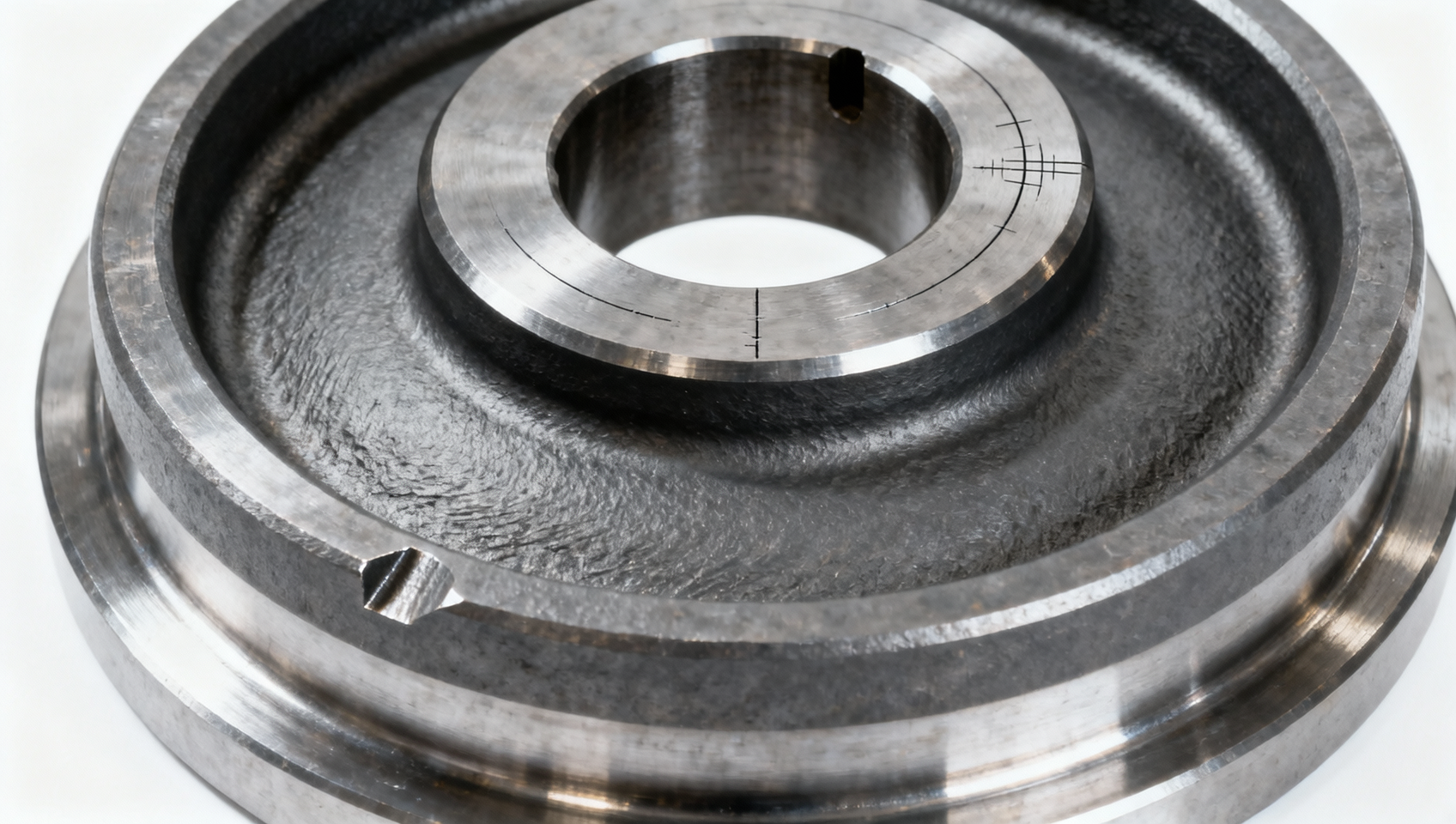
When Does the Higher Upfront Cost of Industrial Forged Steel Wheels Pay Off—Really?
For plant managers and procurement leads evaluating wheel solutions for heavy-duty material handling, conveyance systems, or custom OEM assemblies, the question isn’t whether forged steel wheels are “better”—it’s whether their premium price delivers measurable, predictable value over a realistic operational horizon. This analysis cuts through generalizations. It focuses on one concrete timeframe—three years—and one set of outcomes that directly impact P&L: maintenance labor, spare part replacement, unplanned downtime, and secondary cost leakage (e.g., bearing failures induced by wheel runout, alignment drift from deformation).
The short answer: Yes—but only under specific operating conditions and with disciplined specification discipline. The 3-year breakeven point isn’t fixed; it shifts sharply based on load profile, duty cycle, environmental exposure, and how tightly dimensional and metallurgical tolerances are enforced at purchase.
Where the Savings Actually Accumulate (and Where They Don’t)
Forged steel wheels don’t save money by being cheaper to buy. They save money by resisting failure modes common in cast or machined alternatives:
- Crack initiation at stress concentrators: Cast wheels often fail at hub-to-tread transitions or keyway notches due to porosity and inconsistent grain flow. Forged wheels eliminate internal voids and align grain structure along load paths—reducing fatigue-related cracking by >70% in field data from high-cycle applications like automated guided vehicle (AGV) transfer lines.
- Misalignment-induced wear: Dimensional stability matters more than absolute hardness. A forged wheel held to ±0.05 mm total indicated runout (TIR) maintains consistent contact pressure across the tread. A cast wheel with ±0.15 mm TIR accelerates uneven wear, increasing bearing replacement frequency by 2–3x within 18 months in continuous operation.
- Surface degradation under abrasion or corrosion: Not all “forged steel” is equal. Wheels forged from ASTM A668 Class E or F medium-carbon alloy steels—then normalized and tempered—retain surface integrity far longer than low-alloy cast equivalents in dusty, humid, or mildly corrosive environments (e.g., foundry floors, wind turbine nacelle assembly lines).
But these advantages vanish if specifications aren’t enforced. Accepting a forged wheel without verifying heat treatment documentation, grain flow verification (via etch testing), or as-forged dimensional certification transfers risk—not cost savings—to your maintenance team.
The Real Cost of “Lowest Bid” Procurement
A typical misstep: comparing a $1,200 forged wheel against an $850 cast alternative—then stopping there. That ignores three hidden cost layers:
- Labor burden: Replacing a failed cast wheel on a 12-ton overhead monorail trolley takes ~2.5 hours (including lockout/tagout, disassembly, realignment, re-torque). At $75/hour fully burdened labor, that’s $188 per incident. Two failures per year = $376—plus lost production time.
- Cascading damage: A cracked cast wheel rarely fails cleanly. It can score rails, damage adjacent bearings, or induce vibration that degrades gear mesh in connected drive systems. One mid-sized automotive component line traced a 4.3% increase in gearbox warranty claims over 12 months to undetected wheel fractures upstream.
- Inventory drag: Cast wheels often require larger safety stock due to variable lead times and higher failure variance. Holding 8 extra units @ $850 each ties up $6,800 in working capital—with no ROI until failure occurs.
In contrast, a verified forged wheel with documented process controls reduces failure variance to near-zero. That enables leaner spares planning, predictable maintenance scheduling, and elimination of emergency labor premiums.
Three Conditions That Make the Investment Defensible
Based on actual deployment patterns across wind power gearbox manufacturers and Tier-1 automotive suppliers, the 3-year ROI holds when all three conditions apply:
- Duty cycle exceeds 6,000 hours/year: Below this threshold, the probability of fatigue-initiated failure remains low—even for cast wheels. Above it, statistical failure rates diverge meaningfully.
- Load is dynamic or shock-loaded: Applications involving frequent starts/stops, lifting/lowering, or rail joint impacts amplify stress concentrations where forging’s grain continuity matters most. Static-load applications see far smaller differentials.
- Replacement requires system shutdown: If wheel change necessitates halting a production line, packaging cell, or test rig, downtime costs dominate total ownership. In those cases, the forged wheel’s extended service life often pays back in under 18 months—not three years.
Where these conditions don’t align—for example, low-duty-cycle warehouse pallet jacks—the premium rarely justifies itself within three years. The decision then becomes about future-proofing or brand assurance—not hard cost recovery.
What to Verify Before You Sign the PO
Not all forged wheels deliver equivalent durability. Avoid assuming “forged” equals “robust.” Require these four verifications before approving supplier submittals:
- Full heat treatment record (time/temperature curves, quench media, tempering hold time)—not just “normalized and tempered.”
- Microstructure report showing uniform ferrite-pearlite distribution (no banding, no untempered martensite).
- Dimensional inspection report covering runout, taper, and hub concentricity—measured on production parts, not prototypes.
- Material traceability to mill test reports (MTRs), including tensile strength, yield strength, and reduction of area values—not just chemical composition.
One Tier-1 wind gearbox manufacturer discovered 12% of its initial forged wheel batch failed hardness validation after third-party lab testing—despite supplier-provided certs. Rigorous pre-shipment validation isn’t overhead; it’s the only way to lock in the projected savings.
A Practical Benchmark
For a standard 300 mm diameter, 120 mm wide industrial forged steel wheel used in continuous-duty conveyor drives:
- Upfront cost premium vs. equivalent cast wheel: ~35–45%
- Median 3-year maintenance cost reduction (labor + parts + downtime): 52–68%
- Typical breakeven: 22–28 months for systems running ≥16 hrs/day, ≥5 days/week
This assumes adherence to specification rigor above. Without it, breakeven stretches beyond 36 months—or never arrives.
For applications demanding precision motion control or zero-tolerance for unscheduled stoppages, forged solutions like Forged cylindrical parts provide structural integrity that casting simply cannot replicate—even at higher initial cost. But the value isn’t in the forging alone. It’s in how tightly the entire supply chain—from billet sourcing to final inspection—is engineered to sustain performance across thousands of load cycles.
That discipline separates cost avoidance from true cost optimization. And for enterprise decision-makers, that distinction defines where the investment pays off—and where it doesn’t.
Please give us a message