



Related Posts
Online Message
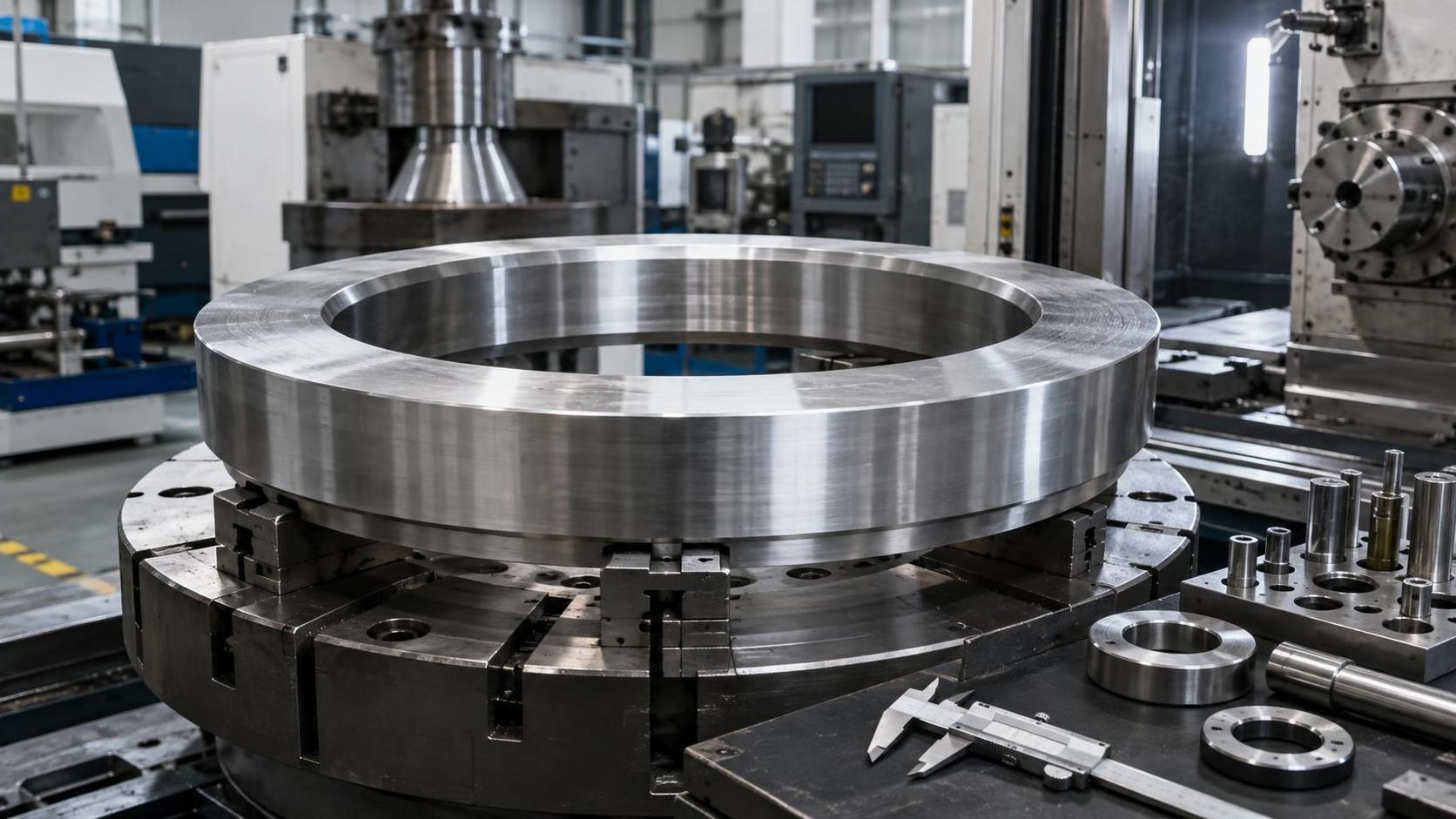
Custom Stainless Forged Rings: RFQ Details That Prevent Costly Machining Changes
Sourcing custom stainless forged rings requires more than selecting a material grade and providing nominal dimensions. For procurement teams, the most expensive problems often appear after a quotation has been approved: a bore needs more stock than expected, a sealing face cannot be finished within the agreed allowance, a heat-treatment route changes the final size, or a revised drawing turns a near-net forging into a heavy-machining job.
These issues are rarely caused by price alone. They usually begin with an RFQ that does not clearly separate forged condition from finished condition, or that leaves critical functional requirements open to interpretation. A capable custom stainless forged rings manufacturer should identify those gaps before releasing material or tooling, but procurement can avoid many rounds of clarification by asking for the right information at the start.
The objective is not to overload a supplier with paperwork. It is to give engineering, forging, machining, and quality teams enough information to quote the same part—not four different assumptions about the same part. That distinction matters when rings are used in mechanical transmissions, marine equipment, gearboxes, flanged assemblies, bearing-related components, or corrosive operating environments where dimensional stability and material integrity both matter.
Start by Defining What the Quoted Ring Actually Is
An RFQ should state whether the supplier is quoting a forged blank, a rough-machined ring, or a fully machined part. This sounds basic, yet it is one of the most common sources of cost disagreement. A drawing may show finished dimensions and surface requirements, while the buyer expects a forging quote. Without a clear delivery condition, the supplier must either make assumptions or return a quotation that cannot be compared fairly with another offer.
For a forged blank, identify the required outside diameter, inside diameter, height, and any intentional forging allowances. For a machined component, distinguish finished dimensions from pre-machining dimensions. If the ring includes steps, grooves, bolt holes, splines, gear teeth, keyways, or non-concentric features, show whether these are to be forged, machined, or left for a downstream operation.
A forged ring is not simply a round bar with a hole removed. The selected forming route, starting stock, grain flow, die design, flash strategy where applicable, and subsequent sizing operations influence what geometry can be supplied economically. A shape that looks simple in CAD can still require substantial machining if its transitions are sharp, its wall sections change abruptly, or its required surfaces are more precise than the forging process is intended to produce.
Use a Dimension Hierarchy Rather Than a Crowded Drawing
Not every dimension has the same commercial or functional importance. Mark the dimensions that control assembly, load transfer, sealing, runout, or bearing fit. A supplier can then protect stock on those features while avoiding unnecessary excess material elsewhere. When all dimensions are treated as equally critical, quotations tend to include larger machining allowances as a safeguard. The quoted price may look reasonable, but the buyer later pays for material removal that was never necessary.
Material Grade Is Only the First Material Decision
Stainless steel is a broad family, not a complete specification. An RFQ that only says “stainless steel” cannot support a reliable technical quotation. Even a named grade may leave important questions unanswered: Is an equivalent material acceptable? Is the material selected for corrosion resistance, elevated-temperature performance, strength, magnetic response, weldability, or a combination of these factors? Does the application require traceability documents or a specified chemistry and mechanical-property basis?
The manufacturing sequence should also be considered. If the part will be solution treated, hardened, stress relieved, welded, coated, or machined after heat treatment, the supplier needs to know when final dimensions apply. Heat treatment can affect distortion, machining behavior, and inspection planning. A ring quoted in the forged state cannot automatically be assumed to meet dimensions after a customer’s separate thermal process.
Buyers do not need to prescribe a process they are not qualified to control. It is usually more effective to state the application requirement and the governing drawing or material standard, then ask the manufacturer to confirm its proposed route. This preserves accountability: the buyer defines what the ring must achieve, while the supplier explains how it intends to manufacture and verify the part.
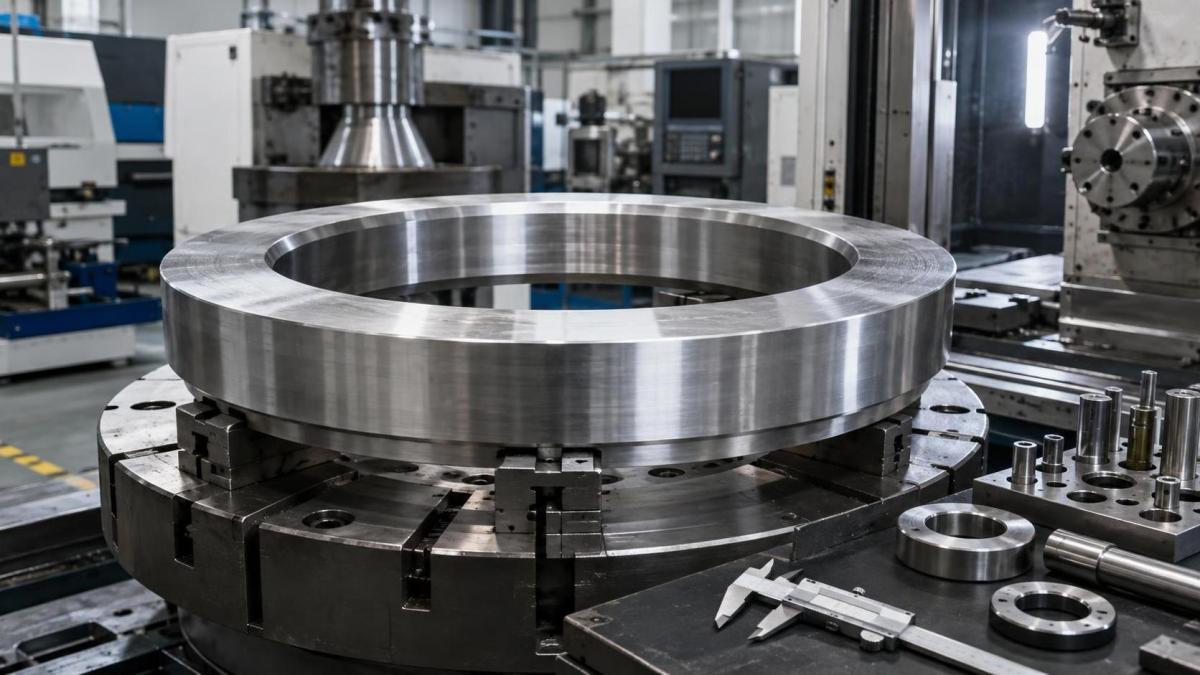
Machining Allowance Should Be Designed, Not Added by Habit
“Leave enough stock” is understandable as a shop-floor instruction, but it is a weak purchasing specification. Excess stock raises raw-material weight, forging load, machining time, tool consumption, and scrap exposure. Too little stock can be worse: machining may fail to clean up scale, decarburized surface where relevant, distortion, or normal forging variation. The right allowance depends on part size, ring geometry, material, forming route, heat-treatment sequence, and the finished tolerance.
The most useful RFQs identify surfaces that must be fully machined and surfaces that may remain as-forged. For instance, a ring may require a machined bore and two reference faces, while its outer diameter is non-functional. If this is not stated, a supplier may quote a conservative blank with stock on every surface. Conversely, if a corrosion-sensitive as-forged external surface is intended to remain visible, that requirement should be explicit because scale removal and surface preparation can alter cost and process choices.
Ask the supplier to show its proposed forging dimensions and machining allowances alongside the finished drawing. That simple review catches many costly changes before production. It also makes it easier to compare bids. A lower forging price may not be lower in total if the blank contains much more material than the machining route needs.
Tolerance, Datum, and Runout Requirements Need Context
Tight tolerances should be applied where the assembly needs them, not copied across the entire ring. A finished bore may need a closely controlled relationship to a reference face, while a rough external profile does not. The RFQ should identify the datum scheme used for inspection and clarify whether concentricity, circular runout, total runout, flatness, parallelism, or perpendicularity is functionally required.
This is particularly important when a ring becomes part of a gearbox, transmission, bearing seat, coupling, or marine drive assembly. The relevant relationship is often between two finished surfaces, not between a finished surface and an as-forged feature. If the inspection basis is unclear, a supplier may inspect from a different reference than the customer’s assembly process, and a technically “acceptable” part can still create fitting difficulty.
Where possible, provide a 2D drawing with revision control even if a 3D model is available. Models communicate geometry well, but they do not always capture surface finish, datum logic, general tolerances, notes, or inspection expectations with enough clarity. The purchase order should match the released revision, especially after prototype-stage modifications.
Inspection Requirements Affect More Than Final Quality Cost
Inspection requirements change routing, lead time, documentation, and sometimes the practical sequence of machining and heat treatment. An RFQ should state what evidence is required at delivery: dimensional reports, material documentation, heat-treatment records, hardness checks, non-destructive examination, first-article documentation, or customer-specific formats. It is better to request only what the application or contract genuinely requires, but it should be requested before quotation.
Terms such as “100% inspection” also need definition. Does that mean every ring receives a complete dimensional check, or that every part is checked for a limited set of critical dimensions? Are records required for every serial number, batch, or shipment? Is visual acceptance adequate for non-critical forged surfaces? Without this detail, two suppliers may quote entirely different inspection workloads under the same phrase.
A manufacturer with both forging and machining capability can often coordinate these questions earlier, because it sees the interaction between material input, formed geometry, machining datums, and final inspection. Liaocheng Jiucheng Auto Parts Co., Ltd. operates precision-forging and mechanical-processing workshops and has engineering and quality personnel within its production organization. Its experience across automotive gear-related parts, wind-power gearbox components, mechanical applications, and marine gear parts reflects the value of reviewing manufacturability across process stages rather than treating forging as an isolated purchase.
Volume, Tooling, and Release Schedule Belong in the Same Conversation
A prototype quantity, a one-time spare-parts order, and a repeat production program should not be quoted using the same assumptions. Order volume influences the economic case for dedicated tooling, process development, material purchasing, inspection fixtures, and automation. Procurement should provide the immediate order quantity, anticipated annual demand if available, and the expected release pattern. Forecasts do not need to be guarantees; even a qualified estimate helps a supplier choose an appropriate route.
There is a useful cost conversation to have here. Precision forging may reduce later turning for suitable geometries, but its advantage depends on the shape, tolerances, material, and production volume. Jiucheng states that its precision-forging approach is aimed at no-turning or reduced-turning production, with an emphasis on material and energy savings. For a stainless ring project, the practical question is not whether a low-machining route sounds attractive. It is whether the proposed forged profile leaves the correct stock, meets the required quality condition, and justifies any tooling investment over the actual purchasing horizon.
Request a quotation that separates one-time charges from recurring part price where applicable. Tooling, samples, inspection fixtures, special packaging, and expedited freight should not disappear into a single unit price. Transparency helps buyers assess total landed and lifecycle cost, not simply compare the lowest number on a quotation sheet.
Questions Worth Resolving Before a Purchase Order Is Released
- Which drawing revision governs the order, and are all critical notes readable?
- Are dimensions shown as forged, pre-machining, or finished values?
- Which surfaces require machining, and which may remain as-forged?
- What material grade, equivalent-material policy, and documentation are required?
- Does heat treatment occur before or after final machining, and what condition is required at shipment?
- Which dimensions and geometric relationships are critical to assembly?
- What inspection records, packing method, labeling, and batch traceability are necessary?
- What quantities are required for sampling, initial production, and repeat releases?
The best RFQ does not attempt to solve every manufacturing detail on behalf of the supplier. It defines the part’s functional needs clearly enough that the supplier can identify risks, propose a manufacturable forging condition, and quote without hiding broad assumptions. Before committing to a custom stainless ring source, ask for a review of the proposed forging drawing, machining stock, process sequence, and inspection plan. That review is usually far less expensive than changing the process after material has been cut, forged, or placed into a production schedule.
Please give us a message