



Related Posts
Online Message
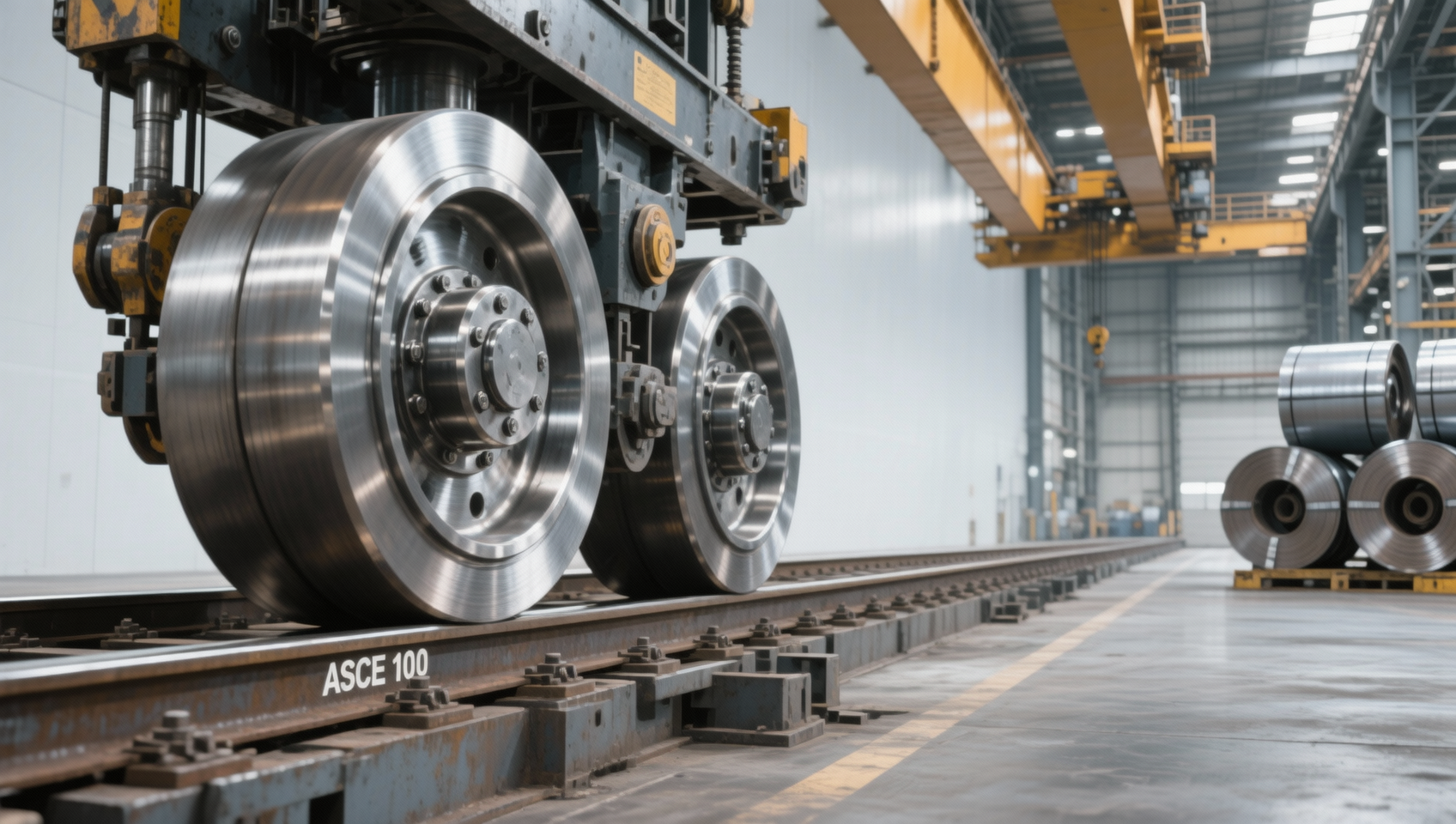
In a 24/7 steel coil storage yard, every minute of crane downtime translates directly into lost throughput, delayed shipments, and contractual penalties. Cast crane wheels—common in legacy systems—often develop microcracks under cyclic radial loads, thermal gradients from hot coil handling, and abrasive contact with concrete or steel rail surfaces. These failures rarely occur catastrophically; instead, they manifest as progressive flaking, uneven wear patterns, and increasing wheel-rail misalignment—conditions that erode positional accuracy during coil placement and trigger premature bearing replacement in the trolley assembly. Forging eliminates these failure modes at the metallurgical level: grain flow follows the contour of the wheel, enhancing tensile strength by 35–45% over equivalent castings and raising fatigue life by 3–5× under identical load spectra.
Yet ROI isn’t determined by material properties alone—it’s governed by how those properties interact with your operational reality. A forged wheel may cost 2.2–2.8× more upfront than its cast counterpart, but that premium is amortized across four interdependent value streams: extended service life, reduced maintenance labor, lower rolling resistance, and avoided unplanned stoppages. Each stream must be quantified using site-specific data—not industry averages—to avoid overestimation.
Step 1: Baseline Failure Frequency & Labor Cost per Wheel Replacement
Start with historical records—not vendor claims. Track the last 12 months of wheel-related interventions on one representative crane (e.g., a 32-ton overhead gantry serving coil staging bays). Record: number of wheel replacements, average time from fault detection to full operational restoration (including alignment verification), and labor hours logged for removal, inspection, reinstallation, and post-installation testing. Exclude scheduled preventive replacements—focus only on unscheduled events. In high-utilization yards, cast wheels typically require full replacement every 14–18 months; forged equivalents routinely exceed 60 months before reaching end-of-life wear limits. But your actual interval depends on rail condition, lubrication discipline, and load distribution across the wheelset—not just material grade.
Step 2: Quantify Energy Savings from Rolling Resistance Reduction
Forged wheels exhibit tighter dimensional consistency and superior surface hardness uniformity (typically HRC 32–36 vs. cast’s HRC 24–28). This reduces deformation hysteresis at the wheel-rail interface. Field measurements show a 6–9% reduction in motor current draw during trolley traverse under nominal load when switching from ASTM A48 Class 30 cast iron to ASTM A668 Class E forged steel. Multiply this percentage by your average trolley motor kW rating, annual operating hours (e.g., 8,760 for 24/7 operation), and local electricity rate. Note: savings are nonlinear—most pronounced during acceleration/deceleration phases, not steady-state travel.
Step 3: Assign Value to Avoided Downtime
This is where most calculations fail. Don’t use “average revenue per hour.” Instead, calculate opportunity cost per stoppage: identify the highest-value coil handling lane affected by the crane outage (e.g., the line feeding cold-rolled coil to the slitting line). Determine its throughput rate (tons/hour), average margin per ton processed, and the average duration of each wheel-related stoppage (from alarm to verified return-to-service). A single 4.2-hour interruption on a $120/ton margin line processing 45 tons/hour represents $22,680 in direct margin loss—not counting cascading delays to downstream lines.
Step 4: Factor in Secondary Maintenance Avoidance
Cast wheel degradation accelerates adjacent component wear: misaligned wheels induce abnormal thrust loads on trolley drive gearboxes and increase lateral stress on end trucks. Track gearbox oil change frequency, bearing replacement logs, and rail realignment cycles over the same 12-month window. Forged wheels reduce these secondary failures by stabilizing kinematic behavior. One yard reported a 40% drop in trolley gearbox overhauls after upgrading—directly attributable to consistent wheel geometry retention.
Why Standardized Payback Periods Mislead
A common error is dividing total upgrade cost by annual savings to yield a “2.3-year payback.” That assumes linear, predictable improvement—and ignores three critical variables: (1) Cast wheel failure rates accelerate exponentially after year 3 due to accumulated subsurface damage; (2) Rail wear increases non-linearly as wheel runout exceeds 0.15 mm, compounding future alignment costs; (3) Energy savings compound with rising electricity tariffs, while labor costs rise faster than inflation. A dynamic model projecting 7-year cash flow—with escalating maintenance costs for cast wheels and conservative 3% annual tariff growth—reveals true breakeven at 3.1 years, not 2.3.
Installation Isn’t Plug-and-Play
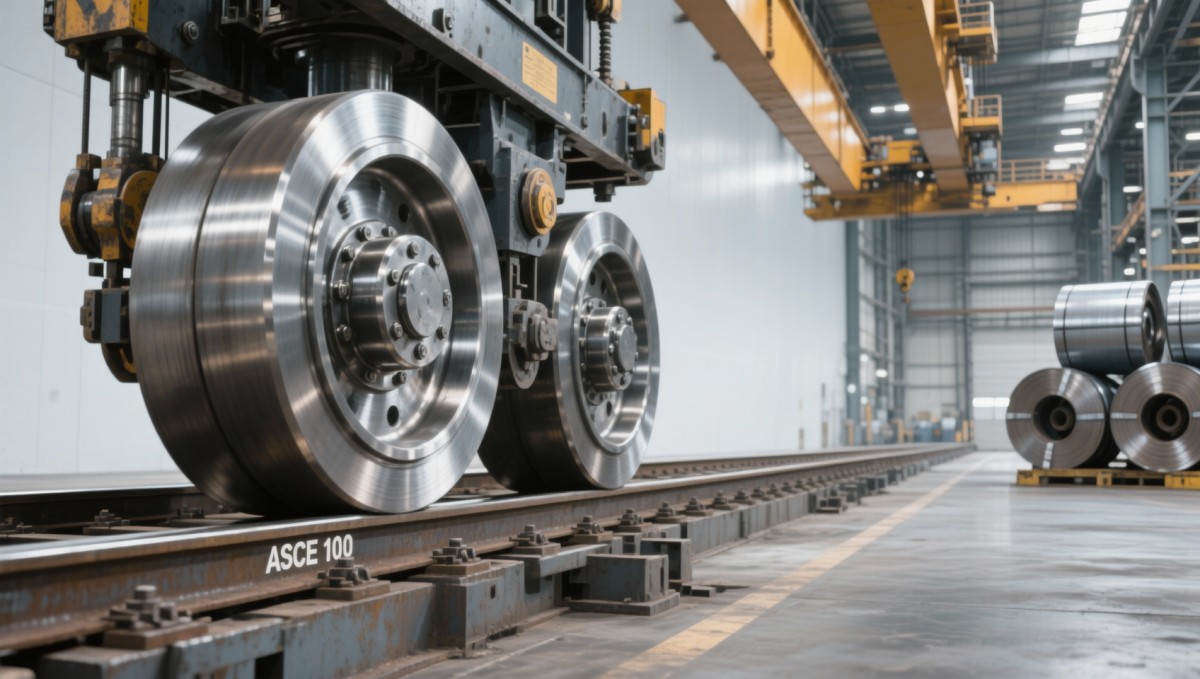
Forged wheels require precise interference fit calculation. Thermal expansion coefficients differ between forged steel and cast iron hubs; mismatched shrink-fit temperatures cause premature loosening or hub cracking. Verify hub bore roundness and surface finish before installation—forged wheels expose geometric flaws in mating components that cast wheels masked through plastic deformation. Also confirm rail profile compatibility: some forged wheels are optimized for ASCE 100 rails, not older AREMA 115 sections. Retrofitting without rail assessment risks accelerated flange wear.
Material selection matters beyond strength. ASTM A668 Class E offers optimal balance for coil yard applications: sufficient toughness to resist impact from dropped coil guides, yet hardened enough to limit abrasive wear. Avoid higher-carbon grades unless rail contamination includes significant slag or mill scale—those increase brittle fracture risk during thermal cycling.
For applications demanding integrated drivetrain components, precision forging enables tighter tolerances on mounting features and gear teeth. Liaocheng Jiucheng Auto Parts applies similar process control to high-load transmission elements—enabling Spur gear supplier solutions where torque transfer efficiency and mesh stability directly affect system uptime.
Validation Before Commitment
Don’t rely solely on lab test reports. Request field trial data from yards with comparable coil weights (e.g., 25–35 ton coils), rail types, and ambient temperature ranges. Ask for wear maps—photogrammetric scans showing depth loss across the tread surface after 12 months—not just average wear depth. Monitor wheel-rail contact pressure distribution using strain gauges embedded in rail sections during initial operation; localized pressure spikes indicate alignment issues invisible to visual inspection.
ROI crystallizes not at purchase order, but at the first scheduled replacement cycle where the forged wheel remains serviceable while its cast predecessor would have been scrapped. That moment validates the metallurgical investment—not as a materials upgrade, but as a systemic reliability multiplier.
Please give us a message