



Related Posts
Online Message
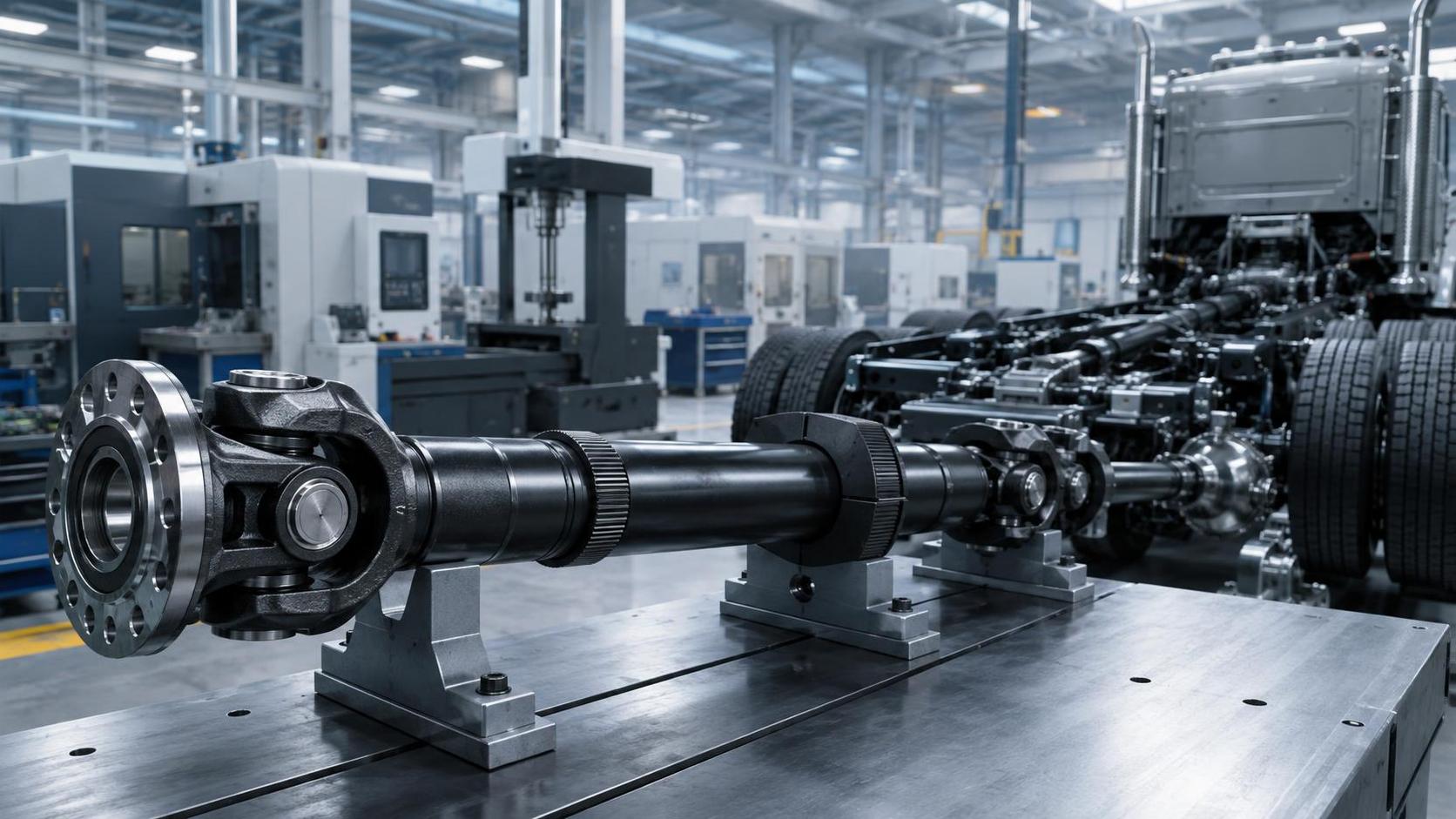
Selecting a Peterbilt drive shaft for fleet replacement projects requires more than comparing length, diameter, and price. The correct choice must match the truck's operating conditions, torque demands, and maintenance strategy.
For purchasing teams, the goal is not simply finding an available replacement part. It is reducing unplanned downtime, avoiding fitment errors, controlling inventory complexity, and protecting the fleet's total operating cost.
A reliable sourcing decision starts with vehicle-level data, then evaluates shaft construction, spline compatibility, balance quality, material traceability, and the supplier's ability to deliver repeatable production quality at scale.
Start With the Truck Configuration, Not the Old Part
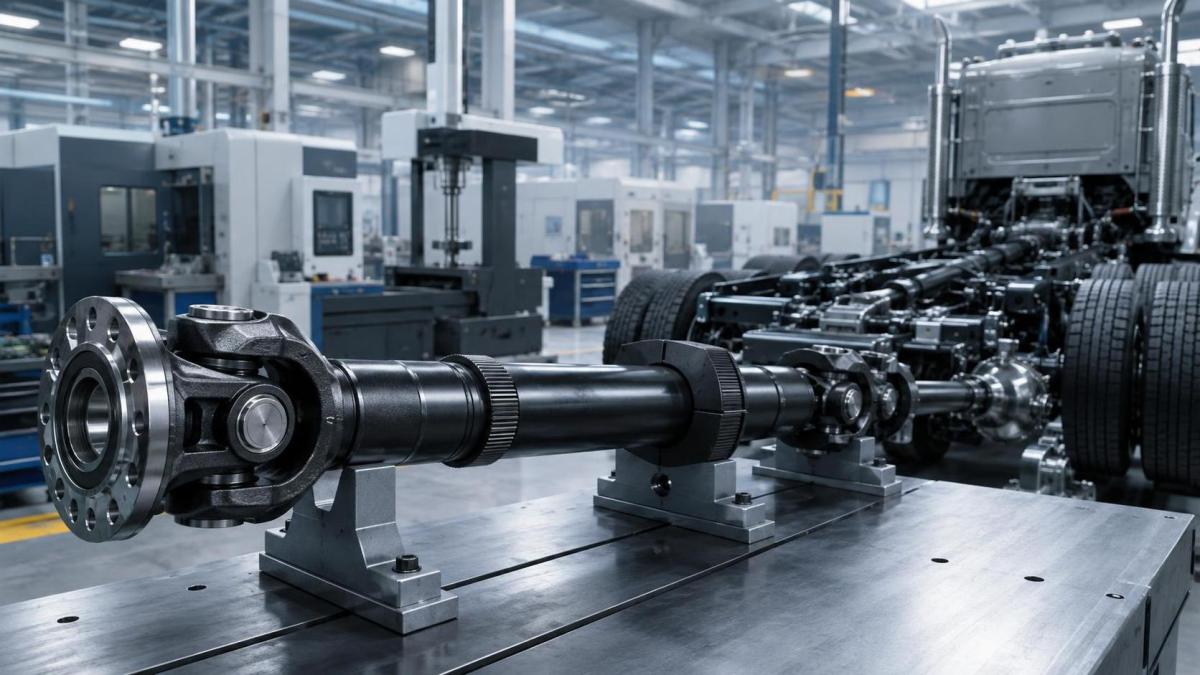
The old shaft is useful as a reference, but it should not be the only source of purchasing information. Fleet vehicles may have been modified, repaired, or repowered during their service life.
Confirm the Peterbilt model, model year, wheelbase, transmission, axle configuration, suspension type, engine output, and driveline layout before requesting quotations. These factors influence the required Peterbilt drive shaft design.
Peterbilt vocational trucks, highway tractors, dump trucks, and heavy-haul units can use significantly different driveline arrangements. Similar-looking shafts may have different torque ratings, flange patterns, tube thicknesses, or slip-joint travel requirements.
Purchasers should collect the vehicle identification number, original equipment part number, shaft assembly number, and universal-joint series whenever possible. These details reduce uncertainty before samples or drawings are reviewed.
Measure the installed shaft only when the truck is parked on level ground and the suspension is at normal ride height. Measurements taken with the axle hanging can produce incorrect operating-length specifications.
Record both the compressed and extended positions where possible. A drive shaft needs sufficient slip travel to accommodate axle movement without bottoming out or losing spline engagement under normal operation.
For multi-piece drivelines, identify every component rather than ordering only one tube section. Center bearings, companion flanges, yokes, slip assemblies, and universal joints must work together as a balanced system.
A procurement specification should state whether the replacement is intended for a direct OEM interchange, a repair upgrade, or a custom fleet application. Suppliers cannot quote accurately without understanding the expected installation outcome.
Match Torque Capacity to Real Fleet Duty Cycles
Torque capacity is often the most important engineering factor in a Peterbilt drive shaft replacement project. A shaft that fits physically can still fail early if its torque reserve is inadequate.
Engine horsepower alone does not define driveline demand. Transmission ratios, axle ratios, vehicle payload, startability requirements, terrain, PTO use, and driver operating habits can create high torsional loads.
Heavy-haul, construction, logging, refuse, and oilfield fleets generally require more torque margin than long-haul highway fleets. Stop-and-go work, steep grades, and frequent low-speed acceleration increase stress on driveline components.
Ask suppliers for continuous torque capacity, peak torque capacity, and the assumptions used for those values. A single broad “heavy-duty” label does not provide enough information for technical purchasing decisions.
The universal joints, yokes, tubing, splines, welds, and flanges should be rated as a complete assembly. The weakest component determines practical durability, even when other parts appear oversized.
Fleet managers should review failure history before standardizing replacements. Repeated joint failure, twisted splines, cracked tubes, or damaged yokes may indicate that the original driveline specification no longer matches current operating conditions.
A moderate upgrade can be justified when fleets have added heavier bodies, changed axle ratios, increased payload targets, or moved trucks into more demanding routes. However, upgrades must retain proper geometry and clearance.
Do not assume that a larger tube always produces a better result. Added mass, incorrect critical-speed behavior, or incompatible joints can create new vibration and service issues if the driveline is not engineered properly.
Check Length, Slip Travel, and Spline Compatibility Carefully
Length errors are among the most common causes of replacement delays. Purchasing teams should define the measurement points clearly, including flange face, yoke centerline, weld yoke location, or joint-center distance.
Different manufacturers may describe shaft length differently. A quote should state the exact measurement convention, operating length, collapsed length, and maximum extended length to prevent misunderstandings during installation.
Slip splines must provide smooth movement while retaining sufficient engagement throughout axle travel. Insufficient engagement can accelerate wear, while excessive compression can damage the slip assembly or transmission output components.
Confirm spline count, spline diameter, pressure angle, and mating component design. Even small differences between spline systems can prevent assembly or create loose fit conditions that lead to noise and premature wear.
Pay close attention to male and female spline surface treatment. Proper machining, heat treatment, lubrication provisions, and seal design help prevent fretting corrosion in vehicles exposed to water, dust, road salt, or debris.
For fleets operating in severe environments, sealed or serviceable slip assemblies may offer different maintenance tradeoffs. The preferred option should reflect grease intervals, technician access, contamination exposure, and fleet service policies.
When requesting custom or replacement assemblies, provide photographs of both ends, measurements of joint caps, and details of flange bolt patterns. Clear documentation prevents costly errors caused by assumed interchangeability.
Engineering drawings remain the strongest purchasing reference for repeat fleet projects. Once a configuration has been validated, a controlled drawing and revision number can simplify future orders and reduce dependence on individual sample parts.
Evaluate Tube Material, Forged Components, and Manufacturing Quality
Drive shaft durability depends on material selection and production control, not only external dimensions. Tube strength, wall thickness consistency, weld quality, yoke integrity, and heat treatment all affect fatigue resistance.
Forged yokes and related cylindrical components can provide favorable grain flow and mechanical strength when properly designed and processed. This is especially important where torque reversals and shock loads are frequent.
Buyers sourcing critical driveline parts should ask whether yokes, flanges, splined sections, and transmission-shaft interfaces are forged, machined from bar stock, cast, or fabricated. Each process has different performance implications.
For applications requiring high-strength precision components, suppliers with integrated forging and machining capabilities may offer better control over material utilization, dimensions, and production consistency than fragmented supply chains.
Products such as Forged cylindrical parts can be relevant when a replacement project requires custom driveline-related components, precision-machined blanks, or durable forged interfaces for heavy-duty assemblies.
Ask for the material grade and applicable mechanical-property requirements, including tensile strength, yield strength, hardness, impact performance, and heat-treatment condition. Generic material descriptions are insufficient for critical fleet replacements.
Quality documentation should match the risk level of the project. For fleet standardization programs, buyers may require material certificates, dimensional inspection records, hardness reports, balancing reports, and traceable production lot information.
Welded tube assemblies deserve particular attention. The welding process, alignment method, weld inspection practice, and post-weld distortion control all influence shaft concentricity and long-term fatigue performance.
Balancing Accuracy and Runout Control Prevent Vibration Problems
Drive shaft vibration can cause more than driver discomfort. Persistent vibration may accelerate wear in universal joints, center bearings, transmission bearings, axle input bearings, seals, and surrounding mounting hardware.
A properly selected Peterbilt drive shaft should be dynamically balanced according to its operating speed and geometry. Purchasing specifications should request balancing requirements instead of treating balancing as an optional supplier process.
Highway trucks can operate at sustained speeds that make imbalance more noticeable. Vocational vehicles may experience lower average road speeds but greater shock loading, making runout control and component alignment equally important.
Ask whether the supplier measures tube runout before assembly and verifies balance after final welding and component installation. Final assembly inspection matters because each production step can affect concentricity.
Critical speed should also be reviewed for long shafts. Shaft diameter, wall thickness, material properties, support arrangement, and rotational speed influence whether the driveline approaches a speed range that can produce instability.
Two-piece or three-piece configurations may be necessary where a single shaft would be too long for stable operation. Center-bearing placement and joint phasing must be engineered correctly to avoid introducing vibration into the system.
Phasing is frequently overlooked during replacement purchases. Universal joints should be aligned according to the intended driveline design, because incorrect phasing can create cyclic speed variation and vibration even with new components.
When vibration has occurred in the fleet previously, do not replace the shaft without investigating driveline angles, ride height, center-bearing condition, transmission mounts, axle alignment, and damaged companion flanges.
Choose the Right Universal Joints, Yokes, and Flange Interfaces
Universal joints are wear components, but their service life depends heavily on correct series selection and installation geometry. A lower-cost joint can create expensive downtime if it does not match fleet duty requirements.
Confirm bearing cap diameter, cross width, retaining method, lubrication arrangement, and joint series. Similar cap dimensions do not always mean complete interchangeability across different driveline manufacturers or truck configurations.
Greaseable joints can support preventive maintenance programs, while permanently lubricated designs may reduce service points. The best option depends on actual maintenance compliance and whether technicians can access lubrication points consistently.
Purchasers should verify flange pilot diameter, bolt circle, bolt size, bolt count, and flange thickness. A mismatch may prevent installation or result in poor centering, bolt loading, and uneven transmission of torque.
Yokes must be inspected for wear at the bearing-cap bores and spline interfaces. Reusing worn mating yokes with a new shaft assembly can undermine replacement quality and cause joint movement or early bearing failure.
For fleet kits, consider supplying associated fasteners, center-bearing hardware, grease fittings, and installation instructions where appropriate. This reduces the risk that technicians reuse damaged components or substitute incorrect hardware.
Standardizing approved joint series across compatible truck groups can simplify inventory. However, standardization should follow technical validation, not merely the desire to reduce stock-keeping units.
Assess Supplier Capability Beyond Unit Price
A supplier quote should be evaluated as a production and quality commitment, not only as a price offer. Fleet replacement projects need dependable lead times, controlled specifications, and consistent repeatability across batches.
Ask whether the supplier can support prototype review, sample approval, drawing confirmation, and production traceability. These capabilities are particularly important when ordering custom shafts or converting legacy parts into controlled replacements.
Manufacturers with forging, machining, inspection, and assembly resources can often provide stronger process visibility. This can help buyers verify that critical dimensions and material properties are controlled from raw material through final shipment.
For larger projects, request a first-article inspection report before releasing the full order. The report should confirm overall length, interface dimensions, runout, balance status, material identification, and visual workmanship.
Review the supplier's response to nonconforming parts. Clear containment procedures, root-cause analysis, corrective action timing, and replacement policies are essential when an installation error can affect multiple trucks.
Lead time should be reviewed together with packaging and shipment reliability. Long drive shafts need appropriate protection against bending, impact damage, moisture exposure, and loss of identifying labels during transport.
Price comparisons should include expected service life, installation labor, freight, warranty exposure, and downtime risk. The lowest unit price may not be the lowest lifecycle cost when failures require roadside repairs.
For recurring demand, establish an approved part list with drawings, photographs, revision controls, inspection criteria, and ordering quantities. This gives procurement teams a repeatable process instead of restarting technical verification each time.
Build a Practical Fleet Replacement Sourcing Checklist
Before placing an order, purchasing teams should verify vehicle identification, shaft assembly number, operating length, collapsed length, spline data, joint series, flange pattern, and expected torque demand for each truck group.
Include operating conditions such as payload range, route profile, PTO use, road speed, environmental exposure, and maintenance intervals. This information helps suppliers recommend a suitable Peterbilt drive shaft configuration rather than a generic replacement.
Request written confirmation of material grade, heat treatment, balancing method, runout limits, torque rating, and inspection documents. Technical details should appear on the quotation, drawing, or approved specification, not only in sales discussions.
Use a pilot installation when replacing a significant number of shafts. Inspect fitment, slip travel, driveline angles, vibration behavior, fastener engagement, and initial operating performance before releasing fleet-wide purchases.
Track the pilot part by truck number, mileage, duty cycle, and maintenance findings. This creates evidence for standardization decisions and helps identify whether a failure is related to the component, installation, or vehicle condition.
Maintain a small safety stock for high-utilization fleet groups, especially where lead times are long or trucks operate in revenue-critical roles. Inventory planning should be based on failure history and supplier responsiveness.
Finally, train service teams to inspect mating components during installation. A new shaft cannot compensate for damaged flanges, incorrect driveline angles, worn mounts, or neglected universal-joint maintenance practices.
Conclusion
The right Peterbilt drive shaft replacement is a controlled fleet decision involving fitment, torque capacity, spline engagement, balancing, materials, and supplier quality. Basic dimensional matching alone does not protect fleet reliability.
Purchasing teams achieve better results when they standardize verified specifications, evaluate suppliers on process capability, and use pilot installations to confirm real-world performance before expanding replacement orders across the fleet.
By focusing on lifecycle cost instead of unit price, fleets can reduce vibration-related repairs, avoid installation delays, improve parts availability, and keep Peterbilt trucks operating with more predictable maintenance schedules.
Please give us a message