



Related Posts
Online Message
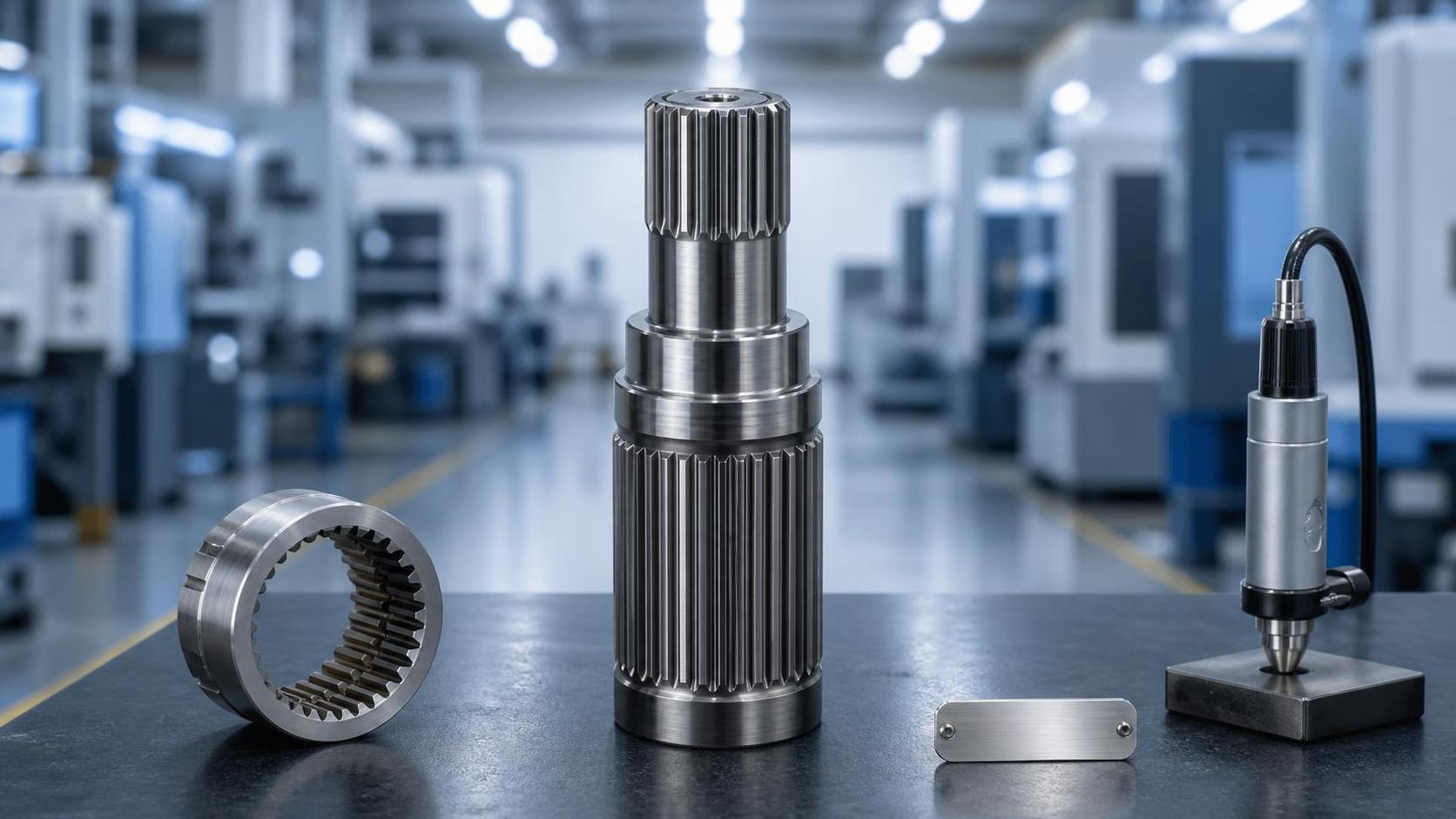
A heavy-duty drivetrain failure rarely begins with a dramatic break. More often, it starts with poor tooth contact, inconsistent hardness, a distorted shaft after heat treatment, or material records that cannot be traced when a problem appears. That is why qualifying a Forged Spline Shafts Supplier should not begin and end with unit price. The real question is whether the supplier can repeatedly deliver shafts that fit, transmit torque, survive fatigue loading, and arrive on schedule without creating hidden downstream cost.
This matters in truck transmissions, wind turbine gearboxes, marine propulsion systems, construction machinery, reducers, and industrial power transmission. In these applications, a spline shaft is not simply a machined bar with teeth. It is a torque-transmitting part whose forging quality, grain flow, machining accuracy, heat-treatment control, and inspection discipline must work together.
A practical qualification process should therefore test both the part and the manufacturing system behind it.
What a Forged Spline Shafts Supplier Must Prove
The first useful distinction is between a company that can make a sample and one that can control serial production. A sample may look correct and pass a basic dimensional check. Serial production exposes the harder issues: material variation between heats, die wear, tool-life management, heat-treatment consistency, machining datum stability, and the ability to respond when a nonconformance is found.
A qualified supplier should be able to explain its process route in a clear sequence: incoming material verification, billet preparation, heating, forging, trimming or sizing, heat treatment where applicable, rough machining, spline machining, final inspection, preservation, and packing. The exact route changes by shaft design, material grade, tolerance, and required condition, but the supplier should not be vague about where critical characteristics are created and checked.
Ask a simple but revealing question: “Which process step controls the spline datum, and how do you prevent that datum from moving after heat treatment?” A capable engineering team should answer directly. If the response is limited to “we inspect every part,” that is not enough. Inspection detects some problems; process control prevents them.
For a forged shaft, the forging stage also deserves attention. Proper forging can orient material flow more favorably than machining a shaft entirely from bar stock, particularly where the design has shoulders, flanges, or changing cross-sections. That benefit is not automatic. It depends on die design, deformation control, temperature management, trimming quality, and the amount of machining allowance left for final finishing.
Do not assume that “forged” automatically means stronger, lower cost, or better for every order. For a low-volume prototype, a simple shaft geometry, or frequent design changes, machining from bar stock may be commercially sensible. Forging usually becomes more attractive when annual demand, material savings, performance needs, and design stability justify tooling and process development.
Start With the Drawing, Not the Quotation
Many avoidable sourcing problems come from asking several factories to quote a drawing that leaves key functional requirements open to interpretation. Before comparing offers, confirm what the drivetrain actually needs.
The drawing package should identify the spline standard or tooth geometry, number of teeth, pressure angle or module where relevant, fit class, major and minor diameter tolerances, effective spline requirements, runout limits, surface finish, material specification, hardness range, case depth or nitriding requirement if applicable, and magnetic particle or ultrasonic testing requirements where needed. It should also state which dimensions are functional after heat treatment.
There is a major cost difference between “machine to nominal dimensions” and “hold a controlled fit after carburizing and finish grinding.” A low quote may reflect a different interpretation rather than a more efficient process.
When mating parts are involved, provide enough information about the hub, gear, coupling, or transmission component to evaluate engagement. A shaft can meet its own individual dimensions yet still show poor contact if the mating spline standard, tolerance class, or inspection method is not aligned. Ask for a functional fit check or agreed gauge strategy when the spline is critical.
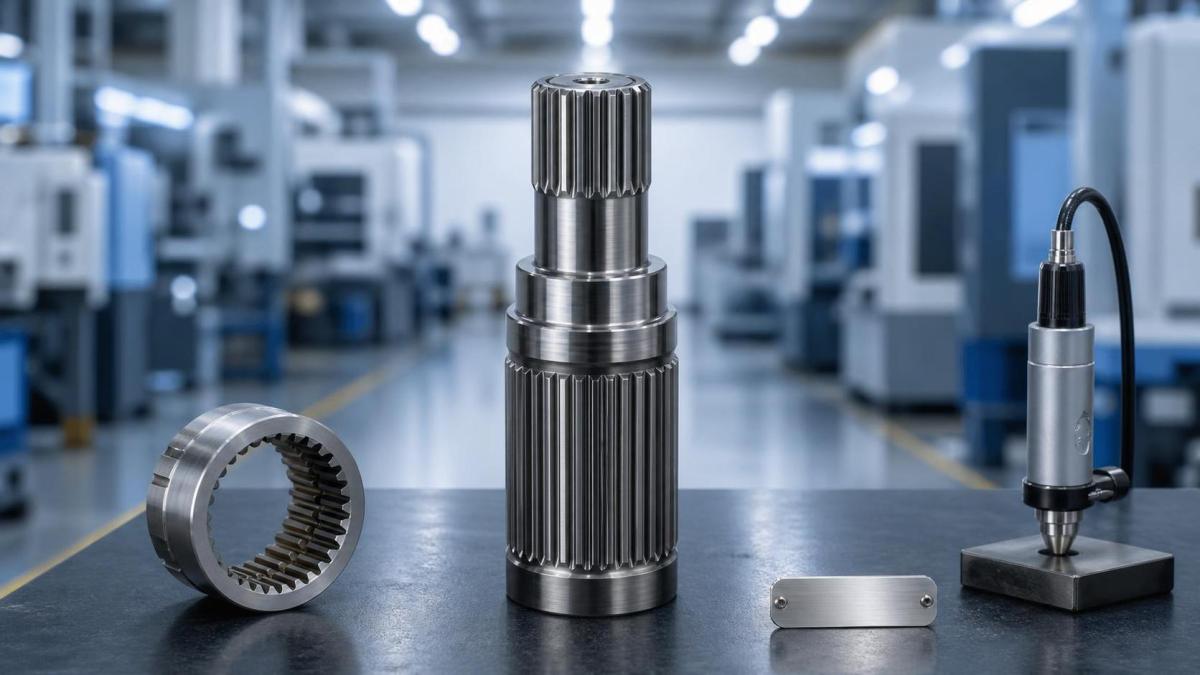
Material Traceability Is a Commercial Requirement
In heavy-duty service, material traceability is not paperwork for its own sake. It is what allows a production lot to be contained, investigated, and replaced efficiently if an issue appears after delivery.
Request material certificates for the steel grade specified, and confirm how material heats are linked to forged batches and finished parts. The supplier should be able to show its identification method: heat number, lot number, traveler, barcode, stamping, or another controlled system. The marking method must not create a stress riser or conflict with the drawing, particularly on fatigue-sensitive shaft areas.
For alloy steels used in transmission shafts, chemical composition alone does not settle suitability. The material condition, cleanliness expectations, hardenability, forging reduction, and heat-treatment route can all affect final behavior. A supplier does not need to disclose every internal parameter, but it should be able to provide the agreed certificates and demonstrate that the actual route matches the engineering requirement.
Be careful with phrases such as “equivalent material.” Equivalence may be acceptable only when it is formally approved against the required standard and end-use condition. A nominally similar grade can behave differently during forging, carburizing, induction hardening, or nitriding. In a high-torque shaft, that difference may surface only after service cycles have accumulated.
Look Closely at Spline Accuracy and Heat Treatment
For many drivetrain shafts, the most expensive failure is not a broken shaft but accelerated wear in the spline interface. Fretting, backlash growth, uneven tooth contact, difficult assembly, and localized tooth distress often trace back to a combination of geometry and hardness issues.
Ask how spline geometry is produced. Depending on the design and tolerance, methods may include hobbing, milling, shaping, broaching, rolling, grinding, or a combination of rough and finish operations. There is no universal “best” method. The right method depends on internal or external spline form, size, material condition, required accuracy, production volume, and whether finishing occurs before or after heat treatment.
The important point is that the supplier can measure what it makes. Calipers alone do not establish spline quality. A serious control plan may use go/no-go gauges, spline gauges, coordinate measurement, profile measurement, runout equipment, hardness testing, and metallographic checks when specified. The inspection method should match the functional risk. Tight transmission fits deserve more than a basic outside-diameter report.
Heat treatment must be reviewed as part of the dimensional-control plan, not as an isolated outsourced operation. Carburizing, quenching, induction hardening, and nitriding can change distortion behavior. If finish grinding is necessary after heat treatment, confirm whether the supplier has that capability in-house or manages it through a qualified partner. Also clarify who owns final acceptance when outside processing is used.
A useful request is a first-article package containing dimensional results, hardness records, material certification, heat-treatment records where applicable, and images or reports for required nondestructive testing. This is more informative than a generic statement that parts have passed quality inspection.
Assess Capacity Through Evidence, Not Workshop Size Alone
A factory visit or remote audit should focus on workflow rather than appearance. A clean workshop is helpful, but it does not prove capacity. Look for whether forging and machining are organized around controlled routing, whether material and work-in-process are identified, whether measuring equipment has calibration status, and whether nonconforming parts are physically segregated.
Liaocheng Jiucheng Auto Parts Co., Ltd., established in 2015, operates both a precision forging workshop and a mechanical processing workshop. This type of integrated setup can be valuable for spline-shaft programs because forging and machining decisions can be coordinated instead of handed off between unrelated suppliers. The company states that its work covers automotive gear components, wind-power gearbox parts, mechanical and marine gear parts, including transmission shafts and spline shafts.
Its stated technical staffing includes mechanical engineering, quality engineering, and dedicated inspection personnel. That is relevant, but it should still be verified against the actual program: ask who reviews the drawing, who approves the control plan, who handles corrective actions, and who can provide measurement records for the lot being shipped. Company capability is only meaningful when it is translated into the controls required by your part.
Capacity should also be evaluated against the production pattern. A supplier with enough annual capacity may still struggle with short release windows, mixed-model orders, or urgent service parts. Ask for realistic lead time at three points: sample development, normal repeat orders, and peak-load periods. Then ask which steps form the bottleneck. A credible answer may identify forging dies, heat-treatment slots, spline machining, or final inspection as the constraint. That honesty is more useful than an unconditional delivery promise.
Compare Total Landed Cost Instead of Piece Price
The lowest quoted part price can become the highest program cost when scrap, sorting, late deliveries, warranty exposure, or assembly interruptions are included. This is especially true for a shaft that requires tight spline engagement or expensive downstream machining.
Compare quotations on the same basis. Confirm whether tooling, forging dies, gauges, sample charges, heat treatment, surface protection, packing, inspection reports, and freight terms are included. Clarify the raw-material price mechanism if the order has a long duration. If the supplier proposes a forging route with reduced machining allowance, request an explanation of how it affects tooling cost, yield, machining time, and final tolerance capability.
Jiucheng reports that its precision-forging approach is intended to reduce turning allowance, save material, and improve production efficiency. Those claimed savings should be treated as a starting point for a program-specific cost review, not as a universal percentage that can be applied to every shaft. The geometry, steel grade, order quantity, tolerance, and finishing requirements determine whether the projected savings are achievable.
For related rotating machinery programs, it can also be useful to assess a supplier’s broader forged-part experience. For example, a review of Slewing bearing rings may help evaluate how a manufacturer approaches ring-shaped forgings, material control, and machining coordination. It should not substitute for spline-shaft-specific qualification, because the loading conditions and inspection priorities are different.
Use a Controlled Trial Before Full Release
A controlled trial order is usually the best bridge between a promising quotation and a production nomination. It should not be treated as a casual sample purchase. Define what the trial must prove: first-article approval, functional assembly, hardness and metallography results where required, spline gauge acceptance, runout capability, packaging performance, and delivery timing.
If possible, test parts in the actual mating assembly. Bench measurement matters, but assembly behavior can reveal burrs, incorrect tooth contact, interference at shoulders, or problems created by coating and preservation. For high-risk applications, agree in advance what happens if the first lot fails: containment time, root-cause format, replacement responsibility, and whether the supplier must inspect material already in transit.
The supplier’s response to a controlled problem is often more revealing than its response to a request for a quotation. Look for structured containment, traceable evidence, and a corrective action that addresses the process cause. Re-sorting the same lot may solve an immediate shipment issue, but it does not necessarily prevent recurrence.
Questions That Expose Weak Qualification
Before approval, ask for direct answers to these points:
- Which operations are performed in-house, and which are subcontracted?
- How is each finished shaft linked to its material heat and forging lot?
- Which spline characteristics are checked on every piece, by sampling, or only during first article inspection?
- What process controls distortion after heat treatment?
- What is the documented reaction plan for a failed hardness, runout, or spline-gauge result?
- What tooling, gauges, and engineering approvals are required before serial production begins?
Vague answers are a risk signal. So is a supplier that agrees immediately to every tolerance and lead-time request without asking about the mating part, material condition, annual volume, or inspection method. Heavy-duty shaft work requires questions because the process has real constraints.
Final Decision: Choose Evidence Over Promises
The right Forged Spline Shafts Supplier is not necessarily the largest factory, the lowest bidder, or the one with the broadest product list. It is the supplier that can demonstrate a repeatable route from certified material to forged blank, finished spline, verified heat treatment, controlled inspection, and reliable delivery.
Start with a complete technical package, compare like-for-like quotations, audit the process that creates the critical features, and release production only after a defined trial confirms both part performance and documentation quality. That approach takes more effort at the beginning, but it protects cost, schedule, and drivetrain reliability when the order volume grows.
Please give us a message