



Related Posts
Online Message
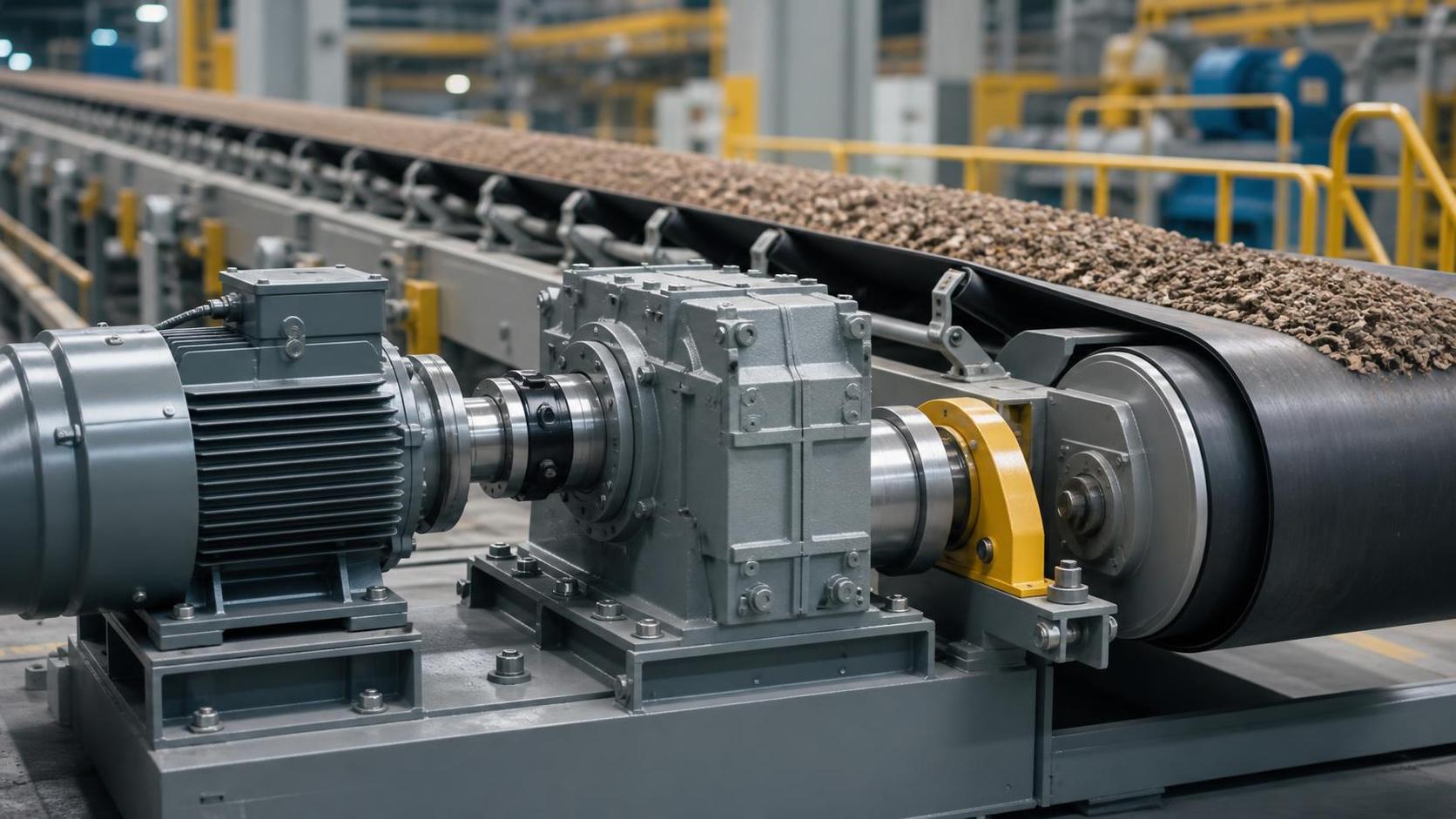
A conveyor can run smoothly during commissioning and still become a source of repeated downtime a few weeks later. The familiar pattern is a drive that runs unusually warm, a motor that trips when the belt is loaded, or a gearbox that begins to make more noise after long shifts. In continuous-duty service, these problems are rarely solved by simply choosing a larger motor or replacing a reducer with the same nominal ratio.
The difficulty is that a conveyor gearbox is selected for a working system, not for a catalog speed alone. Material build-up, changing feed rates, inclined sections, frequent restarts after a blockage, cold starts, and maintenance access all alter the real demand on the drive. A sound selection process starts by defining those conditions before comparing gearbox models.
Start with the conveyor’s actual duty, not its average production rate
Average throughput can hide the worst moments in a conveyor cycle. A belt may carry a modest load for much of the day, then receive a dense surge of material at the loading point. A screw or chain conveyor may appear lightly loaded in normal operation but require substantial breakaway torque after material settles during a shutdown. These short events often determine whether the gearbox has enough mechanical margin.
Before selecting a gearbox, collect operating information from the conveyor layout and the process team. Useful inputs include belt or chain speed, drive pulley diameter, conveyor length, elevation change, material bulk density, likely loading pattern, friction assumptions, start-stop frequency, and the required running schedule. It is also important to establish whether the conveyor runs empty before loading, starts under load, or may be restarted with material already on the belt.
For continuous-duty applications, “continuous” should be described more precisely. A unit operating for long shifts at stable load is different from one that runs continuously while seeing intermittent impact loading. Likewise, an outdoor conveyor exposed to rain and temperature changes does not impose the same demands as an enclosed conveyor in a clean, climate-controlled area.
Translate conveyor resistance into torque at the drive
The gearbox must deliver enough output torque at the required conveyor speed. This requires more than matching the motor’s rated power to a previous installation. Begin with the conveyor resistance calculation used for the equipment design. It normally accounts for the moving belt or chain, conveyed material, idlers or rollers, lift on inclined sections, skirt friction, plow resistance, and any other steady running losses.
Once the required tractive force is known, drive pulley torque can be estimated from:
Output torque = tractive force × effective drive radius
That value represents normal running torque. Selection should then consider the higher torque required during acceleration, loaded starting, abnormal material accumulation, and process disturbances that are expected to occur in ordinary use. The required margin is not a license to oversize every component. Excessive gearbox capacity can raise cost, complicate mounting, and encourage an unsuitable motor selection. The aim is to match the unit to the real torque spectrum.
Acceleration deserves particular attention on long conveyors and systems with large rotating masses. A drive may have enough torque to hold normal speed but insufficient torque to bring the loaded conveyor to speed within the desired time. Conversely, aggressive acceleration can produce shock loads in couplings, chains, belts, shafts, and gearbox gears. Where start-up behavior matters, evaluate the complete rotating system rather than treating the reducer as an isolated component.
Do not confuse rated output torque with usable application torque
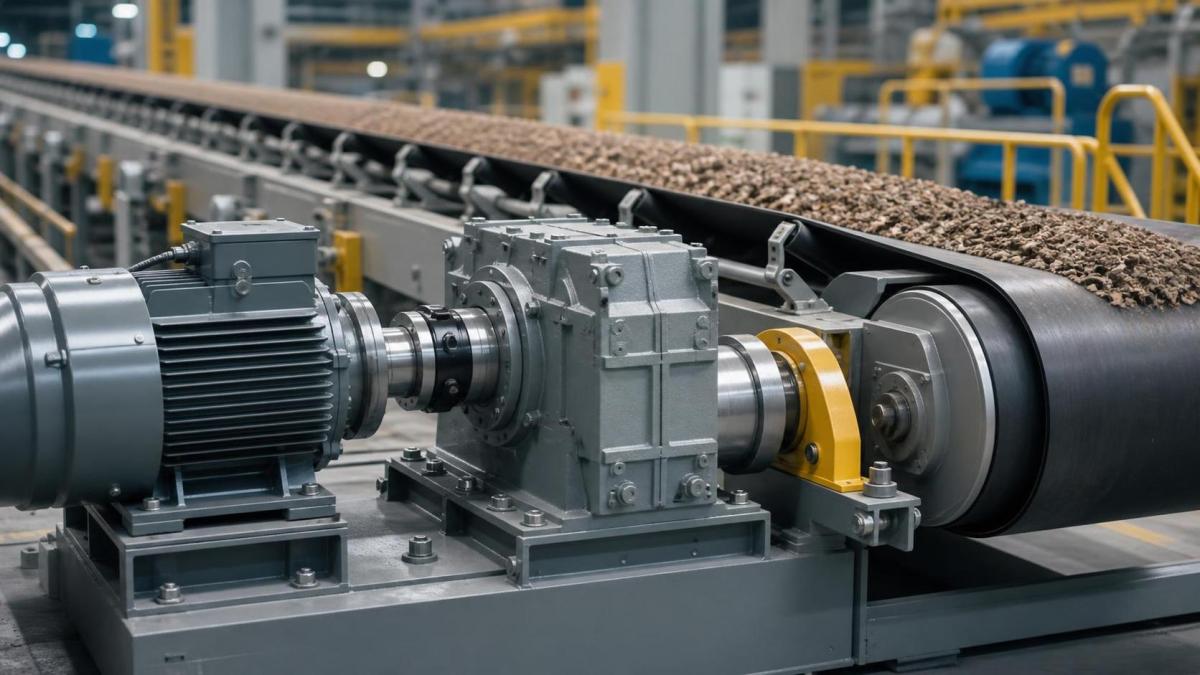
Catalog torque ratings are essential, but they need to be read in context. Gearbox manufacturers may state thermal limits, mechanical output ratings, allowable overhung loads, service factors, and permissible input speeds separately. A reducer with an apparently adequate nominal torque rating may still be unsuitable if its thermal rating is lower under the planned ambient conditions or if the pulley arrangement imposes excessive radial load on the output shaft.
The service factor is intended to account for operating severity, but it should not replace an honest duty assessment. A conveyor with smooth, steady material flow and few starts generally requires a different factor than a loaded conveyor handling abrasive bulk solids, frequent reversals, or shock-prone material. If load data are uncertain, identify the uncertainty rather than applying a generic multiplier without explanation. This makes later design review much easier.
It is also worth separating occasional abnormal events from routine operating events. A jam that should trigger protective control and shutdown is not the same as a regular heavy start. If the drive is expected to overcome a jam mechanically, the torque demand may become high enough to threaten shafts, belts, chains, or the conveyor frame. In many cases, appropriate overload protection and control logic are safer than selecting a gearbox intended to force through every obstruction.
Choose the reduction arrangement around speed, layout, and load path
The required gearbox ratio follows from motor speed and conveyor drive speed. If a motor operates near its base speed while the pulley rotates slowly, a substantial reduction ratio is needed. The ratio should be selected with the available motor speed range, variable-frequency drive settings, and desired belt-speed adjustment in mind. A ratio that only works at one nominal motor speed can become restrictive when the process later needs slower inspection speed or a small capacity adjustment.
Helical gearboxes are commonly considered where efficient, continuous power transmission is needed. Bevel-helical arrangements can suit installations that require a change in shaft direction. Shaft-mounted units may simplify some conveyor layouts but require careful attention to torque arm design, hollow-shaft fit, and support alignment. Parallel-shaft designs can be useful when installation space is constrained in one direction. Planetary arrangements may be considered where high torque density is needed, though the practical decision still depends on mounting, service access, and the rest of the drive train.
The best arrangement is not always the most compact gearbox. On a conveyor that must be maintained without long production interruptions, clearance for oil service, inspection covers, backstop access, coupling removal, and lifting equipment may matter more than a small reduction in footprint. A unit that cannot be safely serviced in its installed position creates a long-term operating problem even if its initial specification looks efficient.
Examine shaft loading before finalizing the mounting method
A common selection error occurs when the gearbox torque rating is checked, but the output shaft load is not. A belt drive, chain drive, sprocket, or pulley mounted on the gearbox output shaft can create radial and axial forces that affect bearing life. These forces depend on transmitted torque, pitch diameter, belt or chain tension, overhung distance from the shaft shoulder, and alignment.
Keeping the driven element close to the gearbox housing generally reduces overhung load. However, the mechanical layout must still allow safe guarding and assembly. If the pulley or sprocket load is high, a separately supported shaft with a flexible coupling may be preferable. This adds components, but it can protect the gearbox bearings and make replacement less disruptive.
Alignment is not a finishing detail. Misalignment can add load to bearings, couplings, and gears, while a flexible base can allow alignment to change after the conveyor is loaded. Verify the base stiffness, mounting surface flatness, anchor-bolt arrangement, and thermal movement of the conveyor structure. For shaft-mounted gearboxes, assess the torque arm through the full range of suspension travel rather than only at rest.
Some material-handling projects combine conveyor drives with rotating positioning or handling equipment. Where adjacent assemblies require support for axial, radial, and moment loads, components such as Slewing bearing rings may be evaluated as part of that separate motion system. They do not replace conveyor gearbox bearings, but considering load paths across the full machine helps prevent incompatible support arrangements.
Thermal capacity can decide a continuous-duty gearbox selection
A gearbox loses a portion of transmitted power as heat. During short or intermittent operation, the housing may cool between cycles. During long running periods, heat accumulates until the unit reaches an equilibrium temperature. That is why a gearbox suitable for intermittent material transfer may not be suitable for a conveyor operating through extended shifts at similar torque.
Check the manufacturer’s thermal rating for the actual ambient temperature, mounting orientation, input speed, and expected operating time. Enclosures, direct sunlight, poor air circulation, dust accumulation on the housing, and nearby furnaces can all reduce cooling. Cold conditions create a different concern: lubricant viscosity can increase at start-up, raising losses and delaying proper oil circulation.
Lubricant selection should match the gearbox design and site temperature range. It is not advisable to change oil grade simply because a unit runs warm; the root cause may be overload, insufficient cooling, incorrect mounting orientation, blocked ventilation, or a mechanical problem elsewhere in the conveyor. If an external cooling method is being considered, confirm that the gearbox manufacturer permits it and that maintenance staff can support it reliably.
Account for motor control, stopping requirements, and backdriving
A gearbox choice should be reviewed alongside the motor, variable-frequency drive, coupling, brake, and control philosophy. A VFD can help reduce mechanical shock by providing controlled acceleration and deceleration, but low-speed operation may affect motor cooling and gearbox lubrication behavior. The motor should be suitable for the intended speed range and cooling arrangement.
Inclined conveyors need particular attention. Depending on the load direction and conveyor geometry, the system may backdrive when power is removed. A backstop can prevent reverse rotation in one direction, while a brake may be needed where controlled stopping or holding is required. These devices must be rated for the actual torque and installed in the correct location in the drive train. A backstop should not be selected as a substitute for a braking analysis.
Frequent reversing also changes the decision. Some gear arrangements and lubrication systems are more comfortable with one dominant direction of rotation, while repeated reversals can increase stress on couplings and driven components. State the expected direction changes clearly in the gearbox inquiry rather than assuming they are implied by the conveyor drawing.
Use a practical comparison sheet before releasing the purchase specification
When several gearbox options appear acceptable, compare them against the same operating assumptions. This avoids choosing the lowest apparent cost while overlooking a condition that will later require rework.
The purchase specification should include the calculated output speed and torque, operating hours, load profile, ambient conditions, mounting position, input motor details, shaft or flange dimensions, required protection level, lubrication expectations, and any special features such as a backstop, brake interface, or cooling provision. Sending only motor power and ratio leaves too much room for interpretation.
Watch for warning signs after commissioning
Even a carefully selected gearbox should be observed during initial operation. Record normal housing temperature, sound level, vibration behavior, motor current trend, and oil condition once the conveyor is stable. These observations create a useful baseline for later maintenance. A gradual rise in temperature or noise is easier to investigate when there is a known normal condition for comparison.
Early warning signs include repeated overload trips, oil leakage at a seal, unusual vibration near the output shaft, darkened lubricant, difficulty holding alignment, or a change in conveyor speed under similar loading. Do not assume the gearbox is automatically at fault. The cause may be a dragging belt, seized idler, material blockage, incorrect belt tension, structural movement, or an unsuitable control setting. Troubleshooting should follow the power path from the conveyor resistance back through the driven shaft, coupling, gearbox, and motor.
A reliable continuous-duty drive usually comes from disciplined input data rather than a single “heavy-duty” label. Define the real load cycle, calculate torque at the conveyor, verify thermal and shaft-load limits, and make maintenance access part of the decision. That approach gives the selected gearbox a realistic operating environment instead of asking it to compensate for unknowns elsewhere in the system.
Please give us a message