



Related Posts
Online Message
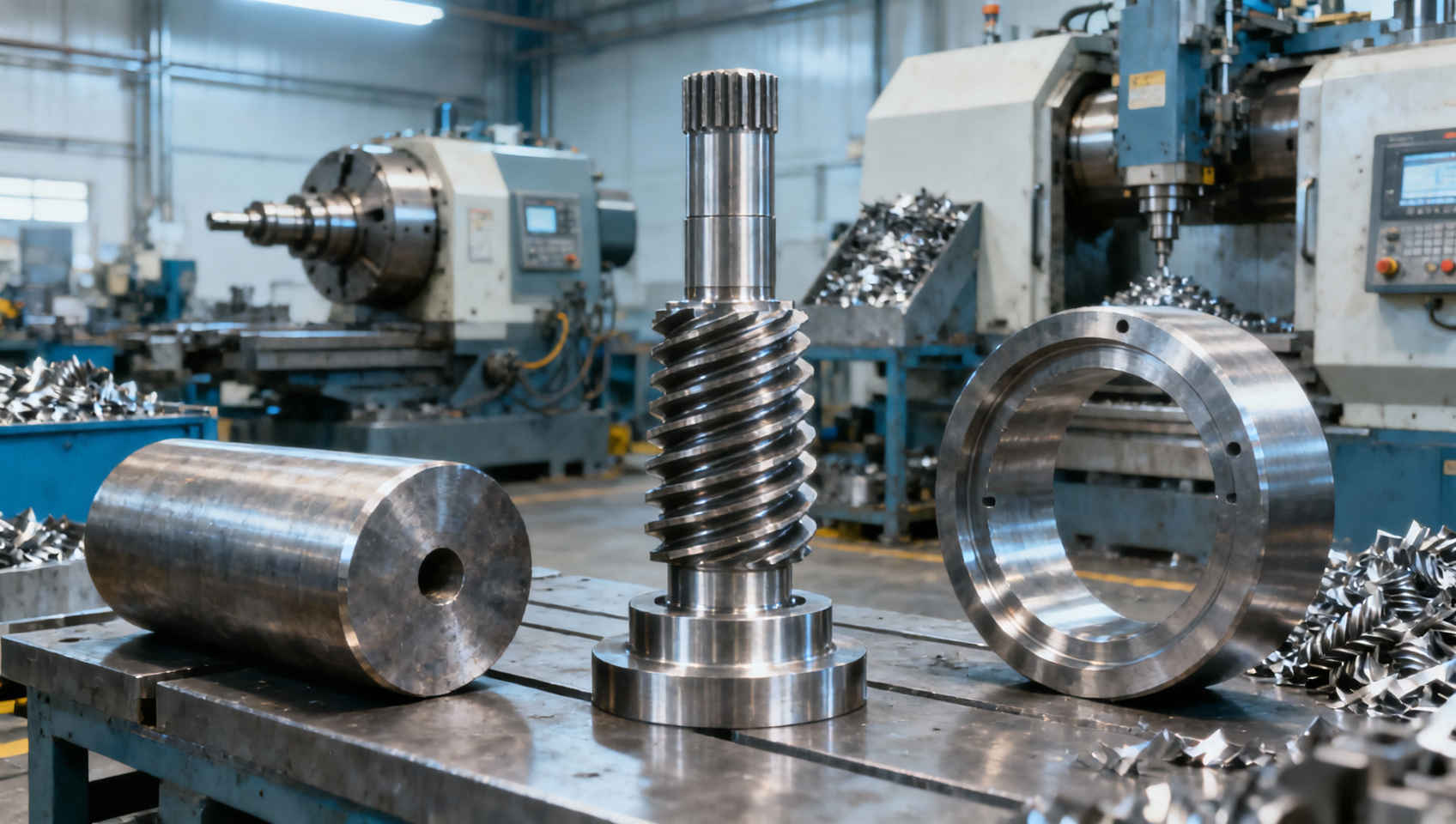
A machining budget can look acceptable at the quotation stage and still miss its target once chips, cycle time, tooling wear, and rework are counted. This often happens when a gear blank, shaft shoulder, hub, or ring-like component is sourced from bar stock because the price per kilogram appears lower than a forged alternative. The purchase order compares raw-material rates, while the factory absorbs the cost of removing material that never becomes part of the finished component.
For parts with a largely round geometry, round forgings usually offer the lower total part cost when production volume, geometry, and quality requirements justify a near-net starting shape. Bar stock remains a sensible choice for prototypes, low-volume orders, simple straight sections, and designs with little diameter change. The financially sound comparison is not forging price versus bar price; it is the fully burdened cost of a conforming finished part.
Why the material price can point to the wrong decision
Bar stock is easy to quote. A buyer can multiply the required cut length by the stock diameter, apply the material rate, and obtain a clear line-item cost. That clarity can be misleading when the part has flanges, hubs, stepped diameters, gear-preform features, or regions that require a large outside diameter but retain much less mass after turning.
A round forging starts closer to the required envelope. Its purchase price may include deformation, trimming, heating, die use, inspection, and handling, so it can appear expensive on a per-piece or per-kilogram basis. Yet it may substantially reduce the starting weight and the machining allowance. Less excess metal enters the plant, fewer chips leave it, and less spindle time is consumed converting paid material into scrap.
The difference becomes especially relevant in components used in automotive drivetrains, wind-power gearboxes, marine transmission systems, and industrial reducers. These parts often combine diameter transitions with high requirements for concentricity, tooth preparation, strength, and repeatability. A comparison based solely on the incoming blank price does not capture the operational consequences of the starting form.
Material yield is the first calculation, not the only one
Material yield describes how much purchased metal remains in the finished part. It should be calculated from actual weights rather than assumed from a drawing alone:
Material yield = finished-part weight ÷ purchased starting-material weight × 100%
For bar stock, the starting weight is based on the selected bar diameter and saw-cut length, including reasonable end allowance. For a forging, it includes the forged blank weight after trimming and any agreed machining allowance. Both calculations should use the same final part definition and the same material grade.
A part with one critical large diameter may require a bar diameter that is much larger than the average diameter of the finished profile. Turning then removes material along most of the length. A properly designed forging can distribute material where it is needed: more at a flange or gear rim, less at a reduced shaft section. This is the basic yield advantage of a shaped blank.
Yield does not mean that every forging is automatically economical. A forging with excessive flash, overly conservative allowance, poor die fill, or a geometry unsuitable for near-net shaping can lose much of its advantage. Similarly, a bar-fed part with a uniform diameter and minimal turning may have excellent yield. The calculation must be part-specific.
Scrap value should be treated carefully. Metal chips have residual value, but that value is rarely equivalent to the cost of the certified, cut, and transported bar from which they came. Chips also require collection, segregation, storage, and removal. In a total-cost model, scrap credit should reduce material loss, not disguise it.
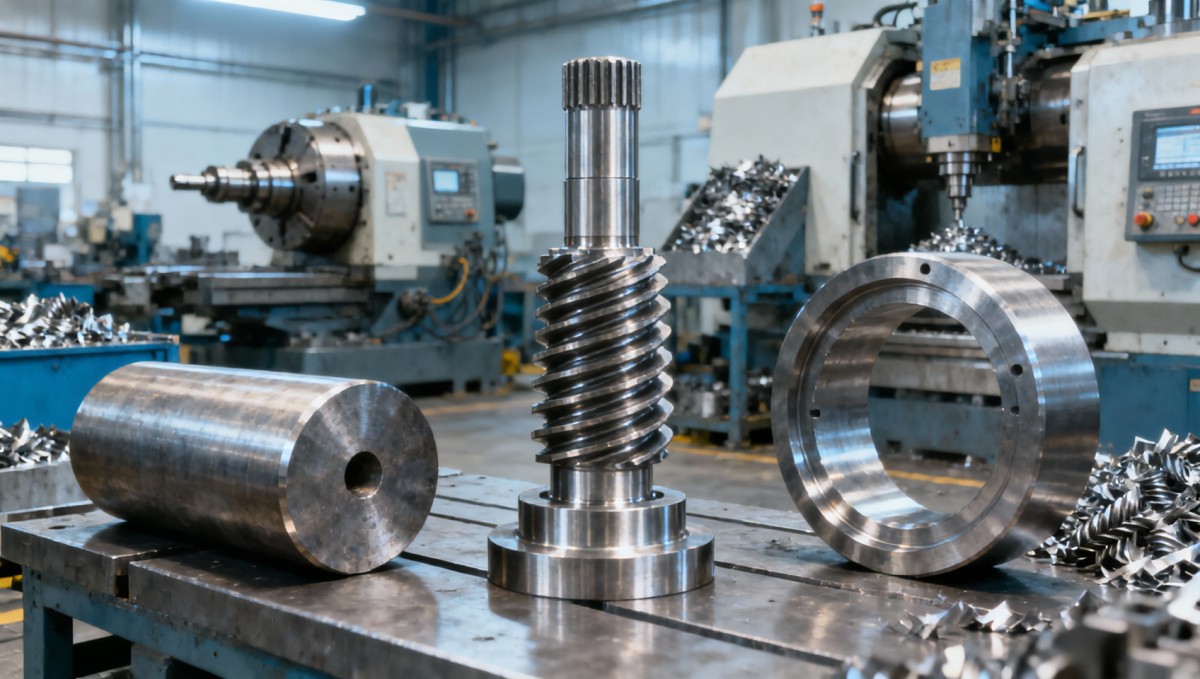
Where total part cost actually accumulates
Once material yield is established, the next question is how much work each blank creates downstream. Finance reviews are more reliable when costs are grouped by process rather than placed under a single “machining” estimate.
Rough-machining time
Removing large volumes of steel takes more than machine minutes. It requires roughing tools, coolant, chip evacuation capacity, operator intervention, and sometimes additional setups to maintain control as the shape changes. Bar stock can force the machine to remove material over the full circumference of a long section even though only a localized flange or rim required that original diameter.
Near-net round forgings reduce this burden when their contour has adequate but not excessive allowance. The resulting time reduction is often most valuable on constrained equipment, where avoiding a roughing operation can free capacity for higher-value work. However, a forging should not be accepted simply because it is nominally closer to shape. Runout, scale condition, datum surfaces, and stock distribution must permit stable fixturing and consistent machining.
Tooling, energy, and consumables
Tool cost is tied to removal volume, interrupted cuts, material condition, and machine strategy. Large roughing allowances generally increase insert consumption and raise the chance that a tool-change assumption becomes inaccurate. Long cycles also consume more electrical energy and coolant, while heavier chip loads increase cleaning and maintenance effort.
These expenses may be small in isolation, but they recur on every part. A cost model should use internally validated machining rates that include labor, depreciation, utilities, maintenance, and reasonable tooling consumption. Comparing a forging quote against only the steel content of bar stock omits these recurring costs.
Quality cost and process stability
Cost is also affected by how consistently blanks arrive at machining. Variable bar straightness, cut-face condition, diameter tolerance, or forging stock distribution can create setup variation. The financial impact appears as extra inspections, slower first-off approval, more adjustment time, and occasional nonconforming parts.
Forging introduces its own control points: die condition, grain flow, trimming, heat treatment requirements, decarburization allowance, and surface defects must be managed. The relevant question is not whether one route has “better quality” in the abstract. It is whether the selected blank specification gives the machining process a stable, inspectable condition for the features that matter.
A practical cost model for approval decisions
The most useful format is a per-finished-part model with separate, reviewable assumptions. Start with a comparable annual or batch quantity, then calculate both routes through the same final machining, heat treatment, inspection, packaging, and logistics scope. Differences should be visible rather than buried in an average rate.
- Raw material: delivered cost of the bar cut or forged blank, based on its actual purchased weight.
- Yield loss: value of material removed, less a realistic scrap recovery credit.
- Blank preparation: sawing, facing, deburring, cleaning, handling, or forging trimming where applicable.
- Machining: setup time, roughing, finishing, tool changes, machine burden, and expected utilization.
- Tooling and setup: inserts, fixtures, forging dies, programming, trials, and maintenance allowances.
- Quality and risk: inspection effort, expected rework, yield loss, and the cost of process interruption.
- Freight and inventory: shipping weight, lot size, lead time, minimum order exposure, and cash tied up in stock.
One-time forging costs should be separated from recurring unit cost. This prevents two opposite errors: rejecting a cost-effective forged route because all tooling is assigned to the first order, or approving it because tooling is excluded entirely. A break-even calculation is straightforward:
Break-even quantity = one-time forging and qualification cost ÷ recurring saving per part
The recurring saving should include material, machining, tooling, energy, and handling differences. It should not be based on an optimistic cycle-time estimate that has not been validated against the actual geometry. Where demand is uncertain, approval can be staged: use bar stock for early validation, then move to forging after design stability and expected volume are confirmed.
Geometry determines whether a forging can deliver its promise
Round forgings are particularly compelling when the finished component contains concentric but unequal diameters, such as a gear blank with a hub, a flange-ended shaft, a stepped transmission component, or a wheel-like profile. In these cases, the forging can place metal near the final outside surfaces and reduce unnecessary bar diameter across the rest of the part.
A component such as Wheel-type forgings may be worth evaluating when the design needs a substantial rim or disc section around a central bore. The decision should still be based on the finished drawing, machining allowance, material specification, and production quantity rather than on product category alone.
Bar stock is often the better route when the part is fundamentally cylindrical, the largest and smallest diameters are close, or the design is likely to change. It also offers flexibility when several small orders use different lengths from a common inventory diameter. Avoiding a dedicated die and shortening procurement lead time can outweigh the material loss in these situations.
Deep internal cavities, difficult undercuts, tight local form requirements, and extensive post-forging machining can also limit the value of forging. A forged preform cannot eliminate machining that is required for tolerance, surface finish, or inaccessible geometry. The blank should remove only unnecessary roughing, not create a more complicated finishing process.
Questions to resolve before comparing supplier quotations
A useful quotation request defines the final part and the commercial assumptions clearly. Otherwise, one supplier may quote a heavy, safe forging while another assumes a more aggressive allowance, making price comparisons unreliable.
- Confirm finished weight, material grade, and required mechanical properties.
- Identify all finished diameters, lengths, bores, faces, and tooth-preparation features that govern stock allowance.
- Define allowable forging condition: dimensional tolerance, scale expectations, trim location, datum strategy, and surface acceptance criteria.
- Ask for blank weight and a proposed machining allowance map, not just a unit price.
- Obtain cycle-time assumptions for roughing and finishing under both routes, including setup count and expected tool use.
- Separate nonrecurring die, fixture, and qualification charges from recurring production pricing.
- Compare lead time, lot size, inventory exposure, and change-management implications.
Engineering input is essential at this point because the lowest-cost blank is not useful if it leaves inadequate metal for cleanup or complicates datum control. Finance can improve the decision by requiring a shared assumption sheet: blank mass, scrap recovery value, machine rate, expected cycle time, tooling life, and allocation method for one-time costs. Differences between bids then become traceable instead of subjective.
Do not confuse lower machining allowance with lower risk
There is a temptation to specify the smallest possible allowance to maximize yield. That can increase risk when scale, distortion, forging variation, or heat-treatment movement leaves insufficient stock to clean a surface. The resulting rework or scrap can erase a large part of the projected saving.
The appropriate target is controlled allowance. Critical faces, bores, and gear-related datums may require more conservative stock than noncritical outside diameters. A supplier’s capability to hold blank dimensions consistently matters as much as the nominal preform shape. Approval should be based on tolerance capability and inspection planning, not on a single theoretical weight.
Making the final choice
Select bar stock when flexibility, very low volume, simple geometry, or uncertain design changes dominate the cost equation. Select round forgings when repeat demand is sufficient, the part has meaningful diameter variation, rough-machining removal is high, and the forging can be specified with stable stock distribution. The strongest business case appears when lower purchased weight and reduced machining time reinforce each other rather than when either benefit is considered alone.
For a defensible approval, request both routes against the same finished-part requirements and compare total recurring cost, one-time investment, break-even quantity, and execution risk. That approach keeps the decision anchored to cash, capacity, and reliable output—not merely to the first material price shown on a quotation.
Please give us a message