



Related Posts
Online Message
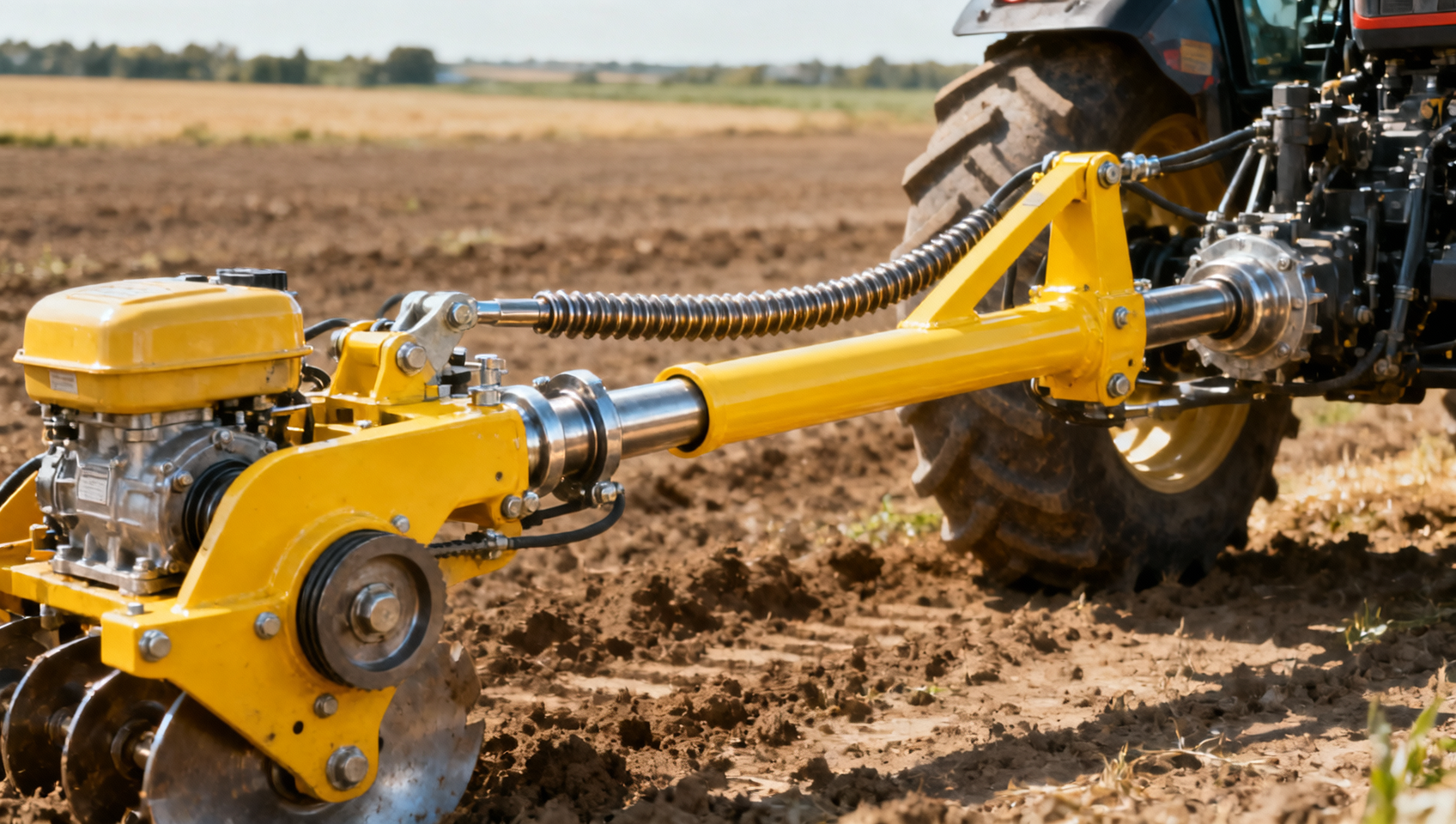
Selecting a PTO Drive Shaft for Rotary Cutters, Balers, and Tillers
Choosing the right PTO drive shaft is one of those decisions that may seem straightforward until a machine begins vibrating, a guard wears through, or a busy workday stops because the shaft cannot handle the load. For operators using rotary cutters, round balers, square balers, or rotary tillers, the PTO shaft is not merely a connecting component. It transfers engine power from the tractor to the implement while working through movement, changing angles, shock loads, dust, crop residue, and uneven terrain.
A correct match improves power transfer and operator safety. A poor match can cause premature wear on universal joints, damaged implement gearboxes, twisted tubing, driveline separation, or unsafe guarding conditions. The best PTO shaft is therefore not simply the strongest-looking option; it is the one sized for the tractor, implement, operating speed, hitch geometry, and actual work environment.
This guide helps operators evaluate a PTO drive shaft before purchase or replacement, with practical selection points for rotary cutters, balers, and tillers.
Begin with the machine, not the old shaft
When an existing shaft fails, it is tempting to copy its measurements and order an identical replacement. That approach works only if the original shaft was properly specified and the equipment configuration has not changed. A previous owner may have fitted an incorrect shaft, altered the hitch setup, changed tractor size, or removed a protective component.
Instead, begin with the operating requirements of both machines:
- Tractor PTO horsepower and PTO output speed
- Implement manufacturer’s recommended PTO speed
- Input shaft diameter and spline count on the tractor and implement
- Maximum and minimum distance between the PTO connection points
- Expected operating angles during lifting, turning, and field work
- Need for overload protection, such as a shear bolt, friction clutch, or overrunning clutch
These details form the real selection profile. A PTO shaft that fits physically but has insufficient torque capacity can fail under load. Conversely, an unnecessarily heavy driveline can add cost, reduce maneuverability, and place avoidable stress on smaller equipment.
PTO speed: 540 RPM and 1,000 RPM are not interchangeable
The most common agricultural PTO speeds are 540 RPM and 1,000 RPM. Although the difference sounds simple, the shaft, yokes, guards, and overload device must all be suitable for the intended speed and transmitted power.
A 540 RPM PTO is common on compact and mid-sized tractors and on many rotary cutters, tillers, and smaller balers. A 1,000 RPM PTO is often used with larger tractors and high-capacity implements. Because power is related to torque and rotational speed, a shaft operating at 540 RPM usually carries more torque than one transmitting the same horsepower at 1,000 RPM. This is why shaft series and protective device ratings matter.
Always confirm the speed marked on the implement gearbox or shown in the operator manual. Running a 540 RPM implement at 1,000 RPM can create severe overspeed conditions. Blades, rotors, chains, belts, bearings, and gearboxes may be exposed to loads far beyond their design range. Using a 1,000 RPM implement at 540 RPM, on the other hand, can reduce performance and may prevent a baler or tiller from working effectively.
Measure the PTO drive shaft length in working positions
Length is one of the most overlooked parts of PTO shaft selection. A shaft must telescope as the distance between tractor and implement changes. This movement occurs every time the three-point hitch rises or lowers, the drawbar angle changes, or the machine travels across uneven ground.
To determine suitable length, measure the distance between the tractor PTO stub and the implement input shaft in two positions:
- The shortest operating position: usually when the implement is raised or positioned close to the tractor.
- The longest operating position: often when the implement is lowered, extended behind the tractor, or working over terrain that increases separation.
At the shortest position, the shaft tubes must not bottom out. If they do, the shaft can push against the tractor PTO bearing or implement gearbox input bearing. The force may bend components or damage bearings before the operator notices the cause.
At the longest position, the telescoping profiles must still have adequate overlap. Insufficient overlap increases the chance of shaft separation, tube bending, vibration, and spline wear. Exact overlap requirements vary by driveline design, so the shaft manufacturer’s guidance should be followed rather than relying on a visual estimate.
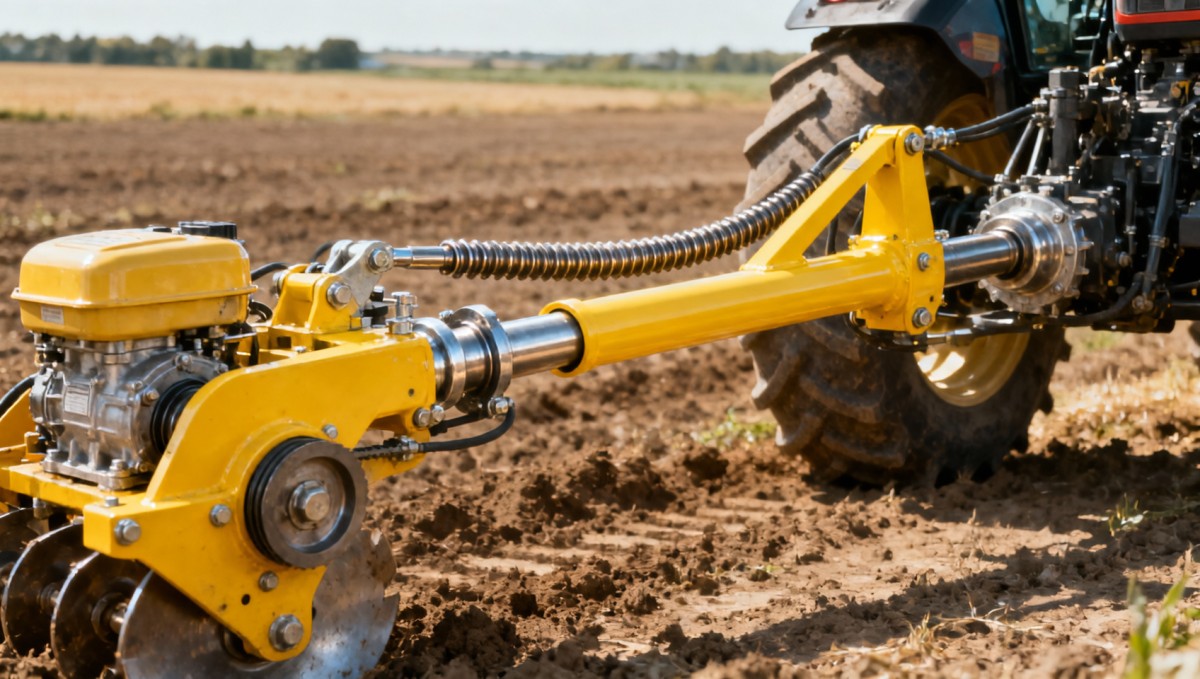
If a new PTO shaft must be shortened, cut both telescoping tubes and both guard tubes evenly. Remove burrs carefully, clean the tubes, and check that the shaft slides freely after reassembly. Cutting only one section or leaving sharp edges can create imbalance and damage the internal profile. When there is uncertainty about minimum overlap or cutting length, a qualified equipment technician should verify the setup.
Match the connection style and spline configuration
A PTO shaft cannot be selected by length and horsepower alone. The yokes must fit both ends securely. The tractor’s PTO output and the implement’s gearbox input may use different spline sizes, profiles, or locking arrangements.
Common configurations include 1-3/8 inch six-spline connections, often found on 540 RPM equipment, and larger or finer-spline arrangements used on 1,000 RPM applications. Some implements use a round, keyed, or specialized input shaft. Confirm the actual connection dimensions rather than assuming equipment of a similar size uses the same pattern.
Also inspect how the yokes lock in place. Push-pin, quick-release collar, locking ball, and clamp-style systems each require correct engagement. A yoke that appears attached but is not fully locked can slide off during operation. Before starting work, pull firmly on each end of the installed shaft to confirm that both locking mechanisms have seated correctly.
Rotary cutters need shock-load protection
Rotary cutters work in conditions that are rarely gentle. Thick weeds, woody stems, hidden debris, uneven ground, and sudden blade contact can create shock loads that travel back through the driveline. The inertia of the cutter blades also continues after the tractor PTO is disengaged.
For many rotary cutter applications, an overrunning clutch is an important consideration. It allows the implement to coast without pushing rotational energy back into the tractor. This is particularly valuable on tractors where the PTO does not have an independent or live PTO system. Without suitable overrunning protection, the tractor may continue moving after the clutch is depressed because the cutter is still driving the PTO.
A shear-bolt device is another common choice. It is designed to fail at a controlled load, protecting more expensive components from a severe impact. The correct replacement bolt grade is essential. Installing a stronger bolt because the original one shears repeatedly may transfer the problem to the gearbox, shaft, or tractor PTO instead. Repeated shearing usually signals a blockage, unsuitable cutting conditions, wrong slip clutch adjustment, or an undersized driveline.
Balers require consistent torque transfer and reliable clutches
Baler PTO demands change quickly. During pickup and feeding, load may be moderate; when dense crop material enters the chamber or the bale forms, torque can rise sharply. A baler shaft should be selected with enough capacity for these changing loads, not just for the tractor’s average power rating.
Friction clutches are frequently used on balers because they can slip when the driveline experiences an overload. Unlike a shear bolt, a friction clutch can continue protecting the system through repeated load spikes when properly maintained. However, it should not be treated as a fit-and-forget part. Moisture, rust, incorrect spring pressure, contamination, or long periods of storage can prevent the clutch from slipping as intended.
At the start of a season, inspect the clutch according to the implement manufacturer’s procedure. Check for seized plates, heat discoloration, worn friction discs, loose hardware, and damaged guards. A clutch that is permanently slipping will generate heat and reduce baler performance; one that is seized may offer no meaningful overload protection.
For baler repairs and replacement assemblies, drivetrain quality also depends on the parts hidden inside gearboxes and transmission systems. Precision-made components such as a Spur gear can play a role in maintaining stable motion transfer where equipment designs require meshing gear stages. Material control, forging quality, tooth geometry, and machining accuracy all affect long-term load distribution.
Tillers place different demands on shaft geometry
Rotary tillers often operate close behind the tractor, and their PTO shafts may run at noticeable angles while the machine follows ground contours. The issue is not only horsepower. Universal joint angle, shaft length, and guard clearance deserve close attention.
When a standard universal-joint PTO shaft operates at a high angle, rotational speed fluctuates through each revolution. At modest angles this may be acceptable, but excessive or uneven angles can cause vibration, heat, and rapid joint wear. If the shaft must operate at a substantial angle during normal tillage, consider whether a wide-angle constant-velocity driveline is needed.
A constant-velocity PTO shaft is especially useful where the tractor turns frequently with the implement engaged or where hitch geometry creates unavoidable articulation. It costs more than a conventional shaft, but it can reduce vibration and improve operating smoothness in the right application. It is not automatically necessary for every tiller; the decision should follow the actual working angle, not a general preference for more complex hardware.
Choose the correct shaft series and torque capacity
PTO driveline series are commonly rated by torque capacity at a specified speed. The correct series should meet or exceed the implement’s expected torque requirement while remaining compatible with the tractor and attachment. Do not assume that tractor horsepower alone gives the entire answer. A compact tractor with a high-torque, low-speed operating condition can still place demanding loads on a shaft, while a larger tractor may be operating an implement with lower actual demand.
Consider the following when comparing shaft series:
- Rated PTO horsepower at 540 or 1,000 RPM
- Intermittent shock loads from cutting, baling, or soil engagement
- Required safety device and its torque setting
- Cross-kit size and universal-joint durability
- Tube profile, wall thickness, and available telescoping travel
- Weight of the shaft and the implement’s ability to support it
It is sensible to allow a practical safety margin, particularly for rotary cutters and balers that encounter unpredictable loads. Yet oversizing should not become a substitute for correct protection. A very large shaft paired with an incorrectly set clutch or unsuitable shear bolt can still leave the gearbox vulnerable.
Guards are part of the PTO shaft, not an optional accessory
The rotating driveline is one of the most serious entanglement hazards on agricultural equipment. Loose clothing, boot laces, crop material, and tools can be caught in an unguarded or damaged shaft in a moment. A PTO shaft guard must rotate independently of the internal shaft and should include the required end shields, retaining chains, and safety markings.
Before every use, inspect the guard for cracks, missing sections, loose bearings, worn cones, and damaged chains. The safety chains should prevent the guard from spinning with the shaft, but they should not be stretched tight enough to restrict movement when the hitch changes position. Never operate with a broken guard removed “just for one job.”
Disengage the PTO, shut off the tractor, remove the key, and wait for all motion to stop before making adjustments, clearing wrapped material, or inspecting the shaft. No productivity gain is worth approaching a rotating driveline.
A practical pre-purchase and pre-season checklist
Before ordering a PTO drive shaft, record the tractor make and model, PTO speed, implement make and model, connection dimensions, maximum closed length, maximum extended length, and required protection device. Photographs of both connection ends can prevent costly confusion when ordering replacement parts.
Before the season begins, grease universal joints and telescoping sections with the lubricant recommended for the shaft. Inspect yokes for cracks, check cross bearings for looseness, and confirm that the locking pins move freely. Examine the implement gearbox input seal as well; oil leakage or unusual movement at the input shaft may point to a problem that a new driveline alone will not solve.
Manufacturers serving demanding power-transmission applications understand that a durable driveline begins with controlled materials and accurate processing. Liaocheng Jiucheng Auto Parts Co., Ltd. applies precision forging and machining capability to gears, transmission shafts, spline shafts, and related mechanical components. Its focus on material utilization and reduced machining where appropriate supports consistent component production for automotive, wind-power, mechanical, and marine transmission needs.
For the operator, the takeaway is simple: measure carefully, match the speed and splines, account for real working angles, and select protection that suits the implement. A well-chosen PTO drive shaft quietly does its job through long hours of mowing, baling, and tillage. That reliability is rarely noticed on a smooth day—but it becomes invaluable when the field is rough, the crop is heavy, and the work still needs to get done.
Please give us a message