



Related Posts
Online Message
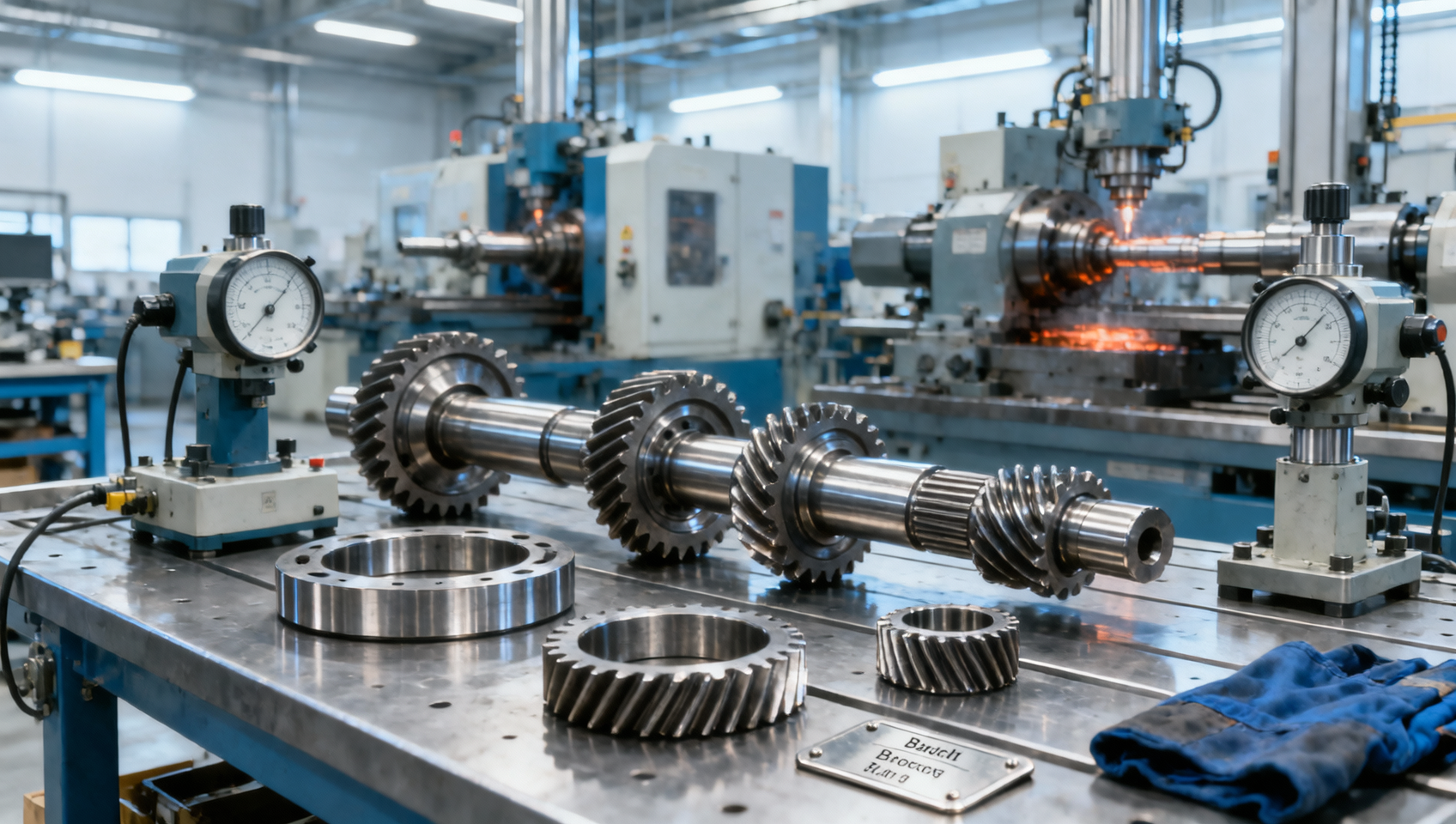
The lowest quotation is rarely the lowest sourcing cost. For auto parts, a supplier that appears competitive on unit price can become expensive through scrap, extra inspection, rushed freight, production interruptions, warranty exposure, or repeated engineering changes. Before approving a new supplier, buyers should establish whether the supplier can make the specified part consistently, prove what material entered the process, and respond when the process does not perform as expected.
This matters most for load-bearing or motion-critical components such as precision forgings, gears, transmission shafts, spline shafts, and bevel gears. A dimensional issue may be detected at incoming inspection. A hidden metallurgical or heat-treatment problem may not appear until machining, assembly, noise testing, or field use, when replacement cost is much higher.
Start with the part risk, not the supplier presentation
Supplier approval should not use one checklist for every component. A simple non-critical bracket and a forged transmission gear have very different failure consequences. Define the part's risk before reviewing a factory.
Consider how the component is used: Does it transmit torque? Is it exposed to cyclic loads, impact, vibration, heat, or corrosion? Does it mate with another precision part? Will a defect stop a vehicle, create a safety issue, or merely affect appearance? The answers determine how much evidence is needed before release.
For a critical forged or machined component, the drawing alone is not enough. The buyer should identify the characteristics that control function: tooth geometry, runout, concentricity, hardness pattern, surface condition, spline fit, bearing locations, and any interfaces that affect assembly. These characteristics should be linked to a defined inspection method and an agreed acceptance rule.
A useful approval question is: “What would cause this part to fail after it leaves our incoming inspection?” That question directs attention toward process control, traceability, and validation rather than appearance alone.
Verify that manufacturing capability matches the actual process route
“We can make this part” is not evidence of capability. Ask the supplier to describe the complete route from incoming steel or bar stock through forging, heat treatment, machining, cleaning, inspection, packaging, and dispatch. The route should make technical sense for the drawing and planned volume.
For forged auto parts, distinguish between a supplier that buys near-net blanks and one that controls precision forging internally. Internal control can simplify communication and reduce handoffs, but it only creates value when tooling, temperature control, trimming, machining allowances, and inspection are managed as one process. Outsourced stages are not automatically a problem; they should simply be visible, controlled, and traceable.
Review the equipment that performs the critical operations, not just a general machine list. A gear supplier may have machining centers, but the buyer still needs to understand how gear cutting, grinding or finishing, heat treatment, and final measurement are handled. A shaft supplier may have turning capacity, yet lack a stable method for controlling spline geometry or runout after heat treatment.
Capacity also means more than theoretical output. Ask how the supplier protects production when a key machine is down, how tooling wear is monitored, and whether the proposed volume competes with existing programs for the same equipment. Short lead times are only credible when the routing, staffing, tooling, and bottleneck operations support them.
For ring-shaped forged blanks or parts requiring a controlled starting geometry, reviewing an example such as a Forged Ring can help clarify what should be agreed before production: material grade, grain-flow expectations where relevant, machining allowance, heat-treatment condition, and the dimensional references used at receipt. The same logic applies to gears and shafts: define the purchased condition, rather than assuming it.
Material traceability must survive the production process
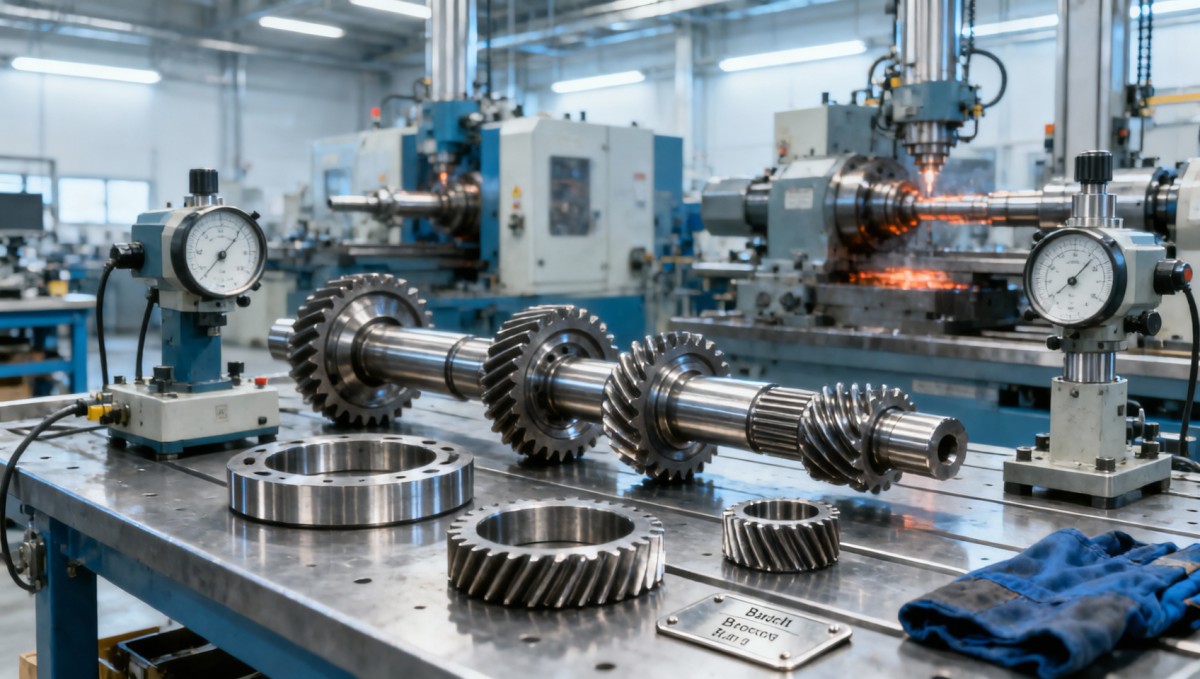
Material traceability is often treated as paperwork, but its real purpose is containment. If a material, heat-treatment, or process issue is found, the supplier must be able to identify affected lots quickly and prevent mixed material from reaching assembly.
Buyers should confirm how incoming material is identified, how it remains identified after cutting and forging, and how final lots connect back to the relevant material record. The method can vary by part size and process, but it must prevent substitution and uncontrolled mixing. Traceability is particularly important where similar-looking grades have different hardenability, fatigue behavior, or machining response.
Ask for the supplier's normal material-control practice, including how it handles customer-specified sources, approved equivalents, and material changes. A substitution that appears commercially harmless may change machining time, heat-treatment response, or gear performance. Material changes should not be discovered through a delivery note after production has started.
The same review should cover external processes. When heat treatment, coating, non-destructive testing, or special machining is subcontracted, the buyer needs a clear chain of responsibility. The direct supplier remains accountable for the finished auto parts, even when another company performs one stage.
Inspect the quality system through a real part, not a certificate
Certificates and formal quality documentation can be useful screening tools, but they do not show whether a specific process is controlled. The more revealing approach is to walk through one comparable part family from order receipt to shipment.
Ask the supplier to show how it translates a drawing into a process plan, identifies critical characteristics, sets up first-piece approval, records in-process checks, and releases the final batch. Look for evidence that measurements lead to action. A measurement report has limited value if operators cannot explain what happens when a reading approaches a limit or falls outside it.
For gears, shafts, and forgings, the inspection plan should reflect the part's failure modes. Checking an outside diameter alone does not establish gear quality. Checking a nominal shaft diameter does not prove spline fit. The plan should cover the functional features that determine assembly and service behavior.
It is also worth asking how the supplier handles rework. Some rework is technically acceptable when it is controlled and approved; some changes can affect fatigue life, surface integrity, fit, or heat-treatment condition. The important issue is whether the supplier has a disciplined process for deciding, documenting, and containing it.
Evaluate engineering support before the first problem occurs
New supplier approval is often delayed by drawings that are incomplete, difficult to manufacture, or open to multiple interpretations. A capable supplier does not need to redesign the customer's part, but it should be able to identify unclear tolerances, unrealistic inspection requirements, unsuitable datum schemes, and manufacturability concerns early.
Engineering communication is especially important when moving from prototype to serial production. Prototype parts may be made with extra setup time, manual selection, or special attention that is not sustainable at volume. Ask which controls will remain in place during normal production and what changes when quantities increase.
For forged components, procurement and engineering should discuss machining allowance, parting lines, draft, grain flow considerations, die life, and heat-treatment distortion where applicable. Early agreement can avoid a common sourcing mistake: approving a sample that fits the drawing but cannot be produced at the required volume, yield, or cost.
Liaocheng Jiucheng Auto Parts Co., Ltd. combines precision-forging and mechanical-processing workshops and manufactures forged and machined components including gears, shafts, and related parts. For buyers evaluating a supplier with this type of integrated route, the practical question is not simply whether multiple processes exist on site. It is whether the handoff from forging to machining is controlled by shared drawings, lot identification, inspection criteria, and responsibility for final performance.
Compare total landed cost, not only the quoted part price
A quote should be comparable before it is considered competitive. Confirm the purchasing condition of the part: raw forging, rough-machined blank, heat-treated component, finished gear, or packaged assembly-ready part. Differences in scope are a common reason one quotation looks much lower than another.
Then examine the cost drivers that affect the delivered program:
- Tooling ownership, maintenance responsibilities, and replacement timing.
- Material grade, approved source requirements, and treatment condition.
- Expected machining allowance and scrap exposure.
- Inspection scope, documentation, and any required sample submissions.
- Packaging that protects machined surfaces, teeth, splines, and corrosion-sensitive areas.
- Order-size assumptions, lead time, inventory expectations, and logistics terms.
- Cost and decision authority for defects, sorting, replacement, and expedited shipments.
Precision forging can reduce downstream material removal for suitable geometries, which may improve material utilization and machining efficiency. It is not automatically the best choice for every part. Low-volume demand, frequent design changes, very simple geometry, or a part requiring extensive finish machining may shift the economics. Buyers should ask suppliers to explain the proposed process logic rather than accept a broad claim of savings.
Similarly, a supplier with a low unit price but long replenishment time may require more safety stock. A supplier with marginal repeatability may require extra incoming inspection. Both costs belong in the sourcing decision, even if they do not appear on the purchase order.
Use a staged approval instead of a one-time yes or no
For new or high-risk auto parts, approval is stronger when it is built in stages. Begin with supplier screening and technical review, then move to samples or pilot lots, followed by controlled early production. Each stage should close a different uncertainty: process suitability, dimensional conformity, material and lot control, assembly fit, packaging, and delivery discipline.
Do not treat a good sample as proof of long-term production consistency. A sample proves that a supplier can make a part once under a particular set of conditions. Production approval should show that the process can repeat the result across normal shifts, material lots, tooling life, and planned output.
Before release, align the commercial and operational rules in writing: revision control, change notification, lot definition, inspection documentation, rejection handling, response timing, packaging, and escalation contacts. These details are less visible than a piece price, but they determine how quickly a supply issue can be contained.
Questions that expose weak supplier readiness
Some questions are more useful than broad requests for a company profile:
- Which operation is most likely to limit output for this part, and how is that constraint managed?
- How is material identity maintained from receipt through final shipment?
- Which characteristics are checked during production rather than only at final inspection?
- What process changes require customer approval before implementation?
- How are tooling wear, machine downtime, and nonconforming lots controlled?
- Can the supplier explain the cost difference between a forged blank, a rough-machined part, and a finished part?
- Who owns root-cause analysis and corrective action when a defect is linked to an outsourced operation?
Clear, specific answers usually indicate that the supplier understands the manufacturing route. Vague assurances about quality, capacity, or fast delivery should prompt a deeper technical review.
The approval decision should rest on evidence that the supplier can make the right part, in the agreed condition, repeatedly, and with a cost structure that remains workable after launch. Price matters, but it becomes meaningful only after capability, traceability, quality control, and change management have been established.
Please give us a message