



Related Posts
Online Message
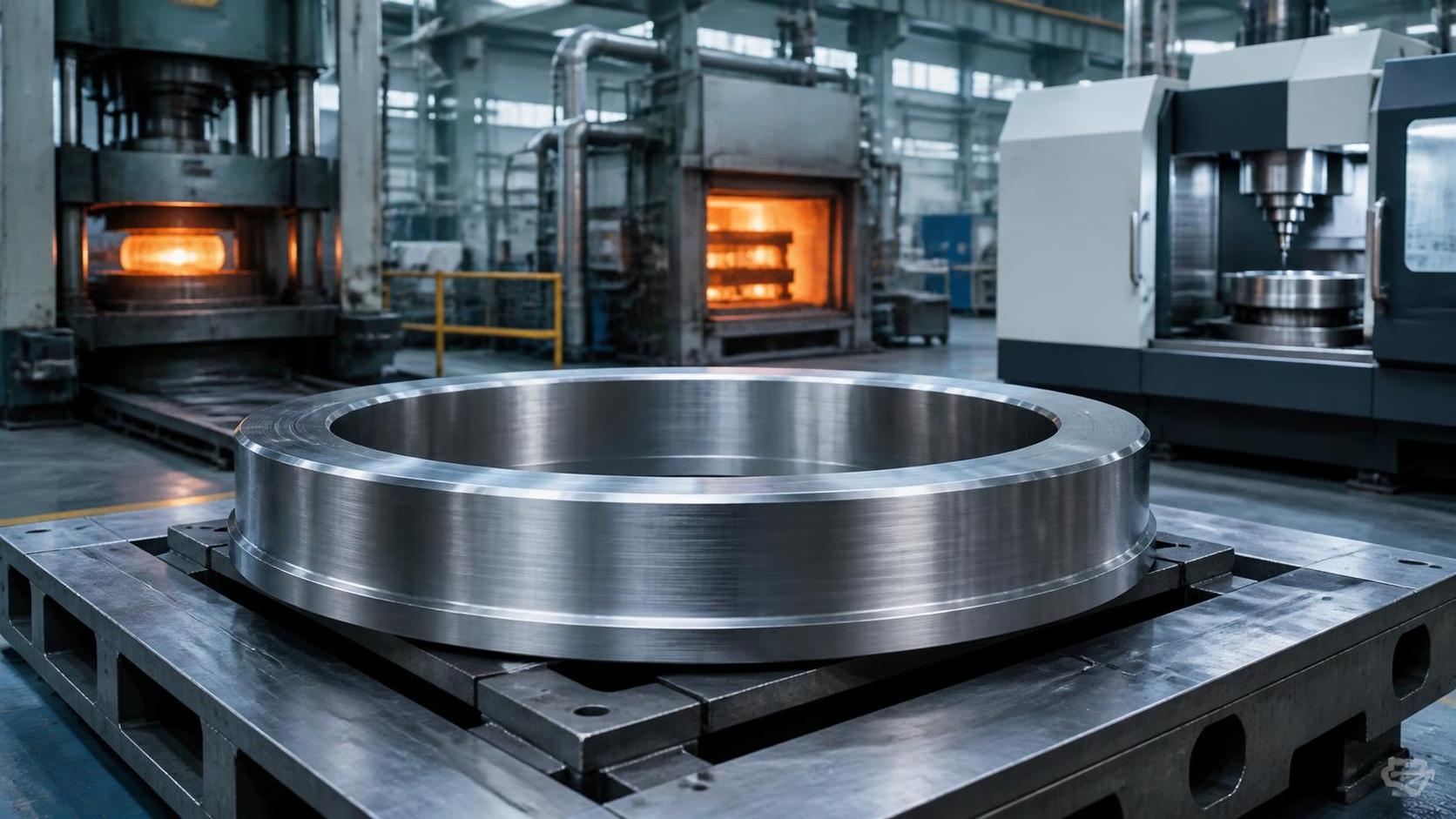
What Drives the Lead Time from a Stainless Steel Forged Rings Factory?
For procurement teams, lead time from a stainless steel forged rings factory depends on far more than available press capacity. A supplier may be able to forge a ring quickly once production begins, yet the full delivery cycle can still be extended by steel sourcing, engineering review, tooling preparation, heat treatment, machining, inspection documentation, packing, and transport planning.
This matters most when forged rings are used in automotive drivetrains, wind power gearboxes, marine equipment, reducers, heavy machinery, or other assemblies where a missed component date can affect an entire production schedule. The practical question is not simply “How many days can you deliver?” It is: “Which steps are included in that promise, and which risks could move the date?”
A useful supplier evaluation separates the visible shop-floor cycle from the hidden preparation work that happens before a ring reaches the forging press. Buyers who understand that distinction can compare quotations more fairly, avoid optimistic schedules, and make better decisions about order release, safety stock, and dual sourcing.
Lead Time Starts with the Technical Definition
The clock should begin when the factory receives a complete and technically workable order package, not merely when it receives an inquiry or purchase order. Stainless steel forged rings can vary substantially in outside diameter, inside diameter, section profile, alloy grade, grain-flow requirement, machining allowance, heat-treatment condition, surface expectations, and traceability requirements. A drawing that leaves these points open may trigger back-and-forth engineering questions before material is even ordered.
For example, the final ring dimensions may look straightforward, but the forging supplier must determine the starting billet size, flash or trimming allowance where applicable, deformation route, and allowance for subsequent turning. If the part will later be machined into a gear-related component, spline feature, bearing seat, flange, or transmission element, the required stock condition and machining datum should be agreed early. Small drawing revisions can have a disproportionate effect if they change the forging route or make an existing tool unusable.
A well-prepared request normally includes the latest drawing revision, material specification, quantity by delivery batch, requested delivery condition, applicable inspection requirements, packaging needs, and destination. If the ring is safety- or load-critical, it is also wise to clarify whether the buyer requires material certificates, hardness records, dimensional reports, non-destructive testing, or a specific marking method. These requirements are not paperwork added at the end; they affect scheduling from the beginning.
Material Availability Is Often the First Real Constraint
Stainless steel is not one interchangeable input. The specified grade, product form, billet diameter, melt route, and required documentation all influence procurement time. A mill-stocked grade in a common bar size may be available quickly. A less common grade, large cross-section billet, or material with project-specific certificate requirements may need a longer purchasing cycle. The forgery cannot responsibly commit to a firm production slot until it knows when conforming steel will arrive.
Buyers sometimes focus only on the nominal alloy designation and overlook the impact of form and yield. A factory may have stainless inventory, but not in the diameter or weight range that produces the required ring efficiently. Substituting a different starting size can increase cutting loss, heating time, or the risk of insufficient reduction. It may also raise the piece price. Fast delivery and efficient material use are connected, but they are not always the same objective.
For repeat programs, a framework forecast can help a supplier reserve steel or plan common billet sizes. This does not require the buyer to release every order far in advance; it gives both sides a more realistic basis for managing supply. It is especially helpful when demand is linked to gearbox, vehicle, marine, or industrial equipment production schedules that fluctuate by month.
Ring Geometry Determines How Easily Capacity Can Be Used
A stainless steel forged rings factory does not schedule every ring in the same way. Diameter alone is not enough to predict lead time. A relatively small ring with a heavy wall can require more deformation force than a larger thin-section ring. Tight concentricity requirements, stepped sections, complex profiles, and limited machining allowance can also demand closer process control. The more demanding the geometry, the less likely it can simply be added into an open production window.
Order quantity matters for the same reason. A small prototype order may fit into a limited campaign, but it may need separate setup, first-piece approval, or a dedicated inspection sequence. A production order can justify more efficient material preparation and longer equipment allocation, yet it must compete for press, heating, trimming, and machining resources. Neither low quantity nor high quantity is automatically faster; the answer depends on the factory’s workload and the process route.
Where a ring is intended to reduce machining work, near-net-shape forging can improve total manufacturing economics. It may, however, require more engineering attention at the start. Buyers should avoid treating “less machining” as an unconditional lead-time shortcut. It can save time downstream once the route is established, while extending the first-order preparation period if tooling or process verification is needed.
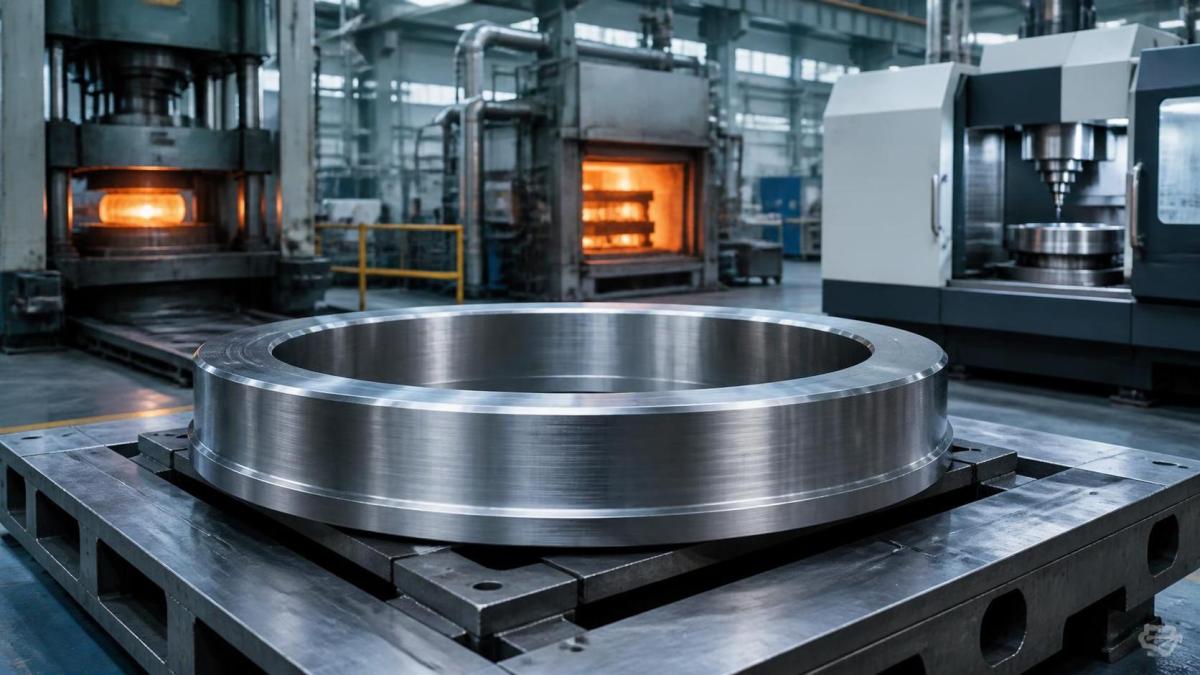
Tooling Readiness Separates Repeat Orders from New Development
Existing, validated tooling is one of the strongest advantages in repeat procurement. If the supplier already has suitable dies, mandrels, sizing tools, trimming tools, fixtures, and machining programs, the order can move directly into material and capacity planning. That does not eliminate inspection or heat-treatment time, but it removes a major source of uncertainty.
New parts require a more careful path. Tool design must reflect material behavior at forging temperature, target tolerances, release angles, expected shrinkage, and equipment limits. Tool manufacturing and trial production are not administrative delays; they are necessary steps to avoid scrap, unstable dimensions, and costly correction after the customer’s assembly process has begun. A buyer seeking a compressed launch should ask whether the quote includes tooling design, manufacture, trial forgings, sample approval, and any tool life assumptions.
This is also where drawings should be reviewed for manufacturability rather than accepted without discussion. A capable factory may recommend a revised machining allowance, corner radius, forging tolerance, or datum strategy. Such feedback can shorten the eventual schedule because it prevents repeated adjustments after the first lot. The best technical review is not the one that produces the fastest initial answer; it is the one that makes the committed delivery date credible.
Forging Is Only One Part of the Manufacturing Route
When comparing supplier lead times, buyers should confirm exactly what is included. Some quotations cover forged blanks only. Others include rough turning, finish machining, heat treatment, drilling, gear-related machining, balancing, surface protection, or final packing. A short forging lead time can look attractive until the buyer discovers that a separate machine shop or heat-treatment subcontractor must add another schedule layer.
Integrated processing can reduce handovers and simplify responsibility, particularly for components that proceed from forging to machining. Liaocheng Jiucheng Auto Parts Co., Ltd., established in 2015, operates both a precision forging workshop and a mechanical processing workshop within its 8,000-square-metre factory site. Its work covers precision forgings and gear-related parts for automotive, wind power, mechanical, and marine applications, including shafts, bevel gears, reducer gears, planetary gears, and spline shafts. For buyers, the relevant point is not the size of the facility alone: it is whether the forging and machining sequence can be planned as one controlled route.
A component such as a Forged Ring may be purchased as a semi-finished blank or as a part prepared for the next assembly operation. The required supply condition should be stated clearly. If rough machining is included, define the remaining allowance. If final machining is included, define tolerances, surface requirements, datum references, and the measurement approach. Ambiguity at this stage is a common cause of later schedule revisions and cost disputes.
Heat Treatment and Inspection Need Protected Time
Stainless steel forgings may require controlled cooling, solution treatment, annealing, quenching, tempering, stress relief, or another route specified by the relevant material and component requirements. The appropriate process depends on the alloy and intended service condition. It should never be assumed from the word “stainless” alone. Furnace availability, batch size, loading sequence, and cooling requirements can all influence the delivery plan.
Inspection follows the same logic. Dimensional checks may be completed quickly for a straightforward blank, while additional hardness testing, chemical verification, ultrasonic examination, magnetic particle testing where suitable, dye penetrant testing, or customer-specific documentation can extend the release stage. More inspection is not a sign of poor production performance. For critical rings, it is part of the actual manufacturing time and should be scheduled as such.
Jiucheng’s stated staffing includes a quality engineer and eight quality inspectors alongside engineering personnel. That structure can support process and release checks, but procurement teams should still confirm the inspection plan for their own part. The right question is not simply whether a factory has quality personnel. It is which records will be issued, when they will be reviewed, and whether any test must be completed before shipment authorization.
Capacity Is About Bottlenecks, Not Headcount Alone
Factories often describe capacity in broad terms, yet the bottleneck may be a furnace, a forging press, a ring-sizing operation, a machining center, a heat-treatment batch, or final inspection. A plant may have open forging capacity but limited space in a downstream process. Conversely, a supplier that combines forging and machining can schedule work efficiently when both departments share a realistic production plan.
This is why a reliable supplier should be able to distinguish between an indicative estimate and a confirmed delivery commitment. Before issuing a purchase order, buyers can ask which operation currently governs the schedule and whether the quoted date assumes material is already available. If the order is urgent, ask what would need to change to accelerate it: an alternate raw-material route, a split shipment, an approved dimensional relaxation, or a different machining scope. Some changes may be practical; some may create more risk than they remove.
Logistics Can Turn a Finished Part into a Late Part
Production completion is not the same as delivery completion. Export packing, corrosion protection, labeling, consolidation, customs documentation, collection booking, and transit time must be included in the buyer’s schedule. Stainless forged rings can be heavy, and packaging must prevent impact damage, mixed identification, and moisture exposure during transport. If rings are delivered in multiple lots, lot traceability should remain intact from packing list to receiving inspection.
The purchasing team should define the delivery term, destination, preferred shipping method, and document requirements before production is complete. Leaving these decisions until the final week often creates avoidable delay. For urgent components, a split delivery can protect an assembly line, but only if the first batch has passed all required inspection and the logistics route is genuinely faster.
How Buyers Can Make the Schedule More Reliable
The most effective lead-time control happens before the order is released. Provide a stable technical package, identify which requirements are mandatory at shipment, and separate desirable extras from true acceptance conditions. Ask the supplier to show the major milestones: material confirmation, tooling status, forging slot, heat treatment, machining if applicable, final inspection, packing, and dispatch. A milestone plan is more useful than a single unexplained delivery date.
For recurring demand, agree on how design changes, forecast changes, and expedited requests will be handled. Precision forging can save material and reduce turning operations when the process is properly matched to the part. Jiucheng reports that its precision-forging approach is intended to reduce machining and improve material utilization; the actual benefit for any ring still depends on geometry, alloy, tolerances, and order volume. Buyers should evaluate that trade-off against total landed cost and schedule stability, not unit price alone.
A dependable lead time from a stainless steel forged rings factory is therefore built from clear inputs, realistic process sequencing, protected quality time, and an agreed logistics plan. When requesting a quotation, ask for the assumptions behind the date. That one conversation often reveals whether a supplier is offering a workable manufacturing schedule or only an attractive number.
Please give us a message