



Related Posts
Online Message
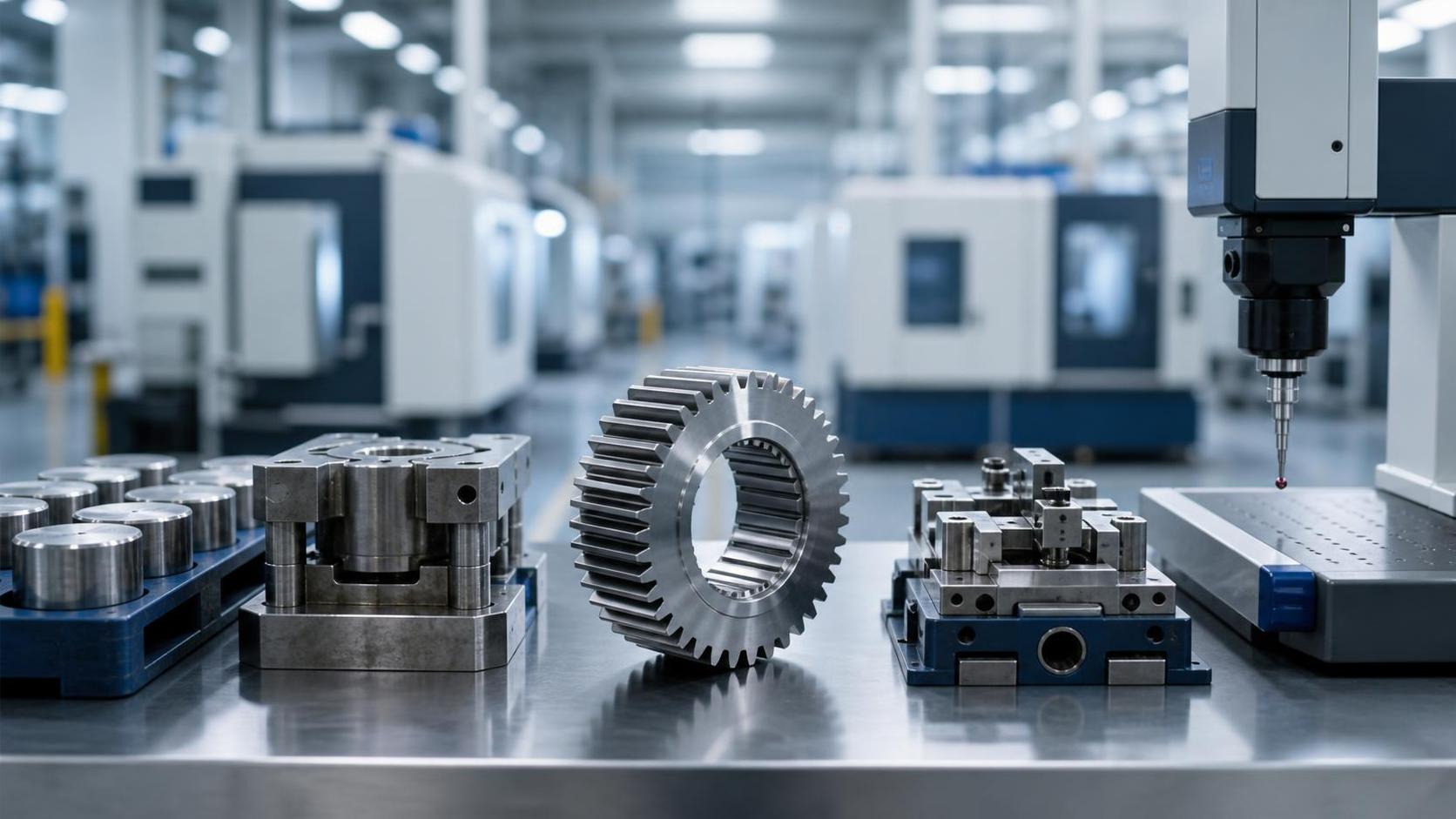
Choosing a Forged Gear Manufacturer for OEM production is not mainly about finding the lowest quoted piece price. The real decision is whether the supplier can repeatedly deliver the required gear blank quality, machining allowance, documentation, and delivery performance without creating hidden costs in your plant. A cheaper forging can quickly become expensive when it causes extra turning, unstable heat treatment results, tooth-profile problems, delayed assembly, or warranty exposure.
Before approving a source, verify what happens from steel receipt through forging, machining, inspection, packing, and corrective action. The goal is simple: buy a part that performs predictably in production, not a sample that looks acceptable on the first inspection report.
What a Forged Gear Manufacturer Should Prove Before Nomination
A supplier brochure may list spur gears, bevel gears, shafts, reducer gears, or automotive applications. That is a starting point, not proof of fit. Ask for evidence related to your actual component: drawing revision, material grade, annual volume, heat treatment route, critical dimensions, gear quality target, and end-use load conditions.
For an OEM program, the most useful supplier evaluation is usually a drawing-based technical review. Send the part drawing under the appropriate confidentiality arrangement and ask the manufacturer to identify the forging method, expected material yield, machining allowance, likely deformation risks, inspection points, and items that need clarification. A capable supplier will not simply say “can produce.” It will ask practical questions about datum selection, hardening area, tooth finishing sequence, runout limits, and traceability requirements.
There is also a useful distinction between a forging supplier and a finished-gear supplier. Some factories are strong at producing near-net-shape gear blanks but outsource machining or heat treatment. That may work for a low-risk, cost-led purchase. It is less suitable when the OEM needs one accountable source for finished dimensions, tooth quality, metallurgical consistency, and delivery coordination. Confirm exactly which processes are performed in-house and which are controlled through qualified partners.
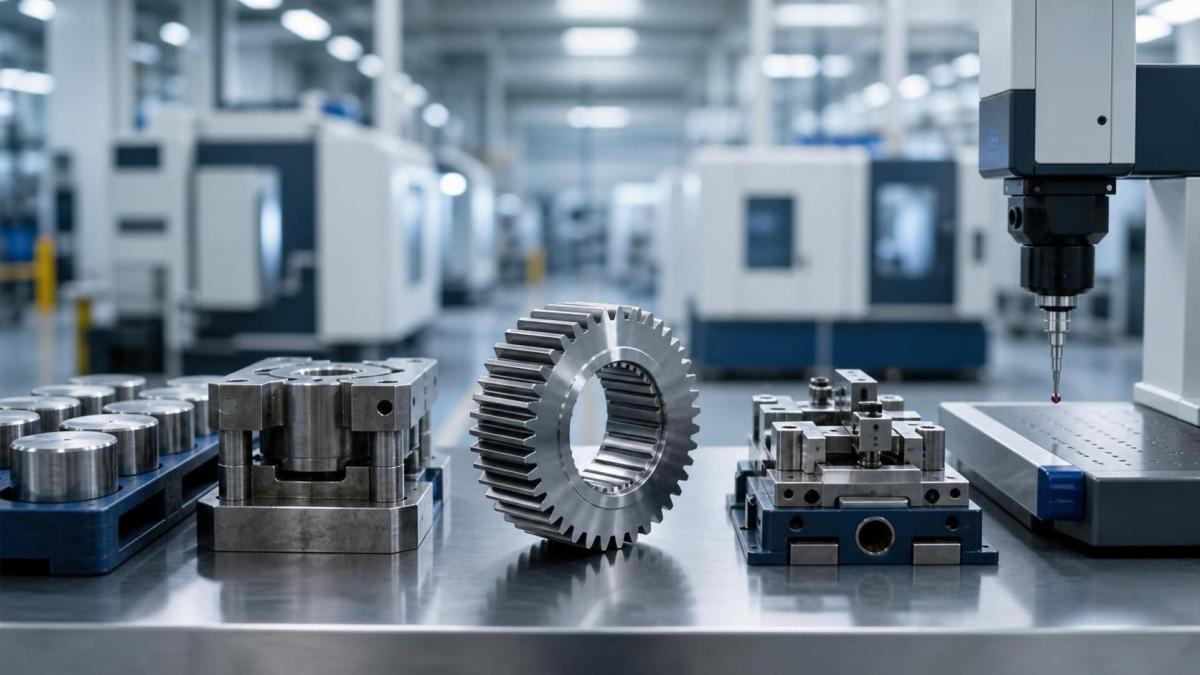
Start With the Manufacturing Route, Not the Unit Price
Forging is valuable because it can shape the metal flow to suit the component and reduce the amount of material removed later. But the saving depends on the part geometry and production volume. A precision-forged blank can reduce machining allowance and scrap for a repeat production part. For a very small batch, highly complex geometry, or a design still changing frequently, tooling investment may outweigh the benefit.
Ask the supplier to explain why its selected route is appropriate. For example, is it closed-die forging, precision forging, or a conventional forged blank with larger machining stock? What tooling is needed? What is the expected tool life? Which dimensions are controlled in forging and which will be established by machining? If the answer is vague, the quoted price may not reflect the real process risk.
A sensible cost comparison should include more than the purchase order line:
- Raw material weight and expected material utilization
- Tooling cost, ownership, maintenance, and replacement terms
- Machining time required after forging
- Heat treatment, grinding, and inspection requirements
- Scrap, rework, sorting, and incoming inspection burden
- Freight, packaging, lead time, and the cost of supply interruption
Many sourcing teams compare a forged blank with a machined-from-bar alternative using only part price. That is incomplete. The better comparison is the total landed cost of an accepted component at the point of assembly. A forging that costs slightly more but arrives with stable stock allowance and lower machining variation can reduce the total program cost.
For straightforward transmission applications, a Spur gear is a useful example of why drawing review matters. The outside diameter and tooth count alone do not define the sourcing challenge. Bore concentricity, face runout, hub geometry, material condition, tooth finishing method, and heat treatment all affect whether the part will run quietly and fit consistently after assembly.
Material Control Is Where Many Cost Problems Begin
Gear failure is often discussed as a design or heat treatment issue, but material control deserves equal attention. Confirm the steel grade, purchasing specification, permitted equivalent materials, chemical composition limits, and requirements for mill certificates. The supplier should be able to maintain batch identification from incoming steel through the finished lot.
For demanding automotive, wind power, marine, or industrial transmission parts, ask how the manufacturer controls heat number traceability, material segregation, and verification testing. The appropriate testing plan depends on the drawing and customer specification, but the process must be clear. “Material certificate available” is not enough if the certificate cannot be linked to the shipped production lot.
Do not assume that a nominally equivalent steel grade will produce identical forging and heat treatment behavior. Differences in cleanliness, hardenability, inclusion control, and supplier consistency can affect distortion and fatigue performance. Where the part is safety-related or highly loaded, have engineering approve any material substitution in writing before production. Procurement should not be left to resolve that question after parts are already made.
Check Forging Quality Before Discussing Gear Accuracy
The gear teeth may be cut or ground after forging, yet the forging still determines whether downstream operations remain stable. Poor die fill, laps, cracks, excessive scale, inconsistent flash removal, or uncontrolled grain flow can become expensive defects later. A polished sample can conceal process variation, so ask to see the inspection approach for normal production rather than only prototype pieces.
Critical questions include:
- What visual and dimensional checks are completed after forging?
- Is there a defined method for detecting surface defects where required?
- How is die wear monitored before it changes the blank geometry?
- How are first-off pieces approved after tooling adjustment or die replacement?
- What happens to parts produced during a process interruption or parameter deviation?
Near-net forging has a particular advantage when the supplier can hold the stock allowance consistently. It can reduce material removal, but it also leaves less room to machine away forging variation. A manufacturer claiming “little or no turning” should therefore demonstrate how it controls the dimensions that support that claim. The right route is not automatically the one with the smallest allowance; it is the one that leaves enough controlled material for reliable final machining.
Machining, Heat Treatment, and Inspection Must Connect
A forged gear is rarely purchased only as a forging in an OEM supply chain. The buyer usually needs a component that reaches the right interface dimensions and performs after heat treatment. This makes process sequence important. For example, machining before and after heat treatment must be planned around expected distortion, grinding allowance, bore tolerance, and gear measurement requirements.
Ask which equipment and measurement capability are actually available. The answer should be connected to your drawing, not presented as a generic machine list. If tooth geometry is critical, clarify how tooth profile, lead, pitch, runout, and backlash-related features are measured. If the gear is supplied as a blank, define exactly which dimensions and conditions are the supplier’s responsibility and which belong to the next processor.
Inspection reports should be useful for production decisions. That normally means they identify the part number, revision, lot, measured characteristics, acceptance criteria, measuring equipment where relevant, and disposition of nonconforming parts. For recurring production, agree in advance on the frequency of dimensional reports, material certificates, hardness records, and any required non-destructive testing.
A common mistake is approving a supplier based on individual sample measurements without confirming its control plan. A sample proves that a factory can make a part once. Process control, calibration discipline, and reaction plans are what show whether it can make the same part month after month.
Capacity Is More Than Press Tonnage
Production capacity needs to be checked against the full route. A factory may have enough forging capacity but limited machining, heat treatment, inspection, or packing throughput. The bottleneck usually appears in the process that has the longest cycle time or greatest queue, not necessarily at the forging press.
Ask for practical information: planned monthly output for comparable parts, normal lead time, minimum economic batch size, peak-season loading, backup arrangements for key equipment, and the lead time for replacement tooling. Also establish how the supplier handles forecast changes. An OEM schedule can change sharply; a source that only works efficiently at one fixed batch size may introduce inventory cost or delivery risk.
Liaocheng Jiucheng Auto Parts Co., Ltd. states that it operates both a precision forging workshop and a mechanical processing workshop within its manufacturing site. Its stated product scope includes automotive gears, wind power gearbox parts, mechanical and marine gear components, along with transmission and spline shafts. For a sourcing review, that kind of combined process scope is relevant because it can reduce handoffs between forging and machining. It should still be verified against the specific part, volume, quality documentation, and required delivery schedule.
The company also reports a technical and quality team that includes engineering and inspection personnel. For buyers, the practical question is not the headcount alone. Ask who owns launch approval, who signs off on deviations, how measurement data are reviewed, and how a customer complaint is contained and corrected. Clear ownership makes supplier communication far easier when a production issue occurs.
Audit the Response to Problems, Not Just the Good Parts
Every manufacturing operation will eventually encounter a nonconformance. The difference between a manageable event and a major disruption is the supplier’s response. Before nomination, ask for an anonymized example of a corrective-action process. You want to see containment, lot traceability, root-cause analysis, corrective action, effectiveness verification, and communication timing.
Be cautious when a supplier promises zero issues but cannot describe its escalation process. A more credible partner explains how it prevents recurrence and how it protects the customer while the investigation is underway.
For new tooling or a transferred program, use phased approval. Start with a technical feasibility review, then tooling design confirmation, trial samples, dimensional and material validation, pilot production, and only then routine supply. Define sample quantity, approval criteria, ownership of gauges, and change-control rules before releasing the order. This takes effort early, but it is much cheaper than discovering an assumption mismatch after the assembly line has been scheduled.
Questions to Settle in the Commercial Agreement
Commercial terms need to reflect the manufacturing reality. State whether pricing includes tooling amortization, what happens if annual demand is below forecast, who owns tooling, and whether the supplier may use it for other customers. Clarify packaging standards, labeling, export documentation where applicable, Incoterms, payment terms, and the process for engineering changes.
Price adjustment language should also be specific. If raw material fluctuations are relevant, agree on the reference mechanism and review interval instead of leaving the issue open to negotiation on every purchase order. For long-running OEM programs, transparency is more useful than an unrealistic fixed price that later creates friction.
Do not overlook packaging. Gear teeth, finished bores, and corrosion-sensitive surfaces can be damaged by poor separation or inadequate protection during transport. Define acceptable packaging with photos or samples, especially for finished machined parts. The cost is modest compared with sorting a damaged shipment.
Make the Final Decision on Evidence
A strong Forged Gear Manufacturer should be selected on demonstrated fit, not broad claims. Compare suppliers using the same drawing package and the same commercial assumptions. Weight the factors that matter to the program: process capability, material traceability, machining and measurement control, capacity, corrective-action discipline, and total delivered cost.
The lowest quotation can be the right decision when the part is simple, tolerances are forgiving, volume is limited, and the buyer can manage downstream machining. It is usually the wrong decision when the gear is load-critical, difficult to inspect after assembly, or expensive to replace in the field. In those cases, stable process control and a documented launch plan are worth paying for.
Before issuing a purchase order, request the technical review, control plan, sample approval route, capacity confirmation, and commercial clarification in writing. That short verification step gives procurement a defensible basis for selection and gives the supplier a much clearer target for OEM production.
Frequently Asked Questions
Should an OEM buy forged gear blanks or fully machined gears?
Buy blanks when your own machining operation has proven capacity and you need direct control over final tooth finishing. Buy finished gears when reducing supplier handoffs, scheduling work, and quality ownership is more valuable than retaining that internal process.
How many samples are enough for supplier approval?
There is no universal number. The sample plan should reflect part risk, tooling maturity, critical characteristics, and customer requirements. For recurring production, a pilot run is more informative than a few hand-selected samples.
Is precision forging always cheaper than conventional forging?
No. It can lower material and machining cost on suitable repeat parts, but tooling cost and geometry limits matter. Confirm the expected saving against annual volume and the final machining route.
What is the first document to request from a new supplier?
Request a drawing-based manufacturing feasibility review. It reveals whether the supplier understands the actual component before commercial discussions become the main focus.
Image Placeholder List
- Placement: after the initial supplier-verification discussion. Image content: a practical flow showing steel receipt, forging, machining, inspection, and shipment checkpoints. Alt text: “OEM forged gear supplier verification process from material control to final inspection.”
Internal Link Anchor Text Suggestions
- Precision forged gear blanks: product category or process capability page
- Gear material traceability requirements: quality assurance guide
- How to evaluate gear machining tolerance: technical resource page
- Forged transmission shaft sourcing checklist: related component guide
- Automotive and wind gearbox forging applications: industry applications page
External Authority Source Suggestions
- ISO standards documentation related to quality management and dimensional measurement
- AGMA technical publications on gear manufacturing, inspection, and terminology
- Recognized steel producer technical documentation for relevant gear steel grades and heat treatment guidance
Please give us a message