



Related Posts
Online Message
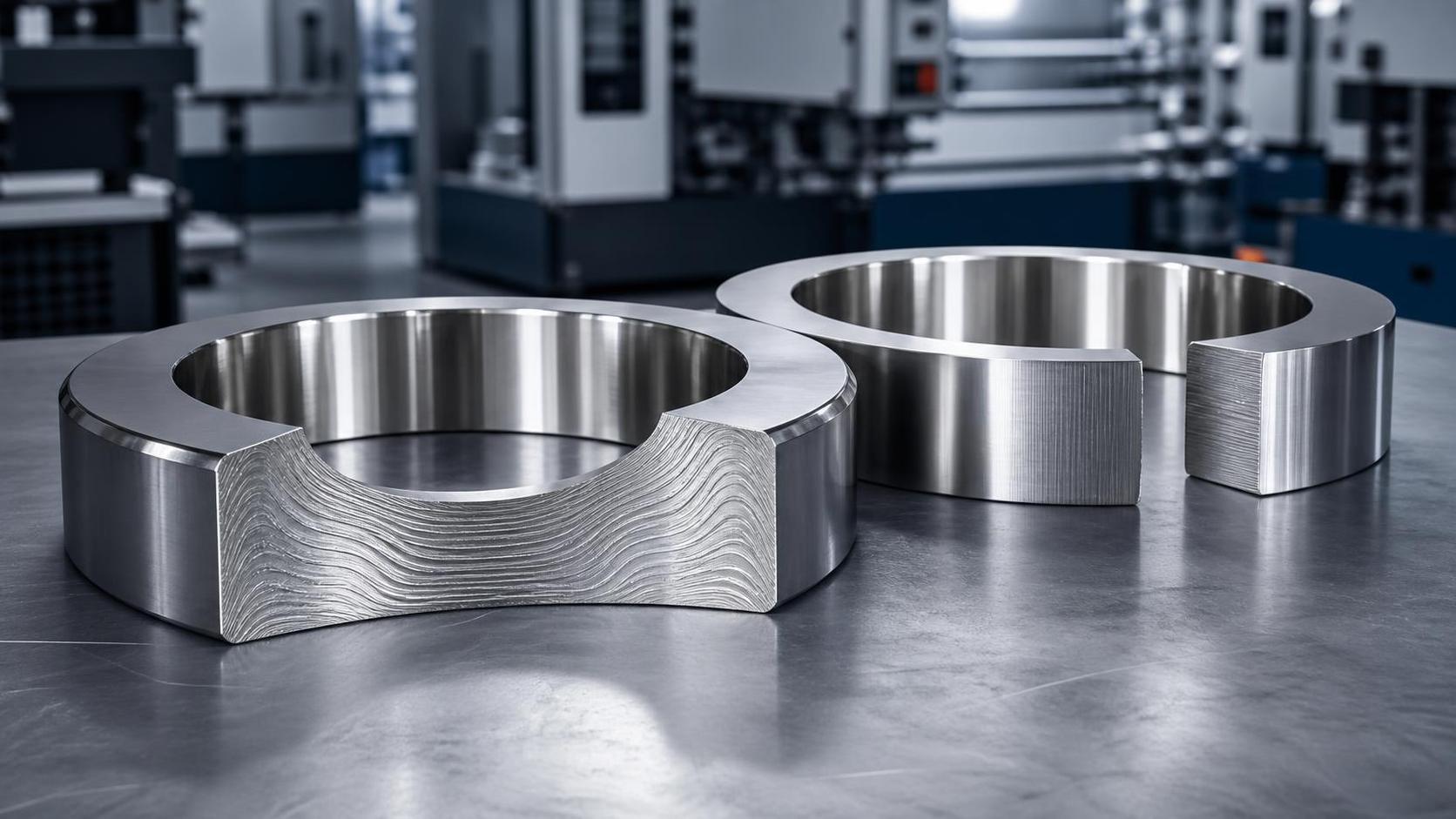
Choose stainless steel rolled rings over plate-cut rings when the component will carry cyclic loads, transmit torque, see pressure or temperature variation, or need dependable concentricity after machining. The rolled route usually costs more at the start, but it can reduce material waste, machining time, and service risk in the applications where ring integrity actually matters.
The comparison is often framed too simply: “rolled is stronger, plate-cut is cheaper.” That is directionally true, but it does not make a usable sourcing decision. The right choice depends on how the ring is loaded, how much stock must be removed, what inspection evidence is required, and whether a failure would mean a minor replacement or an expensive shutdown.
A decorative flange, a low-load cover ring, or a one-off prototype may not justify rolling. A gearbox ring, marine coupling component, rotating flange, bearing support, or corrosion-resistant ring working under repeated stress is a different situation. In those cases, the manufacturing route should be evaluated as part of the engineering design, not treated as a purchasing detail.
Why stainless steel rolled rings behave differently
A plate-cut ring starts as flat plate. The inner and outer diameters are cut by laser, plasma, waterjet, or machining, then the ring may be further machined, formed, or heat treated. It is a direct route, particularly for simple geometries and short production runs.
Rolled rings begin with a pierced or preformed blank that is expanded between rolling tools. During this process, the metal is worked into a continuous circular shape. The material grain flow tends to follow the circumference of the ring rather than being interrupted by a profile cut from plate. That distinction is the main technical reason rolled rings are commonly preferred for demanding rotating or load-bearing duties.
The benefit is not magic. Grain flow does not eliminate poor design, incorrect stainless grade selection, poor heat treatment, inadequate fillet radii, or bad machining practice. It does, however, create a more favorable starting structure for many applications where stress travels around the circumference.
Rolled production can also provide a more efficient near-net blank. When the final part has a substantial ring shape, starting with a ring instead of machining most of that shape from plate can leave less excess material to remove. The practical result may be lower chip volume, reduced machining time, and a more stable component geometry through production.
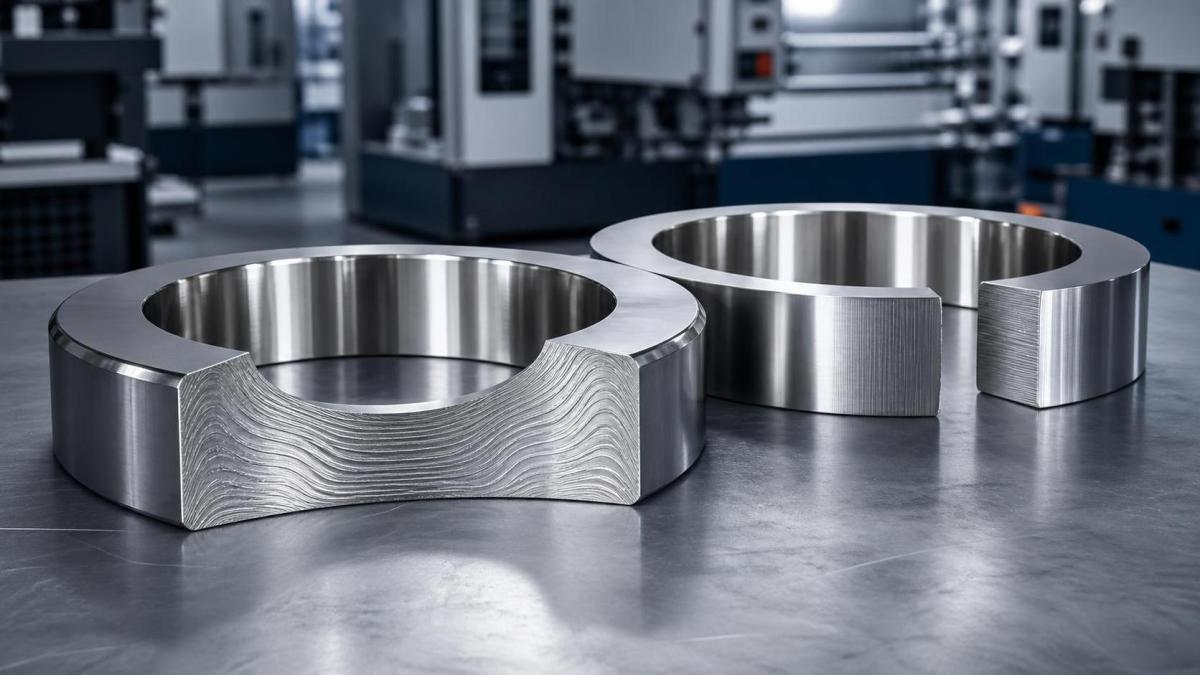
Choose stainless steel rolled rings when fatigue is part of the job
Cyclic loading is the clearest reason to specify a rolled ring. Think about a flange that sees repeated bolt preload and pressure cycles, a ring gear support, a bearing race carrier, a pump component, or a coupling hub that experiences torque reversals. These parts do not fail because of one static load alone. They accumulate damage through thousands or millions of load cycles.
In a plate-cut ring, the original plate grain direction may not follow the circular load path. Depending on the plate quality, cutting method, edge condition, and finished geometry, the cut profile can become a less favorable starting point for fatigue-sensitive service. A rolled ring is normally more aligned with the circumferential stresses found in round components.
This does not mean every stainless ring in a fatigue application must be rolled. If the stress level is low, the part is oversized, the duty is intermittent, and inspection plus machining controls are strong, a plate-cut ring may still be reasonable. The question is whether the saving on the blank outweighs the extra uncertainty over the life of the assembly.
A useful rule is this: if the part is safety-critical, difficult to replace, or installed inside a system where downtime is costly, treat fatigue resistance as a primary selection criterion. Do not reduce the decision to the initial unit price.
When dimensional consistency justifies the forged route
Technical teams sometimes assume that any ring will be machined to final dimensions anyway, so blank quality has little effect. That assumption causes avoidable production problems.
Machining corrects dimensions; it does not always correct an inefficient or unstable starting form. A plate-cut blank with large machining allowance can require extensive removal to achieve the final profile. The result may be longer cycle times, more tool wear, higher scrap exposure, and greater risk that the part moves after stress is relieved. This becomes more important with larger diameters, heavier cross-sections, and features that must remain concentric to the bore.
Stainless steel rolled rings are particularly useful where the finished part requires controlled roundness, concentric walls, or balanced geometry for rotating service. A well-specified rolled blank can be supplied close enough to the required section that machining focuses on functional surfaces rather than creating the whole ring from scratch.
That said, “rolled” does not automatically mean “ready to finish machine.” Request the actual blank tolerances, out-of-roundness limits, surface condition, heat-treatment condition, and agreed machining allowance. A supplier should also understand which surfaces establish the datum structure. If bore concentricity governs the design, the inspection plan should reflect that rather than relying only on outside diameter checks.
Material use matters more on larger rings
Plate cutting may look economical when material pricing is viewed only by kilogram. The full cost picture is different when a large central slug becomes scrap or when a thick plate blank must be machined heavily on both diameters.
For medium and large ring components, rolling can improve material utilization because the starting blank is already annular. The advantage grows when the final ring has a relatively thin radial wall compared with its outside diameter. In that geometry, cutting a ring from plate can leave significant unused material in the center, while rolling redistributes material into the section that the part actually needs.
There is also an environmental and operational angle. Less removed material means fewer chips to handle, lower machining energy per finished part, and less time tied up on turning equipment. Those gains are not identical for every part, so they should be calculated from the proposed blank dimensions and machining route rather than assumed from a sales claim.
Manufacturers that combine forging and machining can be especially useful here because they can assess blank design against the final operation plan. Liaocheng Jiucheng Auto Parts Co., Ltd. operates both precision forging and machining workshops and serves applications involving automotive, wind-power, mechanical, and marine transmission parts. That type of process coverage can help when the real issue is not simply purchasing a ring blank, but coordinating forging allowance, turning sequence, inspection, and final part performance.
Plate-cut rings remain the sensible choice in some cases
There is no engineering value in specifying a rolled ring simply because the part is circular. Plate-cut rings are often appropriate when the ring is lightly loaded, non-rotating, simple, and needed quickly in a very small quantity. They can also be practical for early prototype work, provided the prototype is not being used to validate fatigue life or production-level material behavior.
Plate may be the better route when the part is not truly a ring in functional terms. For example, a flat plate component with a large central opening, irregular external lugs, wide cutouts, or an asymmetric profile may gain little from ring rolling. If much of the rolled form would later be machined away, the near-net benefit disappears.
Availability can also decide the issue. A standard stainless plate grade may be immediately available, while a forged and rolled blank requires a longer lead time. When the component is for maintenance recovery and the loading is moderate, plate cutting may be the responsible operational decision. Just document the reason and confirm that the substitute route meets the duty requirements.
Do not compare only “stainless” against “stainless”
A common mistake is treating stainless steel as a single material category. Austenitic grades, martensitic grades, precipitation-hardening grades, duplex grades, and other stainless families have very different strength, corrosion behavior, weldability, magnetic response, and heat-treatment characteristics. The correct grade depends on the working environment and the mechanical demand.
For example, corrosion resistance may be the driving issue for a marine-exposed ring, but chloride exposure, temperature, crevice conditions, and galvanic contact still need review. A nominally corrosion-resistant grade can perform poorly if the application environment and surface condition are ignored. Likewise, a high-strength requirement may shift attention toward a heat-treatable grade and a tightly controlled heat-treatment route.
The manufacturing method and material specification should be decided together. Ask whether the proposed grade is routinely ring rolled in the needed section size, whether the process condition is solution annealed, normalized, quenched and tempered, or otherwise treated, and what certification package will accompany the material. A mill test certificate alone may not prove every property needed for a finished ring.
What to put on the RFQ before choosing the route
The strongest purchasing documents do not merely state “stainless ring.” They describe service conditions and identify the features that control performance. That gives suppliers a basis for recommending plate cutting or rolling for technical reasons.
- State the stainless grade or the required corrosion and mechanical properties.
- Provide finished outside diameter, inside diameter, axial height, section profile, and allowable machining stock.
- Describe static loads, cyclic loads, torque direction changes, pressure, speed, and temperature where relevant.
- Identify critical dimensions: roundness, concentricity, flatness, runout, bore condition, and balance requirements.
- Specify the required material traceability, non-destructive testing, mechanical test evidence, and final inspection records.
- Clarify annual quantity and whether the first order is a prototype, a pilot run, or serial production.
The last point matters. A process that is not economical for two prototype pieces may become clearly favorable at recurring production volumes, especially if reduced machining improves throughput. Conversely, a technically excellent rolled ring can be unnecessarily expensive when only one simple low-duty part is needed.
When the ring is part of a torque-transmission assembly, do not evaluate it in isolation. The interfaces with shafts, splines, bearings, gears, and fasteners determine whether a higher-quality ring blank will produce a real system benefit. For assemblies that also require a matching Drive Shaft, alignment of material condition, tolerances, and inspection requirements across the mating parts is often more valuable than optimizing either component separately.
Three warning signs that plate cutting may be a false economy
First, the supplier quote appears low because it excludes the actual cost of machining away a large volume of material. Ask for the proposed blank dimensions and estimate the removal allowance before comparing prices.
Second, the application has repeated loading, but the specification only lists ultimate strength. Fatigue performance depends on more than one tensile test result. Surface condition, geometry, residual stress, grain orientation, and defect control can all affect service life.
Third, the drawing has tight runout or concentricity requirements, but no one has discussed how the ring will be held and machined. A difficult blank can create a difficult setup. The cheapest raw ring may become the most expensive finished part when repeated setups, correction cuts, and rejected pieces are counted.
A practical decision point
Choose plate-cut stock when the component is simple, lightly loaded, low volume, and tolerant of greater machining removal. Choose stainless steel rolled rings when circular grain flow, fatigue resistance, reliable geometry, material efficiency, or reduced downstream machining have a measurable value in the application.
The decision should be supported by the actual drawing and duty cycle, not by general preference. For a corrosion-resistant ring in a gearbox, marine drive, rotating mechanical assembly, or wind-power transmission system, request quotations for both routes using the same finished-part requirements. Compare the delivered, machined, inspected part cost and the evidence supporting its performance. That is usually where the correct choice becomes clear.
Questions buyers often ask
Can a plate-cut ring meet the same final dimensions as a rolled ring?
Often yes, after machining. The more relevant question is how much machining, setup control, and material removal are needed to get there, and whether the finished part must also endure cyclic service.
Are rolled rings always stronger?
Not automatically. Strength depends on alloy grade, forging practice, heat treatment, section size, and final geometry. Rolled rings are generally favored because their circumferential grain flow can better support ring-shaped load paths.
Should a prototype use the same route as production?
Use the production route if the prototype will validate fatigue life, distortion, or load capacity. A plate-cut prototype can be useful for fit and assembly checks, but it may not represent the behavior of a rolled production part.
What inspection should be requested for a critical ring?
Start with material traceability and dimensional inspection, then add appropriate mechanical tests and non-destructive examination based on the service risk and governing specification. The exact method should be agreed for the material grade and part geometry.
Is ring rolling suitable for every stainless steel grade?
No. Formability, required heat treatment, section dimensions, and supplier capability must be reviewed together. Confirm the proposed grade and process route before releasing the order.
Image Placeholder List
- - Suggested placement: after the explanation of ring rolling versus plate cutting. Content: cross-sectional comparison showing circumferential grain flow in a rolled ring and plate grain orientation in a cut ring. Alt text: “Comparison of stainless steel rolled ring grain flow and plate-cut ring grain direction.”
Internal Link Anchor Text Suggestions
- precision forging process - Precision forging service or capability page
- stainless steel forging materials - Material grade selection page
- gearbox component manufacturing - Wind power and industrial gearbox parts page
- forged transmission shaft - Transmission shaft product or process page
- forging quality inspection - Quality control and testing page
External Authority Source Suggestions
- ASTM or equivalent recognized materials standards for stainless steel mechanical properties and testing requirements
- ASM International technical references on forging, grain flow, heat treatment, and fatigue behavior
- Industry association or academic research on fatigue design and inspection of forged mechanical components
Please give us a message