



Related Posts
Online Message
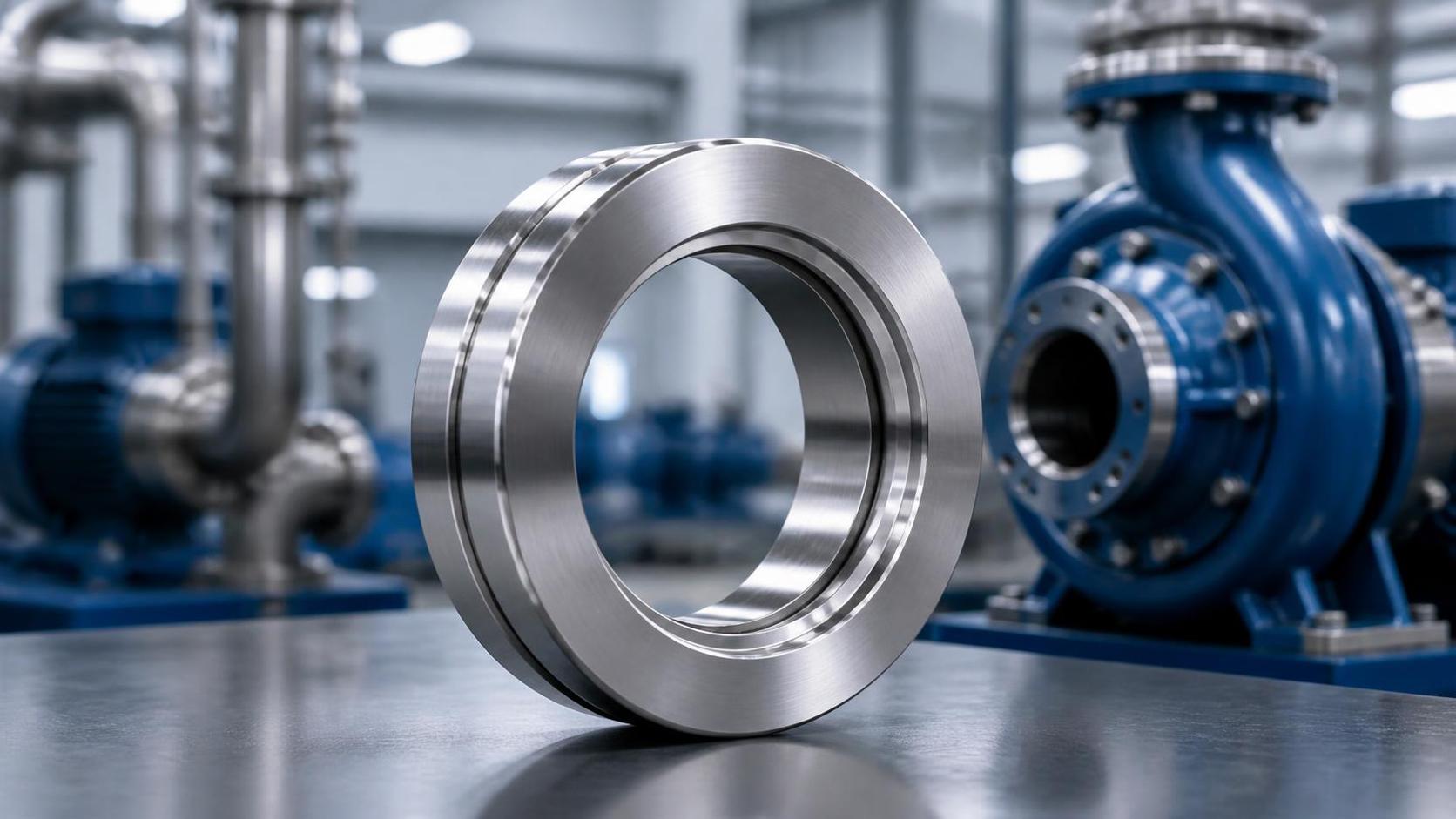
For corrosive pump service, the most suitable stainless steel forged rings are selected from the actual fluid chemistry and operating envelope, then verified against forging condition, heat treatment, machining allowance, and sealing geometry. Austenitic grades such as 316/316L are often appropriate for many aqueous chloride-free or low-chloride services. Duplex and super duplex grades are usually considered when chloride-driven pitting, crevice corrosion, or stress corrosion cracking becomes a realistic risk. High-alloy austenitic and nickel-alloy alternatives may be necessary when hot acids, concentrated chlorides, reducing acids, or mixed chemical streams exceed the limits of common stainless grades.
A forged ring in a pump may function as a wear ring, casing ring, seal chamber component, impeller retaining element, bearing-related spacer, or structural connection. Its failure mode therefore cannot be judged from corrosion resistance alone. A ring exposed to corrosive liquid while maintaining a narrow running clearance has different requirements from one located outside the wetted zone but exposed to salt spray, condensate, or leakage. Pressure reversals, dry-running events, shaft vibration, crevice locations, and assembly preload can all change the preferred alloy.
Start with the corrosion mechanism
The fluid name on a process sheet is rarely enough to specify stainless steel forged rings. Concentration, dissolved oxygen, contaminants, pH, temperature, velocity, solids, and periods of stagnation can materially alter alloy performance. Chloride concentration is particularly important, but it should be reviewed together with temperature and geometry. A grade that performs adequately in a flowing, cool, dilute chloride solution may pit under deposits or at a gasketed crevice after a shutdown.
For oxidizing media, chromium content supports passive-film stability. Molybdenum generally improves resistance to localized corrosion in chloride-bearing environments, while nickel promotes austenitic structure and can improve resistance in selected acid services. Nitrogen is especially relevant in duplex and super duplex alloys because it contributes to strength and pitting resistance. These alloying effects are useful only when the grade is correctly melted, forged, solution treated where required, and kept free from harmful thermal exposure.
Common corrosion questions should be separated before a grade is nominated:
- Uniform corrosion: predictable metal loss across broad surfaces, frequently associated with acid concentration, temperature, and redox condition.
- Pitting and crevice corrosion: localized attack promoted by chlorides, deposits, stagnant liquid, gasket interfaces, threaded recesses, and poorly drained features.
- Chloride stress corrosion cracking: a major concern for austenitic stainless steels under tensile stress at elevated temperature when chlorides are present.
- Galvanic corrosion: possible where the ring contacts a more noble or less noble metallic component in an electrically conductive liquid.
- Erosion-corrosion: accelerated damage where abrasive solids, flashing, cavitation-related turbulence, or high local velocity repeatedly disrupt the passive surface.
A material selection note should identify which of these mechanisms is credible. Treating all corrosive duties as a generic request for “stainless” often leads to either unnecessary alloy cost or a ring that fails at a narrow crevice long before its bulk strength is challenged.
Where 316L forged rings fit
316L is a practical baseline for forged pump rings in many water-based chemical duties, moderate marine exposure, and process streams where 304-type stainless steel lacks sufficient localized corrosion margin. Its molybdenum addition generally improves pitting resistance relative to 304/304L. The low-carbon variant is often preferred when welding is involved, when thermal cycles are expected, or when corrosion sensitivity near heated areas must be reduced.
However, 316L should not be treated as a universal seawater or hot-chloride material. Tight annular clearances, stagnant liquid behind a ring, chloride deposits from evaporation, and elevated surface temperature may create pitting or crevice corrosion conditions that exceed its capability. A forged ring also needs adequate hardness and dimensional stability for its mechanical role. In a close-clearance wear-ring position, 316L may require a carefully chosen mating material or surface-engineering approach to reduce adhesive wear and galling.
When 316L is specified, the purchase description should state the applicable product form and material standard, chemistry limits, heat-treatment condition, dimensional tolerances, and required documentation. “316 stainless” is too broad for a component expected to operate in a corrosive pressure boundary or seal-related assembly.
Duplex grades for chloride-bearing service
Duplex stainless steel forged rings are often suitable when higher yield strength and improved resistance to chloride-related localized corrosion are required. Their mixed austenitic-ferritic microstructure can provide useful resistance to chloride stress corrosion cracking compared with conventional austenitic grades. This combination is relevant for rings that carry assembly load, retain pressure-bearing parts, or must resist distortion while operating in chloride-containing process fluid.
Standard duplex grades are commonly assessed for moderate chloride environments, while super duplex grades offer a higher corrosion-resistance range for more severe chloride exposure. The selection boundary cannot be set by alloy name alone. Temperature, oxygen content, crevices, solids accumulation, intermittent wetting, and fluid velocity should be reviewed together. A super duplex ring may still be unsuitable if a hot, stagnant, highly concentrated chemical can enter a narrow assembly gap.
Duplex processing deserves close attention. Incorrect solution treatment, slow cooling, or excessive exposure to unfavorable temperatures can form intermetallic phases that reduce toughness and corrosion resistance. Forging practice must deliver sufficient deformation and controlled thermal history without leaving an unsuitable grain structure or surface condition. For critical service, material verification may include chemical analysis, mechanical properties, microstructure assessment, ferrite measurement when relevant, and corrosion testing if the specification calls for it.
When higher-alloy materials are justified
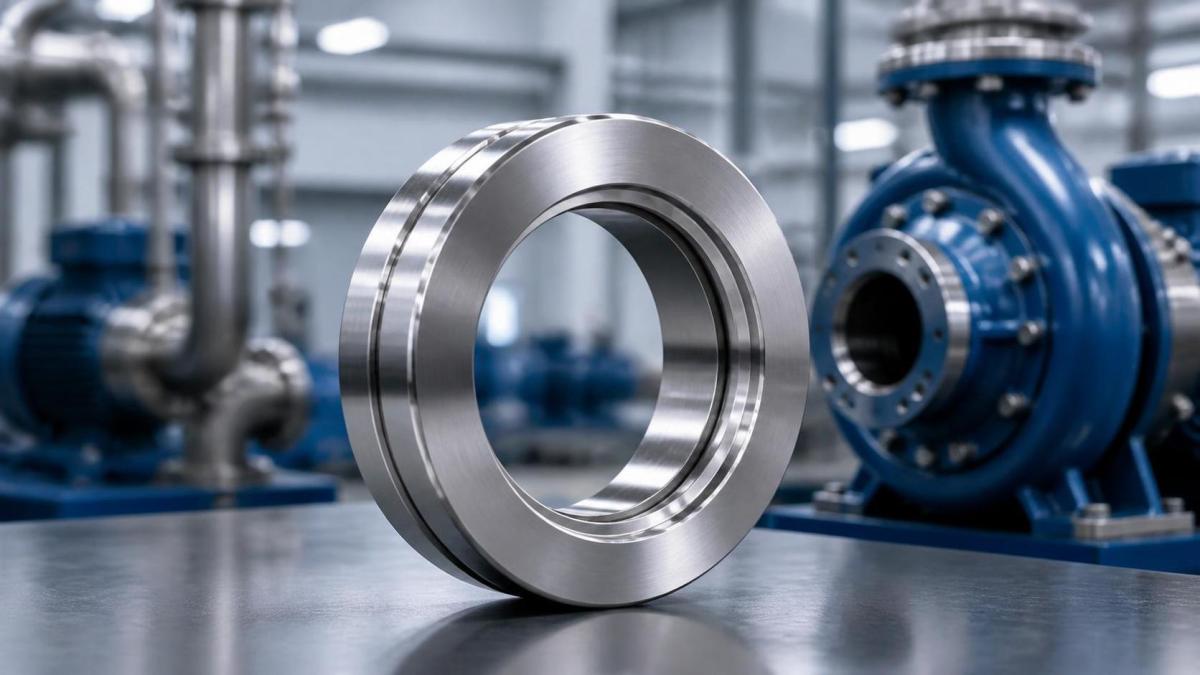
Some pump duties fall outside the reasonable range of 316L and standard duplex stainless steels. Strong reducing acids, high-temperature acid solutions, concentrated chlorides, halide contamination, or chemically variable streams may require a high-alloy austenitic stainless steel or a nickel-based alloy. The correct direction depends on the actual medium. An alloy that resists oxidizing acid may not be the preferred answer for a reducing acid, and a grade selected for seawater exposure may not withstand a mixed acid-chloride process stream.
The ring's location matters here. A component in the wetted hydraulic path may need a substantially different alloy from an external clamp ring that only sees occasional leakage. It can be reasonable to use a higher alloy for a small, failure-sensitive wetted ring while retaining a less costly compatible grade for non-wetted hardware. That decision must still account for galvanic coupling and the possibility that leakage bridges normally isolated components.
Forging quality affects corrosion performance
Forging is valuable for ring components because it can provide directional grain flow, sound material consolidation, and a structure suited to demanding mechanical loading when the process is properly controlled. These benefits do not remove the need for sound metallurgy. Laps, seams, oxide penetration, subsurface discontinuities, excessive decarburization where applicable, or poorly removed scale can become initiation sites for corrosion or fatigue damage.
Ring rolling or open-die forging routes should be chosen with the final geometry in mind. Large machining stock can remove surface irregularities, but it also increases material removal and may disturb the intended grain-flow advantage if the finished profile cuts deeply through the forged section. Insufficient stock, on the other hand, can leave scale, local defects, or out-of-round geometry that cannot be fully corrected. The drawing should define the finished dimensions separately from the forged blank dimensions and identify surfaces that require non-destructive examination.
For stainless grades, heat treatment is usually inseparable from corrosion performance. Austenitic, duplex, and super duplex materials commonly require solution annealing or solution treatment appropriate to the specified grade, followed by cooling that avoids damaging precipitation. Thermal records are useful where the service is severe. If a ring is subsequently stress relieved, welded, hardfaced, or exposed to high-temperature coating processes, the resulting thermal cycle should be evaluated against the alloy's allowable processing window.
Machined interfaces and surface condition
Most forged rings enter service after turning, boring, grinding, drilling, keyway machining, or profile finishing. Surface finish needs to match the function. A sealing land or close-clearance bore often requires a more controlled finish than a non-contact structural diameter. Deep tool marks that run across a sealing direction can promote leakage, while torn metal, embedded abrasive particles, and smeared material can interfere with passivation and create local corrosion sites.
Stainless steels are susceptible to galling in sliding or heavily loaded contact pairs. Two similar austenitic stainless surfaces may seize, especially where lubrication is poor or the contact experiences vibration. Material pairing, hardness difference, coating compatibility, surface finish, contact pressure, and assembly lubricant should be reviewed as a group. A corrosion-resistant ring that galls during installation or startup is not a successful selection.
Pickling and passivation may be specified after machining or fabrication to remove heat tint, free iron contamination, and surface residues. The method should be compatible with the alloy and the final dimensional requirement. Mechanical cleaning tools, grinding media, fixtures, and handling surfaces should be controlled to avoid transferring carbon steel contamination onto stainless parts. Such contamination can rust in service and may be mistaken for base-metal corrosion.
Geometry can defeat a good alloy
Crevice corrosion is frequently a geometry and assembly problem. Ring designs should avoid blind gaps that trap liquid, abrupt shoulders that collect solids, and sealing interfaces that cannot drain after shutdown. Where a crevice is unavoidable, the alloy selection needs to be based on the crevice condition rather than on the more favorable bulk fluid condition. Gasket compression, fastener preload, thermal expansion mismatch, and component runout may alter the gap over time.
For rotating pump assemblies, concentricity and radial clearance are equally important. Excessive runout may cause intermittent contact, heat generation, and local removal of the passive film. Very small clearances may improve hydraulic efficiency but can become vulnerable to solids, shaft deflection, thermal growth, or transient rubs. The ring material must be evaluated alongside shaft material, impeller material, casing material, and any coating system.
Related drive-train components can impose torsional or alignment loads on the pump system. Where the assembly includes gear transmission, the same drawing-control discipline used for a Spur gear should extend to the forged ring's concentric features, bore relationship, and contact faces. Misalignment originating outside the wetted section can still accelerate wear and corrosion within it.
Specification details that prevent ambiguity
A usable forged-ring specification should define the service rather than relying solely on a material label. State the fluid composition range, normal and upset temperature, pressure, chloride or halide content where known, solids content, and expected wet/dry cycling. Identify whether the part is continuously immersed, exposed to splash, located in a sealed crevice, or only exposed during leakage.
The component definition should include forged condition, heat-treatment requirement, allowable machining stock, final drawing tolerances, surface-finish limits for functional diameters, and marking location. Required inspections may include dimensional inspection, visual examination, liquid penetrant examination for surface-breaking flaws, ultrasonic examination for larger cross sections, positive material identification, and hardness verification. Acceptance criteria should correspond to the ring's actual duty and section geometry; applying a generic inspection package without that context can add cost without addressing the likely failure mechanism.
Traceability should remain connected through cutting, rough machining, heat treatment, and final inspection. If multiple rings are cut from a common forged blank, the identification method should preserve the link to heat and processing records. Any repair weld, blending operation, or deviation from the approved heat-treatment route needs formal review because it may affect corrosion resistance in the finished condition.
Balancing initial cost against replacement risk
The lowest alloy cost is not always the lowest installed cost. Replacing a ring can require pump disassembly, seal replacement, alignment work, flushing, and renewed performance testing. Conversely, specifying a premium alloy for an external, easily replaced ring may offer little practical value. The proper comparison considers exposure severity, failure consequence, access for maintenance, expected inspection interval, compatibility with adjacent materials, and availability of the required forging size.
A conservative material choice should still be manufacturable. Some higher-alloy grades have narrower forging and heat-treatment controls, lower machining rates, or longer sourcing lead times. Those constraints should be identified before finalizing the drawing, particularly when the ring has a thin radial section, large diameter, deep grooves, or demanding roundness requirements. A selection is strongest when corrosion margin, mechanical duty, forged microstructure, final machining route, and assembly conditions all point to the same grade.
For many corrosive pump applications, 316L remains a sensible starting point, duplex grades are frequently the next step for chloride-bearing and higher-strength duties, and super duplex or higher-alloy materials are reserved for conditions that justify their additional processing discipline. The final choice should be tied to the most severe credible local environment at the ring, including crevices and transient operating states, rather than to the nominal fluid description alone.
Please give us a message