



Related Posts
Online Message
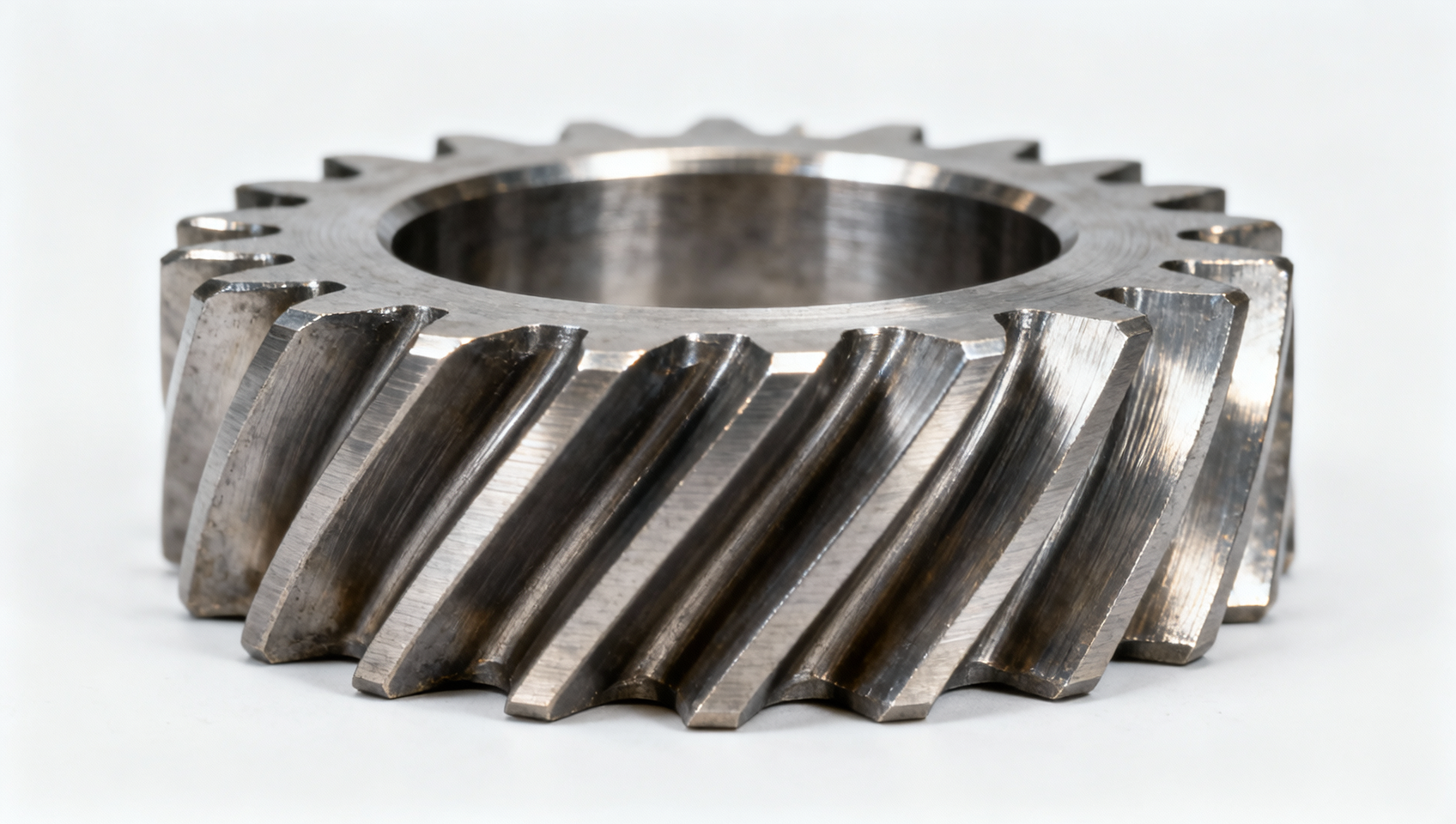
Why Forged Gear Blanks Are Becoming Non-Negotiable for EV Transmission Gear Production
EV transmission gears aren’t just smaller or lighter—they’re subjected to higher torque density, tighter NVH specs, and zero tolerance for microstructural inconsistency. When OEMs and Tier-1 suppliers begin evaluating gear manufacturing routes, the question isn’t whether near-net-shape machining is possible—it’s whether it delivers predictable dimensional stability, grain integrity, and cost control *at scale*. And increasingly, the answer points decisively to precision-forged gear blanks.
Forged gear blanks—specifically those engineered for EV drivetrain applications—aren’t a marginal efficiency upgrade. They represent a structural shift in how high-performance gear geometry is established before machining begins. Where traditional billets require 6–8 mm of radial stock removal and full profile milling, modern forged blanks arrive with profile tolerances within ±0.3 mm and surface roughness under Ra 6.3 µm—enough to eliminate roughing passes and cut finishing time by 35–45%. That’s where the 42% material waste reduction comes from—not theoretical yield math, but real scrap tonnage removed from production lines that run three shifts daily.
It’s Not Just About Less Machining—It’s About What You Gain When You Remove It
The value of near-net-shape forging extends beyond raw material savings. Each millimeter of stock removed in conventional turning or hobbing introduces thermal distortion, residual stress, and potential grain flow disruption—especially critical in thin-webbed, high-ratio EV gear designs. Precision forgings maintain optimal grain flow alignment along load paths, improving fatigue life by 15–20% in independent torsional testing (per ISO 6336-3 methodology). More concretely: fewer gears fail during endurance validation; fewer batches get quarantined for ultrasonic inspection rework; and fewer late-stage design iterations are needed to compensate for machining-induced deformation.
This isn’t incremental optimization—it’s upstream risk mitigation. A forged blank with consistent metallurgical homogeneity reduces the need for post-machining heat treatment correction, cuts quench distortion rates by up to 30%, and allows tighter control over case depth consistency in carburized gears. For suppliers delivering to OEMs with zero-defect launch targets, that translates directly into first-pass yield uplift—not just lower cost per part, but lower cost per *qualified* part.
When Does This Approach Make Strategic Sense?
Forged gear blanks deliver maximum ROI when three conditions converge:
- Volume threshold: Annual demand of ≥50,000 units per gear type. Below this, tooling amortization and process qualification overhead dilute gains.
- Design maturity: Stable geometry with minimal expected revisions over the next 3–5 years. Frequent profile changes negate the advantage of dedicated forging dies.
- Process integration readiness: In-house or partnered CNC capacity capable of handling tighter incoming tolerances—e.g., reduced reliance on manual setup compensation, capability to run adaptive toolpath strategies based on CMM feedback loops.
Where these conditions hold, the payoff compounds: energy use drops 30%+ (forging consumes less kWh/kg than billet heating + multi-pass machining), floor space requirements shrink (fewer machines, less coolant handling), and lead times compress—not because cycles speed up, but because inter-process queues collapse.
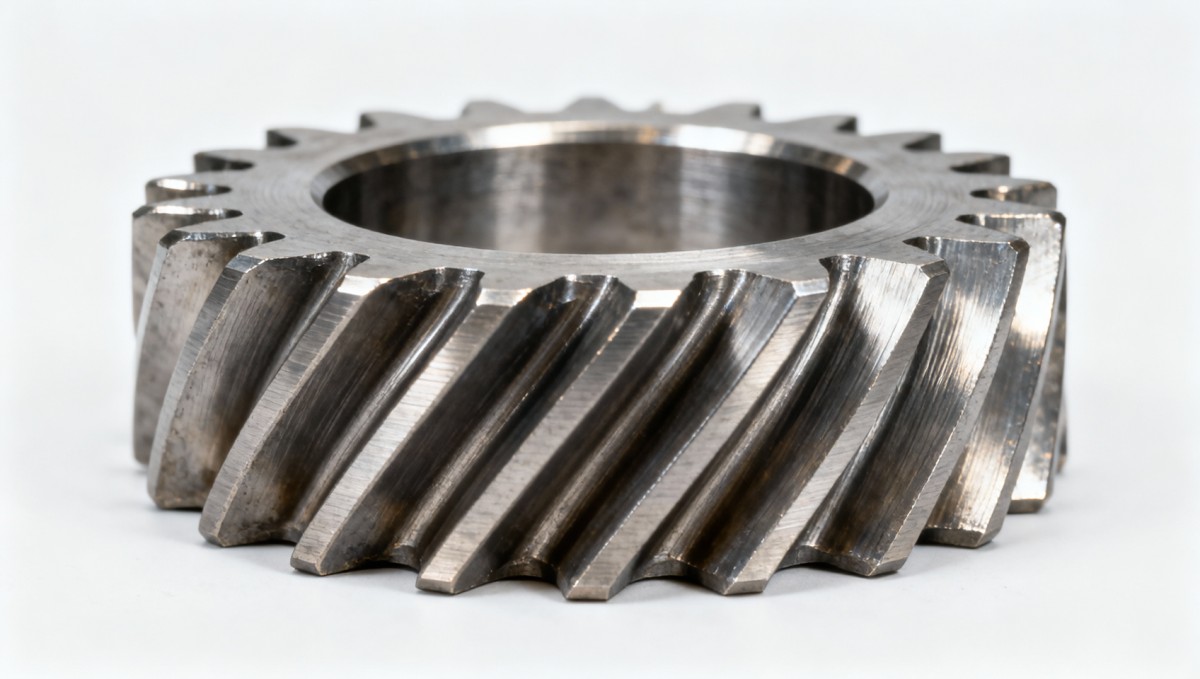
What Often Gets Overlooked—And Why It Matters
Many procurement teams focus exclusively on blank price vs. billet price—and stop there. But the true cost differential emerges downstream. Consider this: a forged blank may cost 12–18% more upfront than a hot-rolled billet. Yet when you factor in 42% less scrap disposal, 25% lower tooling wear (due to uniform hardness and absence of decarburized skin), and 17% fewer operator interventions per batch, total cost of ownership drops by ~20%, as verified across multiple Tier-1 driveline programs.
More critically, forged blanks expose hidden bottlenecks. If your CNC cell relies heavily on manual tramming or lacks in-process probing, the tighter incoming tolerances won’t translate to faster throughput—you’ll simply trade machining time for setup time. Likewise, if your heat treat line struggles with part-to-part temperature uniformity, superior grain flow won’t compensate for inconsistent case hardening. The blank doesn’t fix weak links—it reveals them.
Real-World Validation—Not Lab Benchmarks
Liaocheng Jiucheng Auto Parts has supplied precision-forged gear blanks to SAIC Motor and Shanghai GM for dual-motor e-axle applications since 2021. Their blanks—produced on automated closed-die lines with real-time die temperature monitoring and in-line dimensional verification—consistently achieve <0.15 mm profile deviation on 8-module planetary carriers and <0.2 mm runout on 120 mm diameter input shafts. Crucially, their material utilization rate runs 50% above industry-standard billet processing—not because they use exotic alloys, but because their die design incorporates functional draft angles and optimized flash land geometry that preserve structural integrity without sacrificing machinability.
For applications requiring radial symmetry and high torque transfer, such as integrated e-drive differentials, Wheel-type forgings offer a validated path to stable blank supply—particularly where hub-and-spoke geometry demands balanced grain flow across both rim and web regions.
What’s Next—And What’s Not Changing
Expect continued pressure on forging die life (now routinely exceeding 15,000 hits for EV-grade 20MnCr5 blanks) and tighter integration between forging simulation (DEFORM-based pre-validation) and CAM programming. But don’t expect cold forging to displace warm forging for most EV transmission gears—thermal plasticity remains essential for achieving required ductility in complex tooth root geometries.
The trend isn’t toward “more forging”—it’s toward *smarter* forging: blanks designed not just to reduce stock, but to enable deterministic machining outcomes. That means specifying blanks with controlled microstructure bands, documented grain flow vectors, and traceable lot-level mechanical test data—not just dimensional certs. Suppliers who treat forging as a commodity step will lose ground to those who treat it as the first precision operation in the gear value chain.
For decision-makers evaluating gear manufacturing strategy in 2024 and beyond: forged gear blanks aren’t a cost-saving tactic. They’re a capability enabler—one that reshapes what’s possible in torque density, durability, and sustainable production—not by doing less, but by doing the right things earlier.
Please give us a message