



Related Posts
Online Message
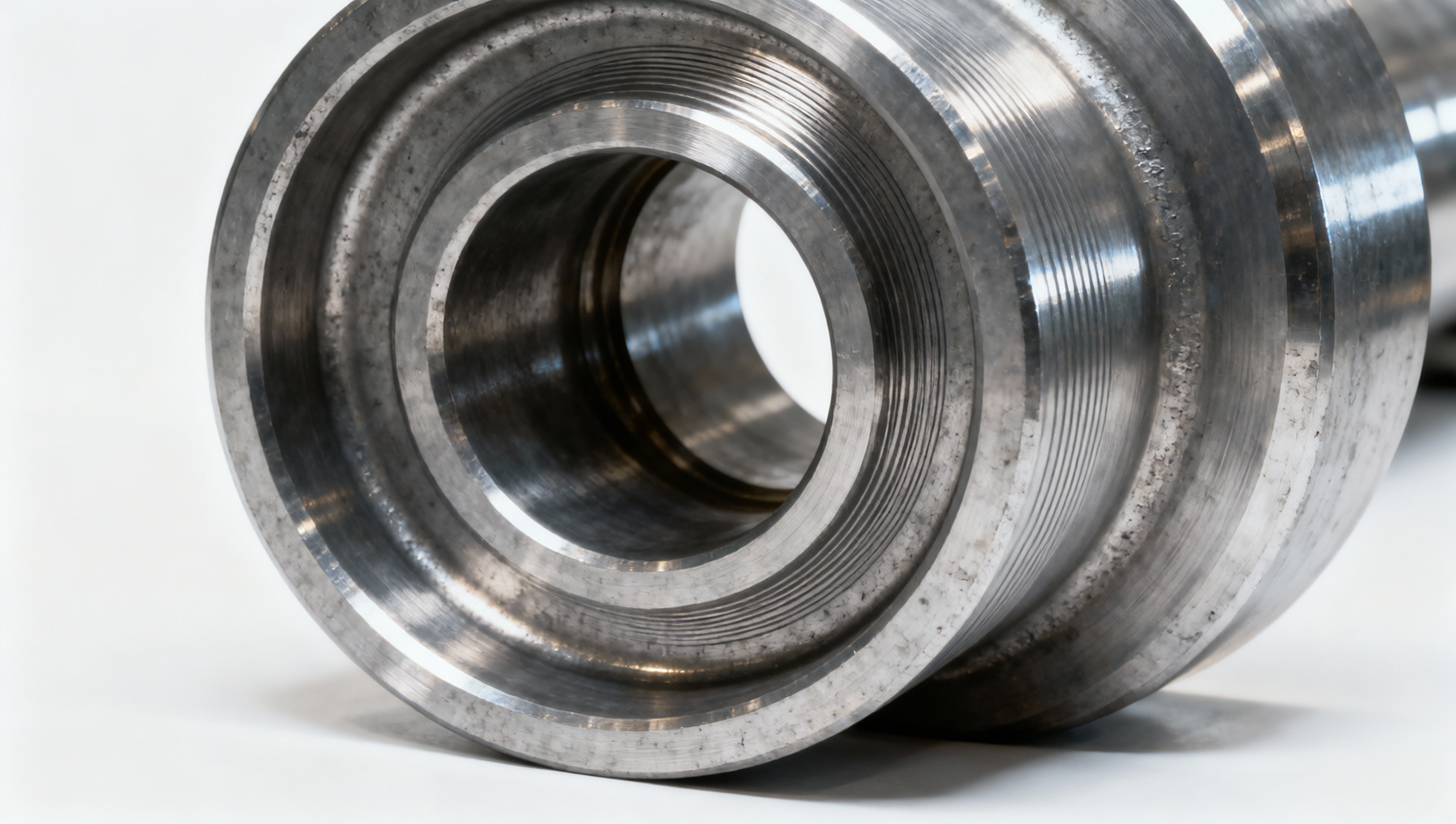
Price Isn’t Just About Location—It’s About How the Heavy Duty Pipe Track Wheel Is Made
When procurement professionals compare quotes for heavy duty pipe track wheels across North America, the EU, and APAC, they often assume regional price differences stem mainly from tariffs or freight. But that’s only part of the picture—and sometimes the least decisive part. What actually moves the needle isn’t geography alone; it’s how deeply each region’s supply chain integrates material science, forging precision, and process efficiency into the wheel’s core structure. A $1,200 wheel quoted in Germany may cost 18% less than an identical-spec unit in Texas—not because labor is cheaper, but because European suppliers increasingly source near-net-shape forged blanks that reduce machining time by 40–60%. Meanwhile, some APAC suppliers quote aggressively on raw steel cost, yet absorb hidden rework premiums due to inconsistent grain flow control in open-die forgings. The result? Higher scrap rates, longer lead times, and lower field reliability—even when nominal specs match. This isn’t theoretical. It reflects real trade-offs procurement teams face daily: choosing between a lower sticker price with uncertain dimensional repeatability—or paying slightly more upfront for a wheel whose geometry holds tight tolerance over 5,000+ operating hours under abrasive soil conditions.Three Drivers That Override “Regional” Labels
1. Forging Method Dictates Long-Term Landed Cost
Casting dominates low-volume, non-critical applications—but for heavy duty pipe track wheels, where fatigue resistance and radial load distribution are non-negotiable, precision forging isn’t optional. Yet “forged” means different things across regions:
- In North America, many suppliers still rely on hot-forged billets followed by full CNC turning—high material waste, high energy use, and variable surface integrity.
- In the EU, tighter environmental regulations have accelerated adoption of near-net-shape forging—where the blank emerges from the die within 1.5 mm of final OD/ID, minimizing post-forging machining.
- In APAC, scale-driven production has improved consistency—but only where Tier-1 OEMs enforce strict die maintenance and microstructure validation (e.g., ASTM A108 + supplementary grain flow reporting).
2. Raw Material Sourcing Isn’t Transparent—And That’s the Problem
Steel grade matters—but so does traceability. A wheel made to ASTM A694 F65 in China may use scrap-based EAF steel with wider carbon banding, while the same spec produced in Poland often uses DRI-based ingots with tighter chemistry control. Neither violates the standard—but the latter delivers more predictable hardness uniformity across the rim section, critical when the wheel runs continuously at 18–22 rpm under 45+ ton axial load.
3. Certification Isn’t Just Compliance—It’s a Proxy for Process Discipline
CE marking, ANSI B11.19, or ISO 13849 aren’t checkboxes—they’re signals about how tightly a supplier controls thermal cycles, die wear, and inspection frequency. A CE-certified wheel from a mid-sized German shop may undergo 100% ultrasonic testing on critical sections, while a nominally ANSI-compliant unit from a larger US facility might use statistical sampling—acceptable per code, but riskier when failure mode is progressive rim cracking.
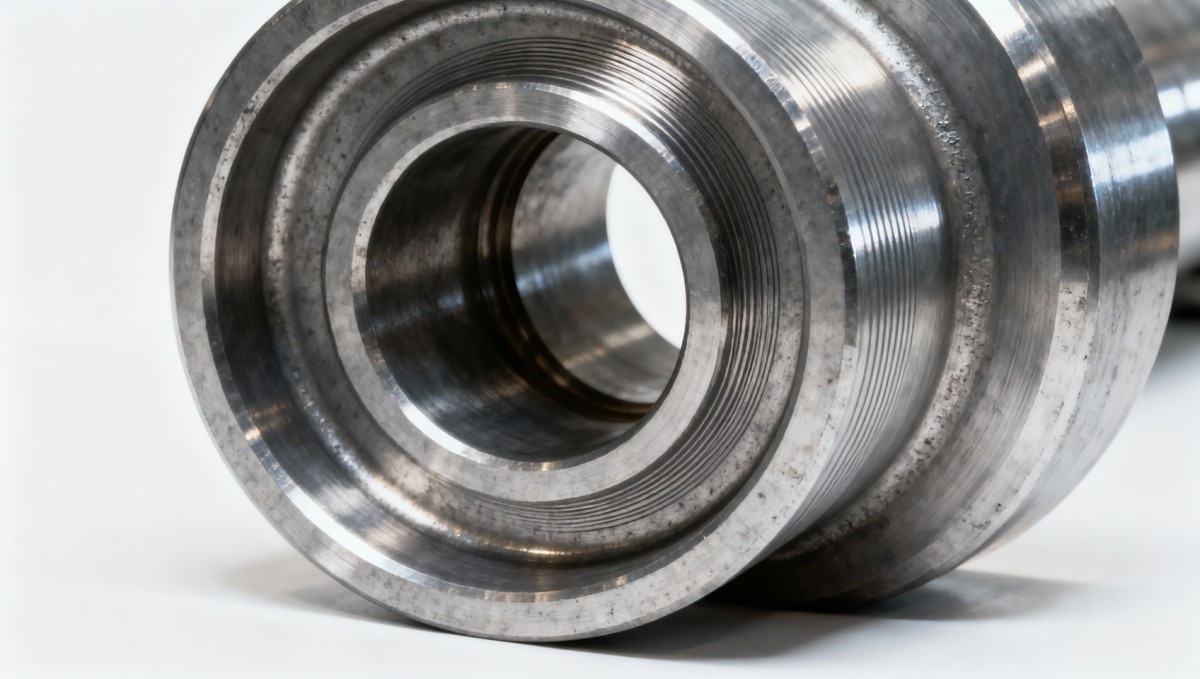
Where Precision Forging Changes the Math
For procurement teams managing global sourcing strategies, the most actionable insight isn’t “EU costs more”—it’s understanding *which* manufacturing capabilities compress variability across regions. Near-net-shape precision forging—especially for ring-shaped components like heavy duty pipe track wheels—does exactly that. By eliminating multiple machining steps, it reduces dependency on local CNC capacity, tooling availability, and operator skill variation. More importantly, it locks in metallurgical advantages early: controlled grain flow along the load path, minimal thermal distortion, and consistent as-forged surface integrity. That’s why suppliers investing in automated forging lines—including those using closed-die presses with real-time die temperature monitoring—show far less inter-regional price drift. Their cost structure anchors to material yield and energy input, not labor arbitrage or tariff volatility. Liaocheng Jiucheng Auto Parts, for example, applies this logic to its precision forging platform: automated heating, multi-station closed-die forming, and in-line dimensional verification allow them to hold ±0.15 mm on critical diameters across batches—whether shipping to wind turbine OEMs in Denmark or construction equipment manufacturers in Ontario. Their approach doesn’t eliminate regional cost drivers—but it isolates them to variables procurement teams can actually benchmark: raw material grade, heat treatment specification, and NDT scope—not “location premium.” In practice, this means a procurement team evaluating options across regions should prioritize suppliers who treat forging not as a step, but as the foundational performance layer. One tangible starting point: ask for proof of grain flow alignment relative to loading direction—not just tensile strength numbers.A Realistic Benchmarking Tip
Don’t compare “heavy duty pipe track wheel” quotes on unit price alone. Build a simple landed-cost matrix that includes:- Forging yield rate (kg of finished part per kg of billet)
- Post-forging machining time (hours per unit)
- NDT coverage level (100% UT vs. sample radiography)
- Heat lot traceability depth (full mill report vs. batch summary)
- Warranty terms tied to fatigue life (not just dimensional warranty)
What This Means for Your Next Sourcing Cycle
Regional price variance in heavy duty pipe track wheels isn’t noise—it’s information. It reflects underlying differences in process maturity, material discipline, and quality accountability. Ignoring it leads to reactive firefighting: chasing down premature failures, expediting replacements, or accepting unplanned downtime. But reading it correctly lets procurement shift from cost negotiation to capability assessment. Ask suppliers—not “what’s your price in Mexico?”—but “how do you validate grain orientation in the rim section?” or “what’s your average forging yield on 42CrMo rings over 800 mm OD?” Those questions reveal more about true cost stability than any regional index ever could. If you're evaluating forged components where dimensional integrity and fatigue resistance are mission-critical, exploring upstream options like the Forged Ring Blank—designed for minimal post-processing and optimized grain structure—can reset expectations around what “competitive pricing” really means across markets. Because in the end, the most stable price isn’t the lowest one on paper. It’s the one backed by repeatable process control—wherever it’s manufactured.Please give us a message