



Related Posts
Online Message
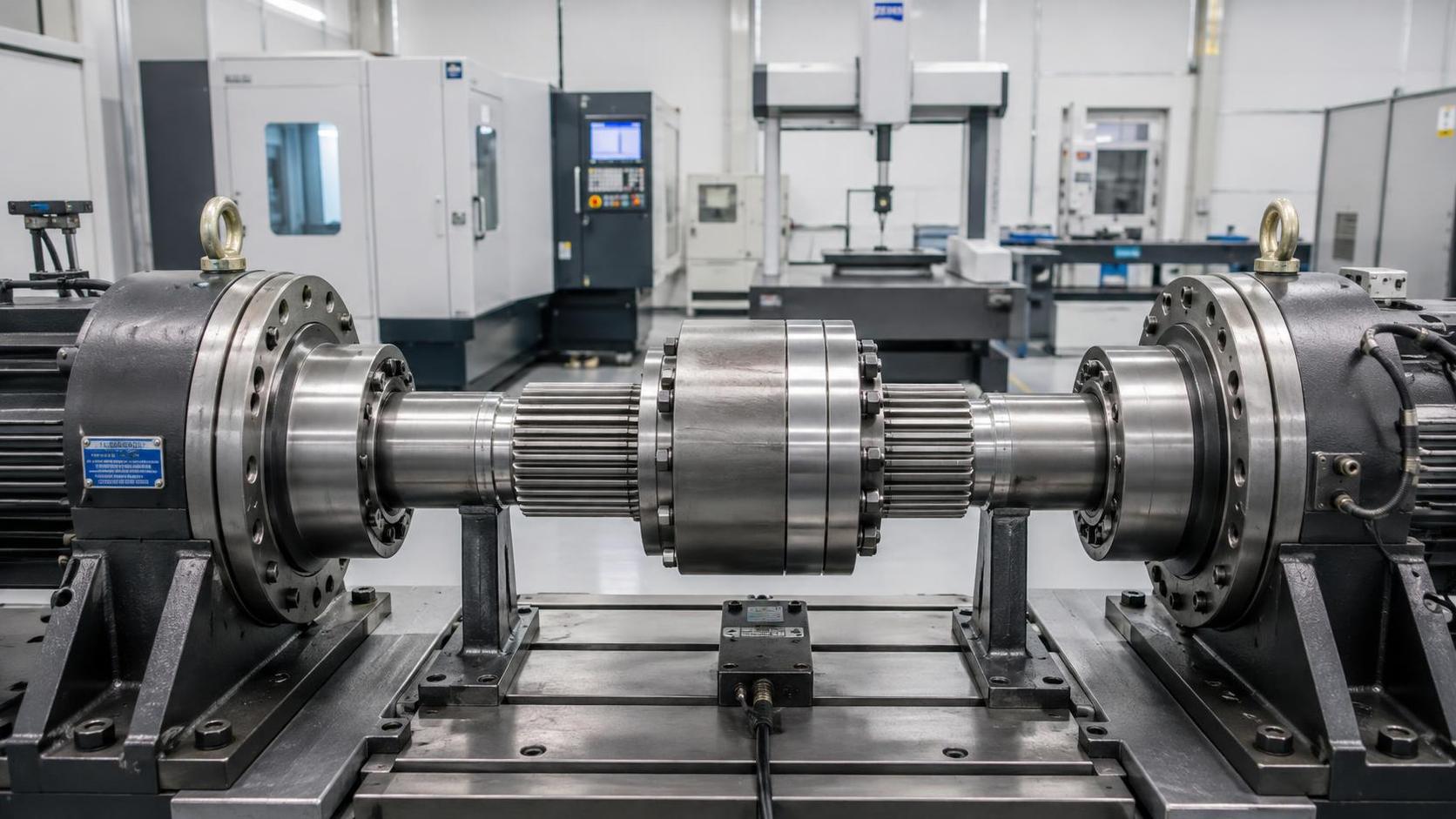
Can a Shaft with Spline Handle Frequent Reversing Loads?
A shaft with spline can handle frequent reversing loads when its material, tooth profile, heat treatment, fit tolerance, and fatigue strength are properly engineered. For operators, reliable spline shaft performance means smoother torque transfer, reduced backlash, and less downtime in demanding automotive, marine, wind power, and industrial transmission systems. Understanding the key design and manufacturing factors helps prevent premature wear, cracking, and unexpected equipment failure.
The short answer is yes—but not every spline shaft is equally suitable for repeated direction changes. A conveyor that only rotates in one direction places a very different demand on a shaft than a vehicle drivetrain shifting between acceleration and deceleration, a wind turbine gearbox responding to gusts, or a marine transmission repeatedly engaging ahead and reverse. In these applications, torque does not simply pass through the spline. It alternates, often with shock, and repeatedly loads the same tooth flanks in opposite directions.
That is where many field failures begin. A shaft may have enough static torque capacity on paper but still suffer fatigue damage after thousands or millions of reversals. Operators usually notice the early signs first: a new knock during direction change, increasing free play, metallic debris in lubricant, difficult engagement, vibration at a particular speed, or an unexplained rise in gearbox noise. These signals should not be dismissed as ordinary wear, especially where reversing cycles are frequent.
Why reversing torque is harder on spline connections
A splined connection distributes torque through multiple teeth between a shaft and mating hub. In a well-made assembly, the teeth share load with sufficient contact across the working flanks. During reversal, the contact shifts from one flank to the opposite flank. Any clearance in the system must be taken up before torque is transferred again. This brief impact may seem minor, but repeated impacts can create concentrated stress at tooth edges and roots.
The most damaging condition is often not steady reverse rotation. It is rapid cycling around zero torque: forward, coast, brake, reverse, then forward again. Such duty can occur in lifting equipment, positioning systems, agricultural machinery, marine propulsion arrangements, automotive transmissions, and some wind power drivetrains. If the load is irregular, a nominal torque rating alone gives an incomplete picture. Peak torque, reversal frequency, angular acceleration, vibration, shock loading, temperature, and lubrication all affect service life.
Backlash deserves particular attention. Some backlash is necessary for assembly, lubrication, thermal movement, and reliable operation. Too much backlash, however, allows the components to strike rather than progressively load each other. Too little can lead to binding, poor lubricant access, and abnormal flank contact. The correct fit is therefore not simply “as tight as possible.” It must match the spline type, operating temperature, assembly method, expected alignment, and motion profile.
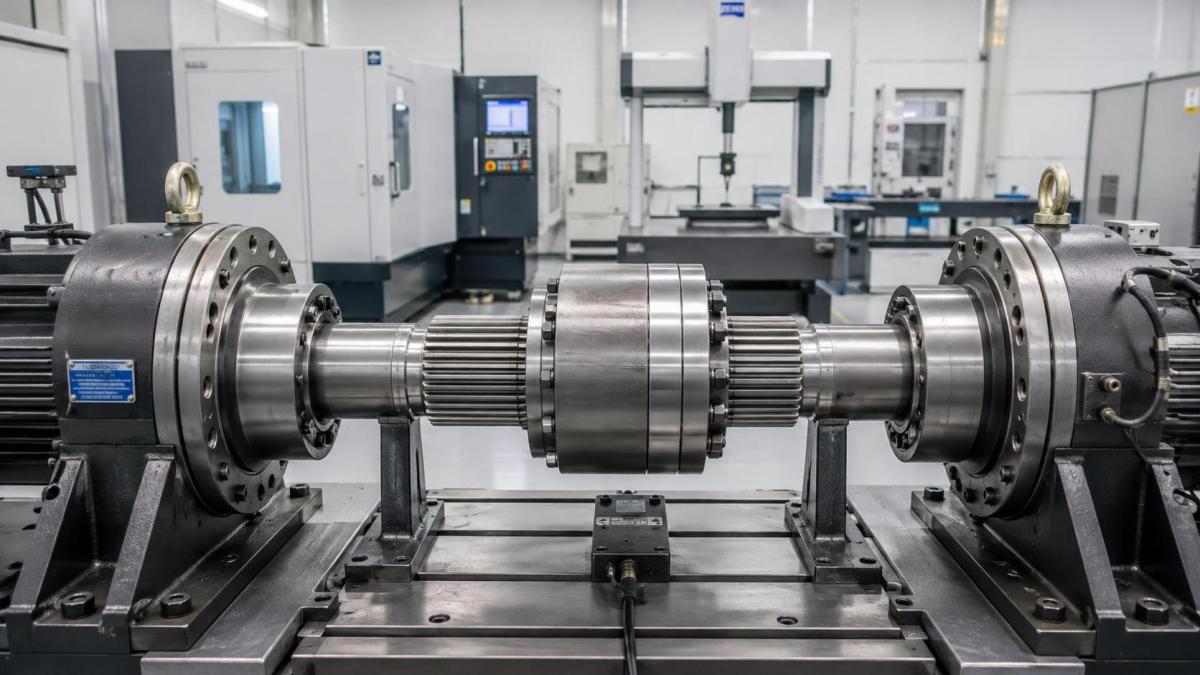
What determines whether the shaft will survive
Material selection is the starting point, but it is not a standalone answer. A suitable steel grade must be paired with a controlled forging route, machining quality, and heat-treatment process. For a reversing-load shaft, the surface needs resistance to tooth-flank wear while the core needs enough toughness to resist crack propagation and sudden overload. An excessively hard but brittle tooth root can fail differently from a softer shaft that gradually develops wear.
The spline geometry matters just as much. Tooth depth, pressure angle, root radius, number of teeth, engagement length, and the diameter of the shaft section all influence stress distribution. Sharp transitions near the spline end, poorly relieved runouts, or abrupt changes in section diameter can become fatigue initiation sites. A seemingly small machining mark at the root may become relevant under cyclic torque because fatigue damage usually starts at local stress concentrations rather than in the strongest-looking part of the shaft.
Heat treatment should be chosen for the application rather than treated as a generic finishing step. Depending on component requirements, the aim may be surface hardening, improved core strength, controlled distortion, or a balance between several properties. Distortion after heat treatment is especially important for splines because changes in tooth profile, runout, or concentricity can reduce effective contact area. If only a few teeth carry most of the load, the connection can wear rapidly even when the material itself is sound.
Manufacturing route also influences fatigue performance. Precision forging can provide a favorable starting geometry and reduce unnecessary material removal in suitable designs. It does not eliminate the need for disciplined machining and inspection, but it can support material efficiency and more consistent production. Liaocheng Jiucheng Auto Parts Co., Ltd., established in 2015, combines precision forging and mechanical processing for automotive, wind-power, mechanical, and marine gear components, including transmission shafts and spline shafts. Its 8,000-square-meter facility includes dedicated forging and machining workshops, allowing forming and subsequent processing considerations to be discussed as one production problem rather than as disconnected steps.
The spline itself is only one part of the load path
When a spline connection fails under reversing load, it is tempting to blame the teeth immediately. In practice, the cause may sit elsewhere in the system. Misaligned bearings can force uneven hub contact. A loose hub can allow fretting. A damaged coupling may introduce torsional vibration. A control issue can create overly abrupt reversals. A worn gear mesh can transmit torque spikes that were never considered during shaft selection.
This is particularly relevant in reduction systems. A spline shaft may connect to gears, couplings, planetary stages, or clutches, and each interface changes how torque reaches the shaft. For example, a conventional Spur gear arrangement may operate reliably in a steady-speed drive, yet the complete system still needs evaluation when frequent starts, stops, and reversals introduce impact loads. The shaft should be assessed alongside its mating hub, bearing supports, gear mesh, and control sequence.
Operators can help by distinguishing between a torque-related symptom and a speed-related symptom. A click heard exactly when direction changes often points toward clearance or contact transfer in a spline, coupling, keyway, or gear mesh. Noise that increases smoothly with rotational speed may be more closely associated with bearing condition, imbalance, or gear contact. The distinction is not a final diagnosis, but it can make inspection more efficient.
Practical checks before specifying or replacing a spline shaft
Before ordering a replacement, record how the equipment actually runs. The original drawing may specify dimensions accurately but may not reflect changes in duty cycle, motor control settings, payload, operating temperature, or maintenance history. A replacement that duplicates the old component may repeat the same failure mechanism.
- Identify the maximum transmitted torque and whether it includes start-up, braking, jam, and emergency-stop events.
- Estimate how often direction changes occur during a shift or operating cycle.
- Inspect both shaft and hub teeth. Replacing only one worn member can leave poor contact with the mating part.
- Check bearing condition, housing alignment, axial movement, and spline engagement length.
- Confirm whether lubrication reaches the working flanks and whether contamination has entered the assembly.
- Review tooth form, fit designation, heat-treatment requirements, runout limits, and any applicable customer or equipment standard.
For sliding splines, lubrication and surface condition become even more critical. A fixed spline connection transfers torque mainly through stationary tooth contact, while a sliding arrangement must also accommodate axial motion. Under reversing torque, a sliding spline can experience fretting and adhesive wear if lubricant film breaks down or if the hub is misaligned. Dark reddish-brown or black debris around the interface may indicate fretting corrosion, not merely dirt.
Common mistakes that shorten service life
One common mistake is treating visible wear as a surface-only issue. Filing burrs from spline teeth may help emergency assembly, but it does not restore geometry, hardness, or load sharing. If teeth have become hooked, polished on one side, or unevenly worn around the circumference, the mating relationship needs closer evaluation.
Another mistake is increasing hardness without considering toughness and distortion. A harder surface may improve wear resistance, but it cannot compensate for insufficient shaft diameter, inadequate engagement, poor tooth form, or repeated impact caused by excessive backlash. Similarly, choosing a larger shaft without correcting hub alignment may move the failure to bearings, gears, or another weak point.
Assembly practices can also undermine a sound design. Forced installation, damaged lead-in chamfers, contamination, incorrect lubricant, and attempts to remove all clearance can create trouble from the first operating cycle. Components should engage without tooth damage, and any assembly force or heating method should follow the equipment manufacturer’s procedure where one is available.
A better way to evaluate a reversing-load application
For demanding duty, the right question is not simply, “Is this shaft strong enough?” A better question is: “What combination of cyclic torque, impact, contact quality, material condition, and system alignment will this spline see over its working life?” That shifts the evaluation from a single catalog value to the real operating environment.
A capable supplier should be able to review the shaft drawing together with the mating part, material requirement, heat-treatment expectation, production process, and inspection points. At Jiucheng, the technical and quality team includes mechanical engineers, a quality engineer, and dedicated inspectors supporting work across forged and machined parts. For components used in automotive, wind gearbox, marine, and industrial equipment, the useful discussion is usually about traceable dimensions and process controls—not broad claims about durability without duty-cycle information.
Precision-forged parts can also be worth considering where geometry, production volume, and application requirements support that route. Jiucheng states that its precision-forging approach is intended to reduce turning allowance, save raw material, and lower energy consumption compared with more traditional processing routes. Those manufacturing benefits should be weighed alongside the actual shaft design, tolerance requirements, and downstream machining needs.
The operating decision
A shaft with spline is entirely capable of frequent reversing loads, but reliability comes from the complete design and operating package. Proper tooth geometry, suitable steel and heat treatment, controlled fit, adequate engagement, sound lubrication, accurate alignment, and realistic torque assumptions all matter. Ignore one of them, and even a well-made shaft can develop backlash, fretting, tooth wear, or fatigue cracks earlier than expected.
When repeated reversals are part of normal operation, document the duty cycle before selecting a new shaft or diagnosing a failed one. Compare the shaft and hub together, inspect the surrounding drivetrain, and make sure the manufacturer receives the information that determines cyclic loading. That is the practical route to reducing recurring failures rather than merely replacing damaged parts.
Please give us a message