



Related Posts
Online Message
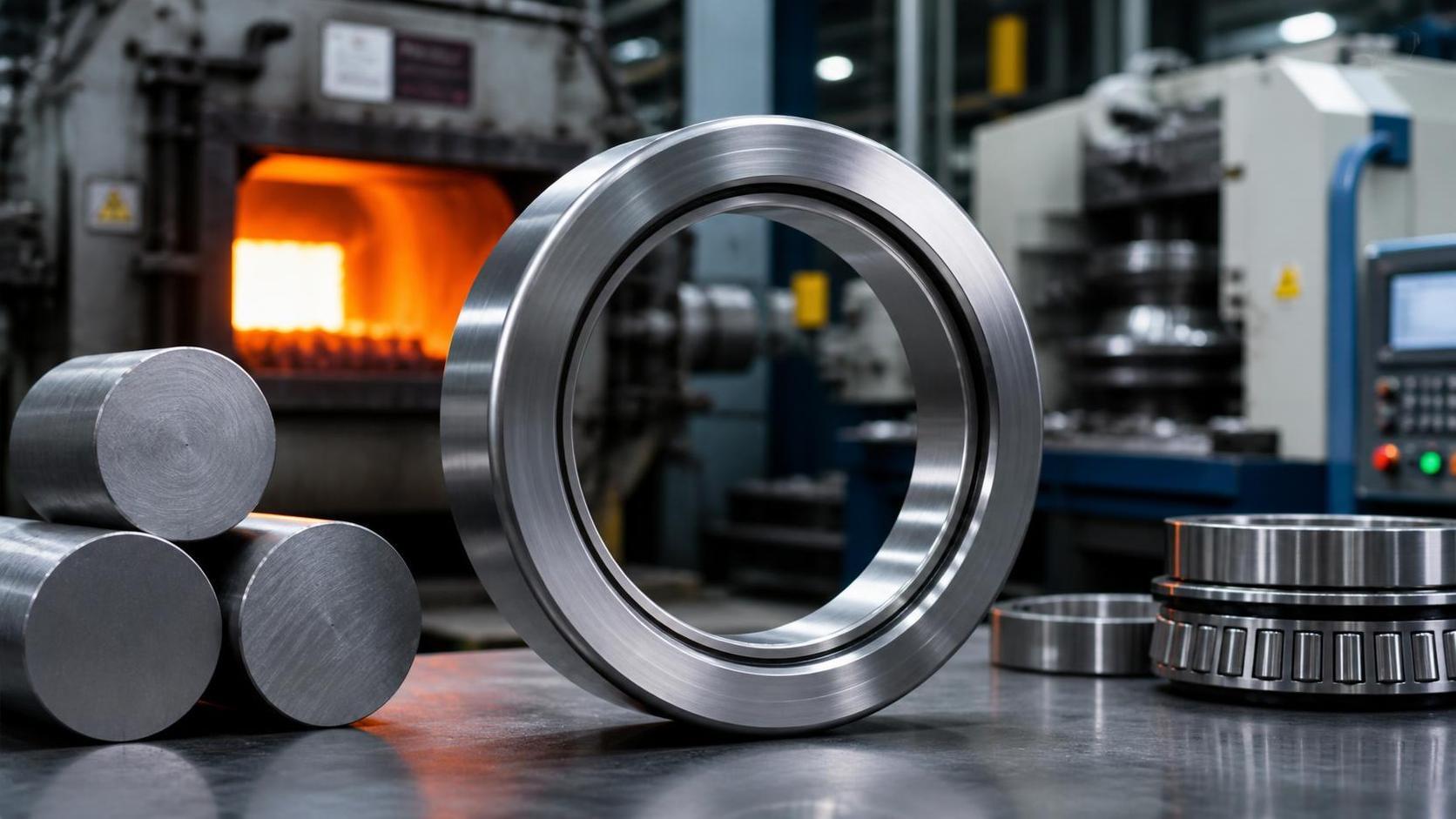
Forged Bearing Rings: Material and Heat Treatment Choices for Longer Bearing Life
Forged Bearing Rings are a critical foundation for bearing durability, load capacity, and operating stability in demanding automotive, wind power, marine, and industrial machinery applications. For technical evaluators, selecting the right steel grade and heat treatment route is essential to balancing hardness, toughness, fatigue resistance, and dimensional consistency. The choice is not simply between “hard” and “strong.” A ring that reaches the specified hardness but contains unfavorable microstructure, excessive retained austenite, decarburization, or residual stress may still fail early through spalling, cracking, distortion, or raceway damage.
Bearing life begins before machining, grinding, and assembly. It begins with steel cleanliness, billet condition, forging reduction, fiber flow, thermal uniformity, and the ability to control every transition between those stages. This is particularly relevant where bearings carry variable loads, vibration, shock, or long maintenance intervals, such as wheel-end systems, reduction gearboxes, marine drive equipment, and wind turbine transmissions.
Why the Ring Manufacturing Route Matters
A bearing ring is not merely a circular steel blank. Its raceway is a highly stressed rolling-contact surface. Repeated contact between rolling elements and the raceway creates subsurface shear stresses that can eventually initiate rolling contact fatigue. The material must resist this fatigue while retaining enough toughness to avoid brittle fracture under transient overloads, mounting stress, or low-temperature service conditions.
Forging can support these requirements by consolidating the material and shaping the grain-flow direction around the ring profile. Compared with a route based solely on machining from bar or thick-walled tube, a properly designed forging process can reduce material waste and provide a more suitable starting structure for heat treatment. That benefit is not automatic: poor heating practice, inadequate deformation, excessive finishing temperature, or uncontrolled cooling can introduce coarse grains, banding, surface defects, or internal discontinuities that later become fatigue initiation sites.
For precision forged components, the practical objective is to leave enough machining allowance for raceway finishing while avoiding unnecessary stock removal. Lower machining volume can improve material utilization and energy efficiency, but it must never come at the expense of geometry control, inspection access, or the allowance required to remove decarburized surface layers.
Steel Grade Selection Starts with the Failure Mode
The familiar high-carbon chromium bearing steel family remains a common starting point for many through-hardened rings. Grades comparable to 100Cr6, 52100, or GCr15 are widely associated with rolling bearing applications because they can develop high hardness and wear resistance after suitable hardening and tempering. Their usefulness, however, depends on section size, operating temperature, target hardness, cleanliness level, and required toughness. Selecting a grade by name alone is not an adequate specification.
For larger rings or designs requiring a harder case over a tougher core, carburizing steels may be considered. This route is often relevant when the ring must absorb high loads or shock while maintaining a hard raceway surface. Case-hardening steels require a different evaluation framework: effective case depth, core hardness, carbon potential control, quench response, distortion allowance, and post-carburizing grinding all become central concerns.
In applications exposed to elevated temperature, corrosion, electrical current passage, or unusual lubrication conditions, conventional bearing steel may not be sufficient by itself. Stainless bearing grades, specialty alloys, coatings, insulation strategies, or lubrication changes may be part of the solution. It is risky to ask a heat treatment process to compensate for an unsuitable material family.
The specification should also identify the governing material standard rather than relying on trade terminology. Depending on the supply chain and destination market, technical documentation may refer to standards such as ISO 683 for heat-treatable and bearing steels, ASTM material specifications, EN designations, or customer-specific requirements. Equivalency between grades should be verified through chemical composition, metallurgical condition, and required performance—not assumed from a similar grade label.
Heat Treatment Is a Controlled System, Not a Final Step
For through-hardened bearing rings, the conventional sequence generally includes spheroidize annealing of the raw material or forged blank where required, machining preparation, austenitizing, quenching, and tempering. Each stage affects the next. Spheroidized carbides can support machining and more predictable hardening behavior; uneven or unsuitable carbide distribution may make it difficult to obtain a stable final structure.
Austenitizing must dissolve enough carbon and alloying elements into solution to develop hardness after quenching, but excessive temperature or hold time can coarsen austenite grains. Coarse grains may reduce toughness and make the ring more vulnerable to crack propagation. Quenching must be sufficiently rapid and uniform for the required martensitic transformation, yet harsh enough to cause distortion, quench cracks, or residual stress is not a successful result.
Tempering is sometimes underestimated because it follows hardening, but it is essential for stabilizing the structure and moderating quench stress. The selected temperature and time should be validated against the requested hardness range, dimensional stability, and service duty. Where high precision and long service life are required, sub-zero treatment or stabilization treatment may be assessed as part of the full route; whether it is justified depends on the material, heat treatment practice, tolerance requirement, and bearing design.
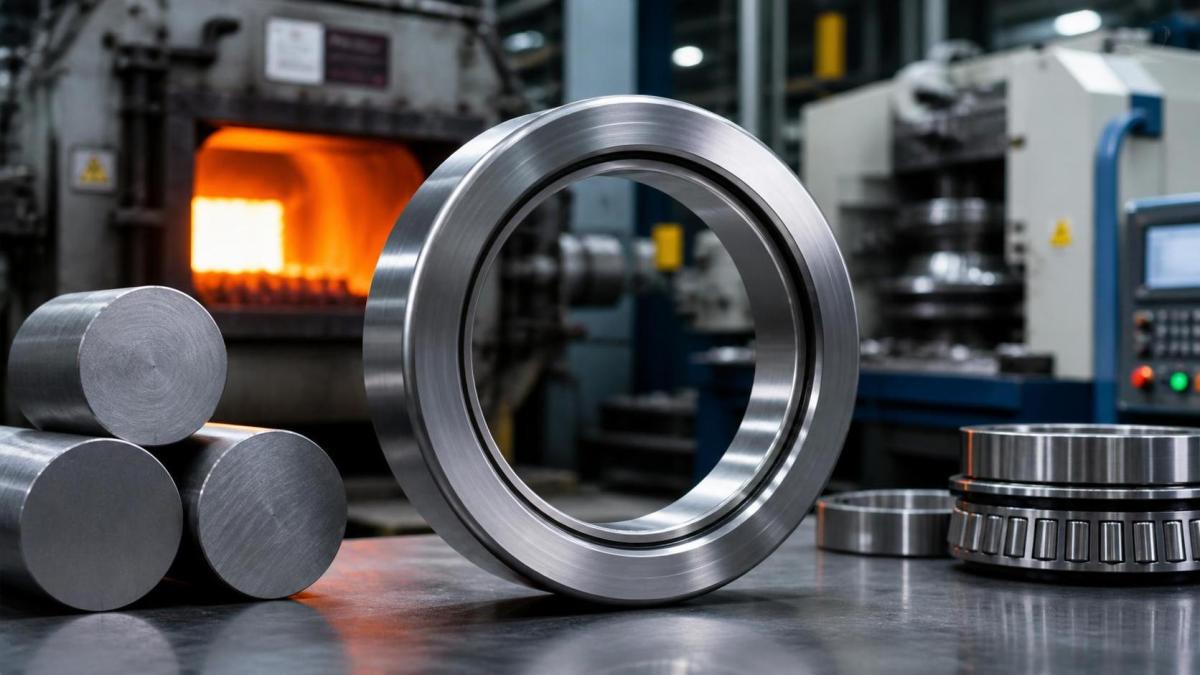
For carburized rings, the process window is broader and often more sensitive. Carbon potential, effective case depth, diffusion time, atmosphere control, quenching, and post-treatment all affect the final surface and core relationship. Excessive surface carbon can encourage undesirable carbide networks or brittleness. Insufficient case depth can leave the raceway without enough support beneath the contact surface. The correct answer is application-specific rather than universally “deeper is better.”
The Metallurgical Risks That Deserve Early Review
A technical review should address failure risks before tooling and production approval. Decarburization is a clear example. If the surface loses carbon during heating, the resulting softened layer can compromise the future raceway unless it is completely removed by machining or grinding. Oxidation and scale can create similar practical problems, especially where stock allowance is tight.
Retained austenite is another balancing issue. A limited amount can be acceptable or intentionally managed in some bearing steel systems, but excessive or unstable retained austenite may contribute to later dimensional change and hardness variation. It should be evaluated by the applicable engineering requirement and validated measurement method rather than treated as a universal defect.
Non-metallic inclusions, segregation, and carbide irregularities matter because rolling contact fatigue is highly sensitive to local stress concentrations. This is why steel source, incoming documentation, sampling plans, and metallographic examination should be discussed when ring duty is severe. For high-load gearbox and wind power work, the required material quality level is often tied to a customer’s internal drawing and validation process, not merely the nominal steel grade.
Dimensions Cannot Be Separated from Metallurgy
Heat treatment changes dimensions. Ring growth, ovality, runout, and variation in wall thickness can all influence the amount of grinding needed to reach the final geometry. A process that produces excellent hardness but requires excessive corrective grinding may reduce efficiency and create additional risk at the raceway. Conversely, pursuing near-net shape without adequate allowance can leave no margin to correct thermal movement or remove affected surface material.
This is where forging, machining, and heat treatment teams need a shared process plan. The forging blank should be designed around the eventual datum strategy, machining sequence, heat-treatment distortion pattern, and final inspection requirements. Components such as Forged cylindrical parts can provide an efficient foundation for ring-like or sleeve-like geometries when their stock allowance and thermal route are defined as part of the engineering package rather than after the fact.
Final bearing geometry may be controlled under standards such as ISO 492 for rolling bearing tolerances, but the relevant tolerance class, raceway profile requirements, and measurement procedures must come from the actual product specification. A forged-ring supplier may not manufacture the finished bearing, yet the upstream blank dimensions and metallurgical consistency directly affect whether downstream operations can reliably meet those final requirements.
What to Ask During Technical Evaluation
The most useful supplier discussion is not limited to unit price or nominal grade. It should establish what the ring must survive and how conformance will be demonstrated. A practical review normally includes the following questions:
- What is the ring’s final function: inner ring, outer ring, race component, or a related transmission part?
- Which load conditions dominate: steady radial loading, axial loading, shock, vibration, or reversing torque?
- Is through hardening or case hardening specified, and what property range applies at the relevant location?
- What inspection evidence is required for chemistry, hardness, microstructure, decarburization, cracks, dimensions, and traceability?
- Which surfaces remain after heat treatment, and how much material will be removed before final grinding?
- Are there environmental constraints involving corrosion, low temperature, contamination, or long relubrication intervals?
These questions often reveal conflicts early. A tight distortion limit may require a different quench method, revised blank geometry, or a more conservative machining allowance. A high hardness target may be technically possible but inconsistent with the desired toughness. A supplier that sees the drawing, material requirement, inspection plan, and expected process route together is better positioned to identify those trade-offs before production begins.
Precision Forging Capability and Process Discipline
Liaocheng Jiucheng Auto Parts Co., Ltd., established in 2015, operates precision forging and mechanical processing workshops within an 8,000-square-meter factory facility. Its work includes forged components for automotive gears, wind power gearboxes, mechanical equipment, and marine transmission parts. That application mix is relevant to bearing-ring evaluation because gearboxes and drive systems impose many of the same concerns: fatigue loading, dimensional repeatability, material traceability, and coordination between forging and subsequent machining.
The company’s stated emphasis on near-net-shape precision forging, reduced turning, and material-saving production reflects a sound manufacturing direction when it is controlled by clear process limits. Reduced machining can lower waste and energy use, but the technical priority remains consistent blank quality. With engineering, quality, inspection, and electrical personnel supporting production, process control can be organized around the actual component route rather than treated as a separate inspection activity at the end.
For any forged bearing ring program, the right material and heat treatment choice should be confirmed against the finished bearing design, not isolated from it. Review the duty cycle, steel standard, hardening route, microstructural acceptance criteria, machining allowance, and inspection records as one connected system. That is the more reliable path to longer bearing life than choosing a familiar grade and assuming the rest of the process will take care of itself.
Please give us a message