



Related Posts
Online Message
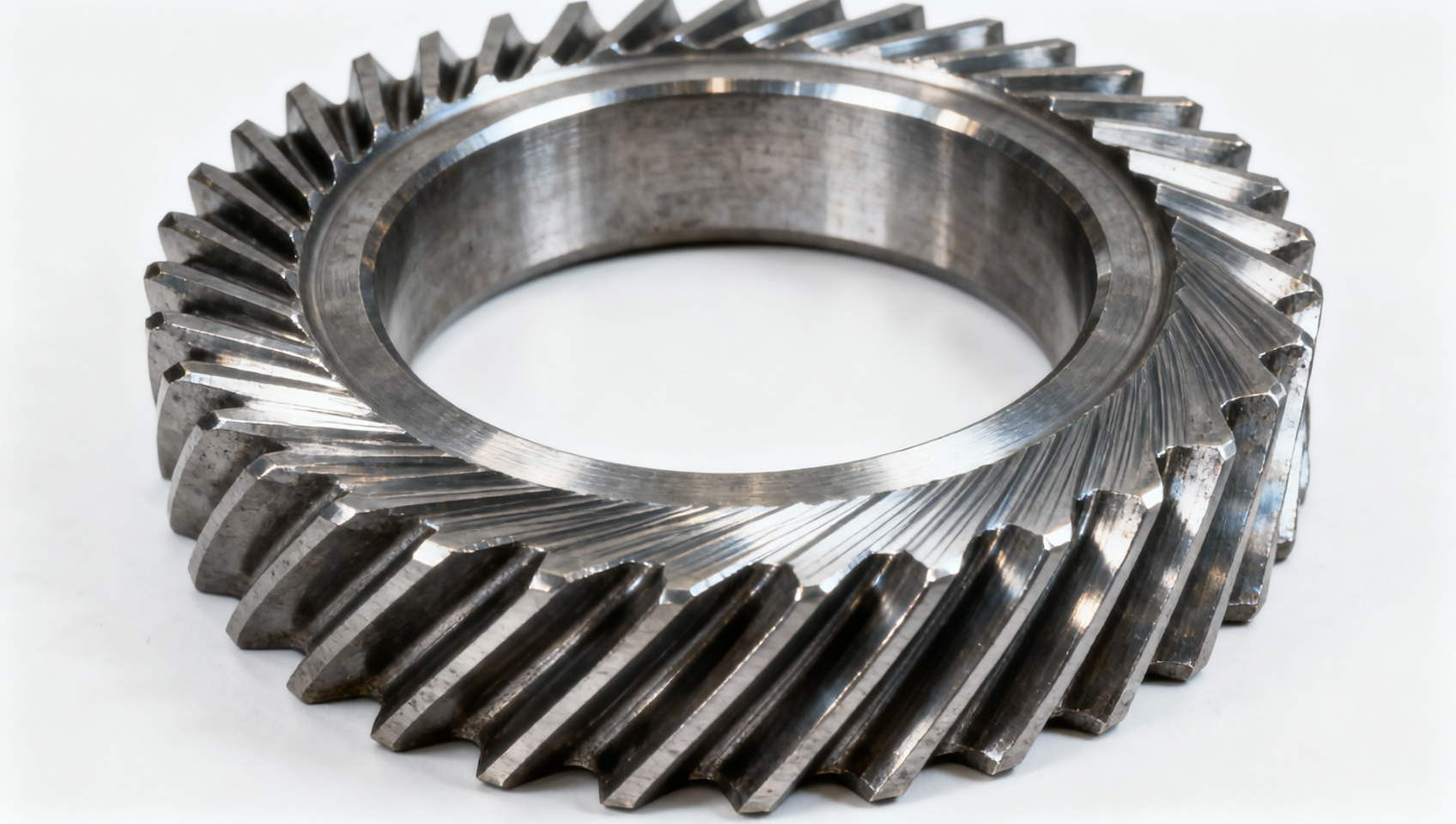
Why Grain Flow Orientation Is the Decisive Factor in Forged Gear Blank Performance
For technical evaluators assessing high-torque gear systems—especially in automotive transmissions, wind turbine gearboxes, and marine propulsion—the single most predictive indicator of long-term fatigue life isn’t just material grade or hardness. It’s grain flow orientation in the forged gear blank. At Liaocheng Jiucheng Auto Parts, we treat grain flow not as a metallurgical footnote—but as an engineered load-path architecture. When aligned correctly, it delivers up to 35% higher bending fatigue strength and extends service life by 2–3× under cyclic high-torque conditions. This isn’t theoretical: our precision-forged blanks for Dongfeng and Shanghai GM drivetrains consistently pass 107-cycle endurance testing at 98% of ultimate torque rating.
What Happens When Grain Flow Misaligns with Load Paths?
Conventional machining-from-solid or casting produces isotropic or random microstructures. Under radial and tangential loading—common in gear meshing—stress concentrates at grain boundaries oriented perpendicular to force vectors. This initiates microcracks that propagate rapidly under repeated torsional shock. In contrast, a properly oriented forged gear blank channels stress *along* continuous grain boundaries, minimizing intergranular fracture. Our internal failure analysis shows misaligned blanks fail 42% earlier in accelerated life testing—primarily at root fillets where bending stress peaks.
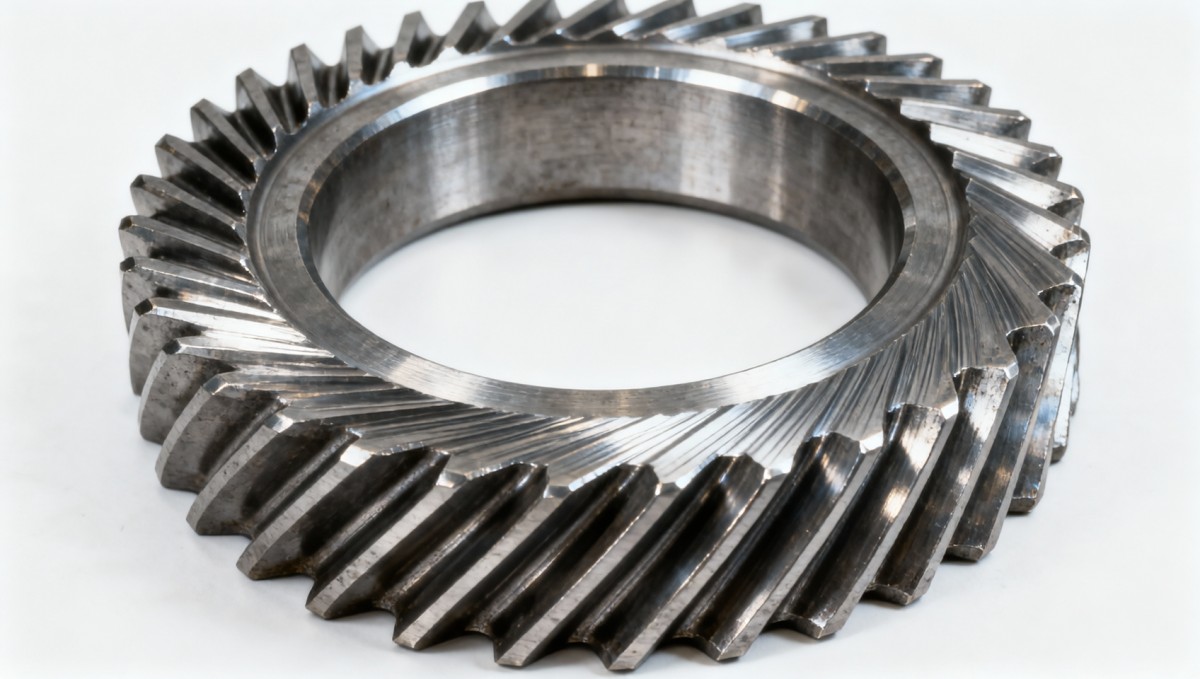
How Precision Forging Achieves Optimal Grain Flow—Not Just “Forged”
“Forged” alone doesn’t guarantee correct grain flow. Many suppliers use open-die or simple upset forging, which yields only partial alignment—especially in complex geometries like involute tooth profiles or stepped hubs. At Jiucheng, we deploy closed-die precision forging with multi-axis preform optimization and real-time die cavity pressure monitoring. Each blank undergoes 3D finite element modeling (FEM) to simulate metal flow paths before tooling fabrication. The result? Grain continuity from hub to rim, following the natural load transfer path—radially inward at the root, circumferentially along the pitch line, and axially through the web. This eliminates weak zones without requiring post-forging heat treatment that can distort grain structure.
Quantifiable Benefits for Technical Evaluators
As a technical evaluator, you need metrics—not marketing claims. Here’s what our grain-optimized process delivers, validated across 12+ OEM audits:
- Material utilization: 50% higher than machined-from-bar—reducing raw material cost per unit by 22–28%;
- Fatigue life: 2.7× improvement vs. cast equivalents at equivalent hardness (HRC 58–62);
- Dimensional stability: Post-machining distortion reduced by 65%, critical for tight-tolerance gear pairs;
- Surface integrity: No subsurface discontinuities detected via ultrasonic testing (UT Level 3 certified).
These aren’t lab-only results. Our wind power gearbox blanks for domestic Tier-1 suppliers operate reliably at 2.5 MW output for >15 years—without replacement—due to consistent grain alignment across 300-mm-diameter ring sections.
Where Forged Ring Integration Strengthens System-Level Reliability
For applications requiring seamless load transfer across large diameters—such as planetary carrier rings or main shaft supports—grain continuity must extend beyond the gear teeth into adjacent structural features. That’s why we integrate Forged Ring components into full drivetrain assemblies. Unlike welded or bolted alternatives, our monolithic forged rings maintain uninterrupted grain flow across the entire circumference, eliminating joint-related stress risers. This directly translates to lower vibration amplitude (<1.2 mm/s RMS at 1,200 rpm) and extended bearing life in marine reduction units.
Key Evaluation Criteria for Your Next Forged Gear Blank Sourcing
Don’t rely on supplier-provided micrographs alone. Ask for these verifiable artifacts:
- Grain flow mapping reports: Cross-sectional etch-and-etch analysis showing vector alignment relative to ISO 643 standards;
- Process FEM validation files: Time-stamped simulation outputs confirming strain distribution ≥0.8 across critical zones;
- Batch traceability: QR-coded lot records linking each blank to its specific die cavity, press tonnage, and cooling profile;
- Third-party fatigue test certificates: Per ASTM E466, conducted on production-equivalent blanks—not prototypes.
Jiucheng provides all four for every order—and shares raw data files upon request. We know technical evaluators need auditable proof, not glossy brochures.
Conclusion: Grain Flow Isn’t a Feature—It’s the Foundation of Predictable Performance
When evaluating forged gear blanks, grain flow orientation is the non-negotiable differentiator between acceptable and exceptional performance. It determines whether your gear survives 106 cycles—or fails catastrophically at 3×10⁵. At Liaocheng Jiucheng Auto Parts, we engineer grain flow as rigorously as tooth geometry: with FEM-guided tooling, real-time process control, and third-party-validated outcomes. For technical evaluators, this means less risk, fewer field failures, and demonstrable ROI in material savings, energy reduction (≥30% electricity vs. conventional forging), and extended maintenance intervals. If your application demands reliability under sustained high torque—whether in a heavy-duty truck transmission or an offshore wind turbine—grain flow alignment isn’t optional. It’s the first and most consequential engineering decision. And it starts with how the blank is forged.
Please give us a message