



Related Posts
Online Message
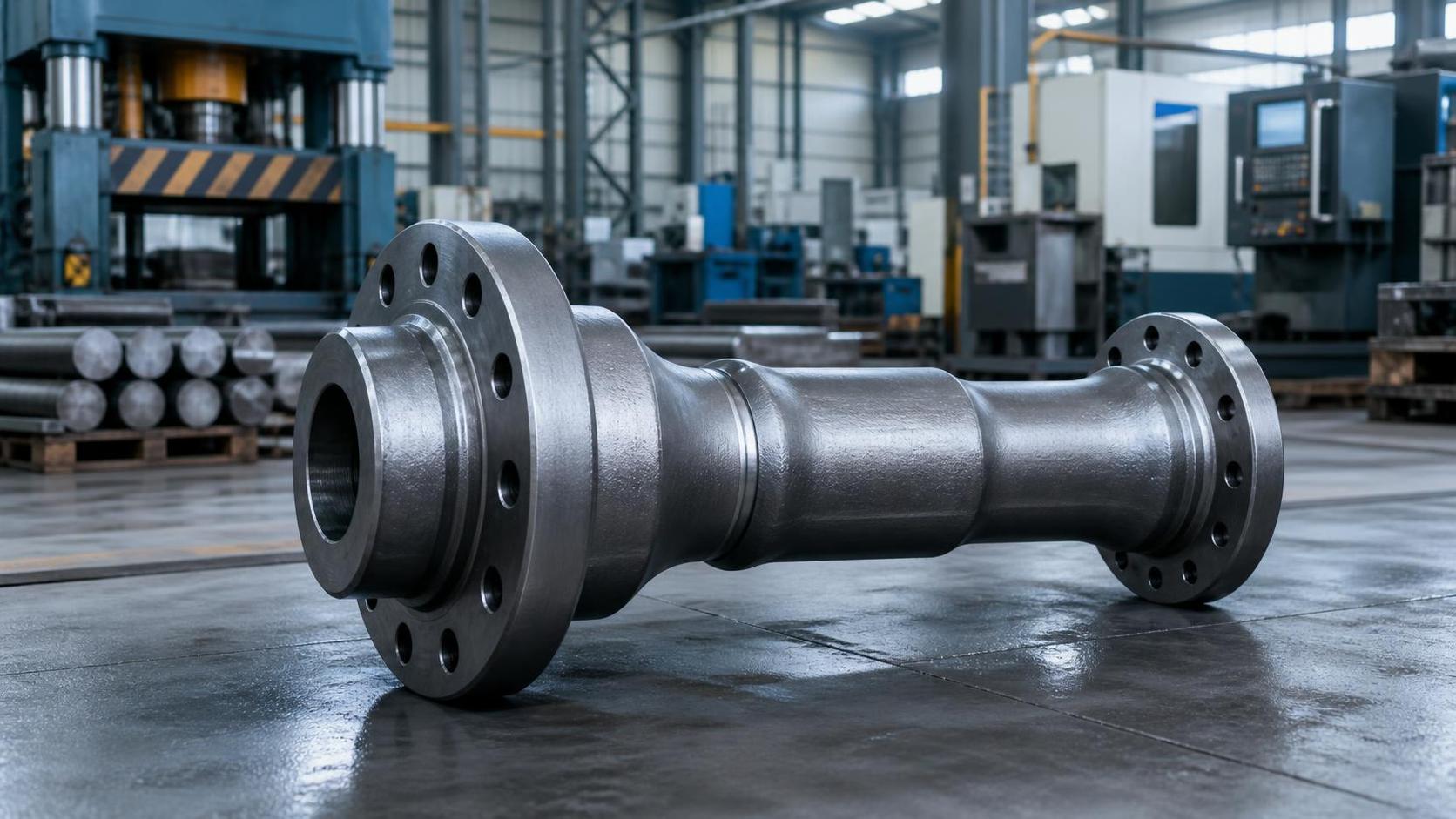
For manufacturers evaluating production routes for high-load components, choosing between hot forging and bar-stock machining directly affects material efficiency, strength, cost, and lead time. Hot forging parts are often the better solution when complex geometries, superior grain flow, and reduced material waste are required. Yet forging is not automatically the right answer for every drawing or production volume. The practical decision depends on what the component must withstand, how many pieces will be produced, and how much downstream machining is truly necessary.
For purchasing leaders, the question is rarely “Which process has the lowest piece price today?” It is more often: “Which route gives us stable quality, predictable supply, and the lowest total cost over the life of the program?” For engineering teams, the concern may be different: fatigue life, torque transmission, impact resistance, dimensional repeatability, or the risk of a machined part failing in service. Understanding where hot forging creates value makes those conversations much more productive.
Why the Choice Matters Beyond the Initial Quote
Machining from bar stock begins with a rolled steel bar and removes material until the desired shape appears. This method is flexible, familiar, and well suited to prototypes, low-volume programs, and parts with relatively simple geometry. It also avoids the up-front cost and development time associated with forging dies.
Hot forging takes a different path. Steel is heated to a controlled forging temperature and shaped under pressure in dies. Rather than cutting most of the form away, the process moves material toward the final geometry. In precision forging, the blank can be produced close enough to net shape that only limited finishing operations are needed.
The difference becomes substantial when a component has thick-to-thin transitions, hubs, flanges, splines, teeth preforms, shoulders, or load-bearing contours. Bar-stock machining may turn a large percentage of purchased steel into chips. A forged preform places more of that steel into the part itself, which can reduce scrap handling, machining time, tool wear, and exposure to raw-material price fluctuations.
There is also a structural difference. During forging, the metal’s grain flow can follow the shape of the component. In a shaft shoulder, gear blank, or flange transition, this directional grain structure may provide better resistance to repeated loading than a part machined entirely from bar stock, where machining cuts across the original grain orientation. The benefit is especially relevant where torque, shock, bending loads, or fatigue cycles govern component life.
Situations Where Hot Forging Parts Usually Win
Hot forging tends to be the stronger production route when several of the following conditions are present at the same time.
The component is safety- or load-critical
Automotive drivetrain components, wind-power gearbox parts, marine transmission elements, reducer gears, transmission shafts, and spline shafts operate under forces that are not always steady or forgiving. A part may experience thousands or millions of stress cycles, sudden torque reversals, vibration, and local contact loading. In these applications, forged material continuity and a controlled forging structure can be more important than simply achieving the final dimensions.
Examples include gear blanks with integral hubs, bevel gear preforms, flanged shafts, coupling elements, and heavy-duty yokes. If the drawing contains areas where loads change direction sharply, a forging engineer can often design the preform so material flow supports the stress path rather than leaving a heavily machined transition as the critical weak point.
Material utilization is under scrutiny
When a machined component starts from an oversized billet or large-diameter bar, waste can become an overlooked cost center. This is particularly true for disc-shaped or flanged parts, where a large outer diameter may be machined down while internal profiles, hubs, and relief areas are cut away.
For production programs with stable demand, near-net-shape hot forging can sharply reduce the amount of steel removed. Liaocheng Jiucheng Auto Parts Co., Ltd. applies precision forging and controlled mechanical processing to help reduce unnecessary turning on suitable parts. The company reports that its precision-forged route can achieve substantially higher material utilization than conventional processes, while also lowering energy use and comprehensive production cost for appropriate applications.
The exact savings must always be validated against the drawing, grade, process route, and annual volume. Still, the procurement principle is clear: when machining chips represent a meaningful share of purchased material, forging deserves a serious feasibility review.
Annual volumes can absorb tooling investment
Forging dies cost money, and they should not be treated as an afterthought. A low-volume custom part may never recover the investment. But as annual demand rises, the economics shift. The die cost is spread across more units, while the savings from reduced machining time, lower material consumption, and repeatable preforms accumulate.
There is no universal break-even quantity because steel grade, part weight, geometric complexity, tolerance requirements, and die life all matter. Rather than asking a supplier for a generic “forging minimum order quantity,” decision-makers should request a side-by-side cost model based on anticipated annual demand and expected program duration. Include tooling amortization, machining cycle time, scrap rate, inspection, heat treatment, logistics, and the cost of any quality risk.
The geometry is difficult to machine efficiently
Some part designs are technically machinable but economically poor candidates for bar stock. Deep shoulders, asymmetric mass distribution, large flange-to-shaft ratios, gear-integrated forms, and multiple diameter changes may demand numerous setups, long cycle times, special fixtures, or heavy material removal.
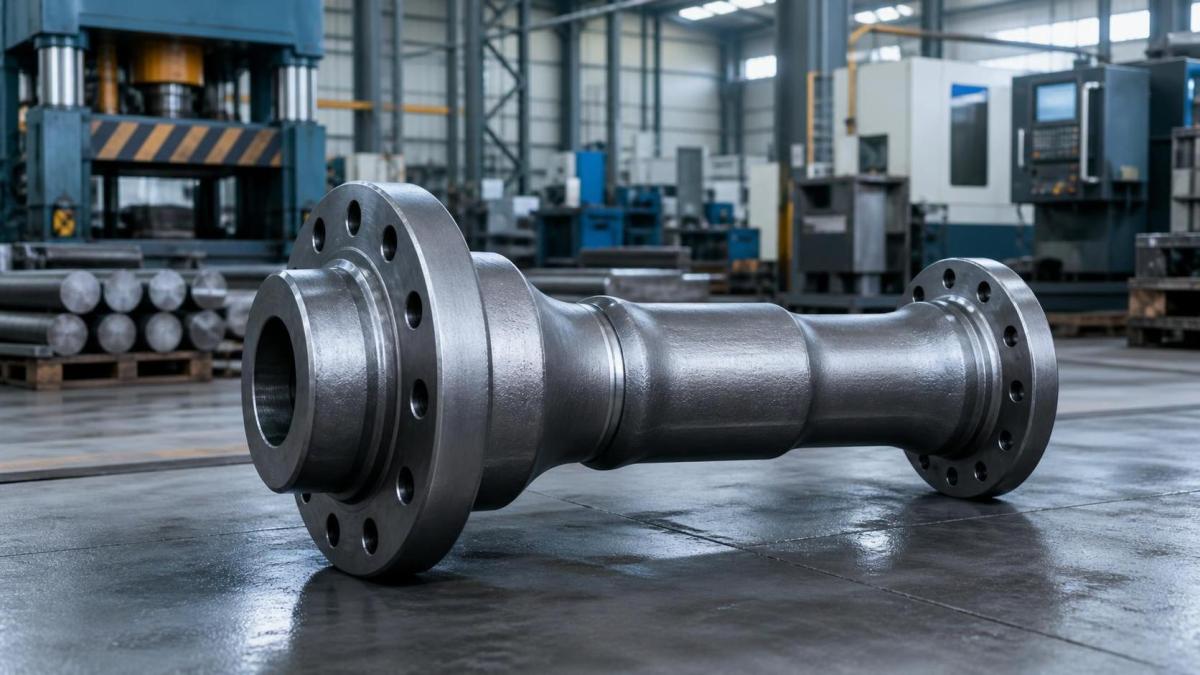
Consider a flange component used in a power transmission assembly. If its mounting face, central hub, and reinforcing web are all formed from a solid bar, machining can be slow and wasteful. A forged blank can bring those major volumes closer to their final shape before CNC finishing begins. For applications of this kind, Flange forgings can provide a practical starting point for evaluating whether a near-net-shape route makes sense.
When Bar-Stock Machining Is Still the Better Decision
A balanced sourcing strategy does not force every component into a forge. Bar-stock machining remains the better option in several common situations.
- Prototype and validation quantities: Before a design is frozen, avoiding permanent tooling allows engineering changes to be made quickly.
- Very low annual demand: If production volumes are limited, die amortization may overwhelm the material savings of forging.
- Simple prismatic or turned geometries: Parts that closely match available bar sizes and require little material removal may be machined efficiently.
- Frequent design revisions: A forging die is built around a defined geometry. If interfaces, diameters, or tooth forms are likely to change, machining offers greater flexibility.
- Extremely tight local tolerances: Forging can create the ideal preform, but certain bearing seats, spline features, gear teeth, and sealing surfaces still need finish machining. If nearly every surface requires extensive precision machining anyway, the forging advantage may narrow.
The important distinction is that forging and machining are not always competing processes. In many high-value components, the strongest route is forging plus machining. The forge establishes material shape and mechanical integrity; the machining workshop delivers final tolerances, surface finish, concentricity, and functional interfaces.
A Practical Comparison for Sourcing Teams
Do Not Compare Only the Finished Part Price
A common mistake is comparing a forged-and-machined quote with a bar-machined quote without confirming that both suppliers are pricing the same technical responsibility. A cheaper route may exclude tooling maintenance, heat-treatment control, non-destructive testing, final machining, material traceability, or inspection documentation. Conversely, a forged blank quote may appear expensive if it is compared directly with a raw bar price rather than with the complete machining route.
For a meaningful decision, ask each supplier to define the process boundary. Is the quote for a rough forging, a normalized forging, a machined blank, or a finished part ready for assembly? Which dimensions are controlled at the forging stage? Which surfaces will be machined afterward? What inspection is performed on incoming material, forged shape, heat treatment, and finished features?
This is particularly important for gears and transmission parts. A forged gear blank can be an excellent foundation, but final gear quality still depends on subsequent hobbing, shaping, grinding, heat treatment, and inspection. The forged route improves the starting condition; it does not eliminate the need for disciplined process control.
Questions Engineering and Procurement Should Ask Before Selecting a Route
Before approving hot forging parts, create a joint review between design, quality, manufacturing, and sourcing teams. The following questions often reveal whether forging will deliver genuine value:
- What are the actual load paths, fatigue requirements, and failure modes of the part?
- Can the geometry be redesigned slightly to improve forgeability without changing function?
- How much raw material becomes chips in the current bar-stock process?
- What annual volume and product life are realistic, not merely optimistic forecast numbers?
- Which dimensions require finish machining, and which can be controlled by the forging?
- Does the supplier have both forging and machining capability, or will multiple handoffs create risk?
- What material grades, heat-treatment requirements, and traceability expectations apply?
- How will tooling changes be managed if the design is revised after launch?
These questions move the discussion away from assumptions. They also help suppliers provide a more useful manufacturability recommendation rather than simply quoting the process requested on the drawing.
What a Capable Forging Partner Should Bring to the Evaluation
The best hot-forging outcome is not created by press capacity alone. It requires coordination between die design, billet preparation, heating control, forming sequence, trimming, heat treatment, machining allowance, and inspection. A forged part that is too far from final geometry loses material-efficiency benefits; one that is formed without adequate machining allowance may create finishing difficulties.
Liaocheng Jiucheng Auto Parts combines a precision forging workshop with mechanical processing capability, serving component needs across automotive, wind power, machinery, and marine applications. Its production focus includes precision forgings, gears, bevel and spiral gear preforms, reducer gears, planetary gear components, transmission shafts, and spline shafts. For buyers, this integrated approach can simplify the conversation: the supplier can assess not only whether a shape can be forged, but also how the forged blank will perform in the next machining operation.
Quality planning should be part of the initial feasibility discussion. Look for clear agreement on material chemistry, forging temperature window, grain-flow considerations, deformation allowances, hardness targets, dimensional inspection points, and records needed for your supply chain. A robust process is more valuable than an attractive sample part that cannot be repeated consistently in production.
The Decision in One Sentence
Choose hot forging when a stable-volume, load-bearing component has geometry that wastes significant bar stock or would benefit from grain flow and near-net-shape forming; choose bar-stock machining when flexibility, low volume, rapid revision, or simple geometry matters more than production-scale material and performance advantages.
For many automotive, gearbox, wind-power, and industrial transmission programs, the most economical answer is not “forging instead of machining.” It is a carefully engineered combination of both. By reviewing the full lifecycle cost and functional demands before tooling is approved, decision-makers can turn hot forging from a purchasing alternative into a durable manufacturing advantage.
Please give us a message