



Related Posts
Online Message
How Seamless Rolled Ring Forging Reduces Weld-Related Failure Risks
For quality-control and safety managers, weld-related failures can create costly downtime, inspection challenges, and serious operational risks.
Seamless rolled ring forging removes the weld seam, creating continuous grain flow, stronger structural integrity, and more predictable load-bearing performance.
This article explains how the process reduces crack initiation, fatigue failure, and quality variation in automotive, wind power, marine, and industrial equipment.
Why Welded Rings Create a Persistent Quality and Safety Concern
A welded ring may satisfy dimensional and strength requirements at delivery, yet its weld zone remains a localized area requiring additional risk control.
The welding process introduces rapid heating and cooling cycles that can alter microstructure, residual stress distribution, hardness, and corrosion behavior near the joint.
These localized changes do not automatically mean a welded component will fail. However, they make performance more dependent on welding quality and inspection discipline.
For safety-critical rotating equipment, a small inconsistency at the weld can become significant after thousands or millions of loading cycles.
Common weld-related concerns include incomplete fusion, porosity, slag inclusions, undercut, lack of penetration, and crack formation during cooling or service.
Even when non-destructive testing detects no obvious discontinuity, residual stresses and heat-affected-zone variability may still affect long-term fatigue behavior.
Quality managers therefore face a practical question: can the required geometry be produced without introducing a weld seam in the first place?
For many ring-shaped components, seamless rolled ring forging provides a direct answer by forming the ring from a single heated billet.
The process does not eliminate every metallurgical or manufacturing risk. It does, however, remove one important source of localized uncertainty.
This matters most where a component transmits torque, supports bearings, contains pressure, or experiences repeated bending, vibration, and temperature cycling.
How Seamless Rolled Ring Forging Changes the Failure Mechanism
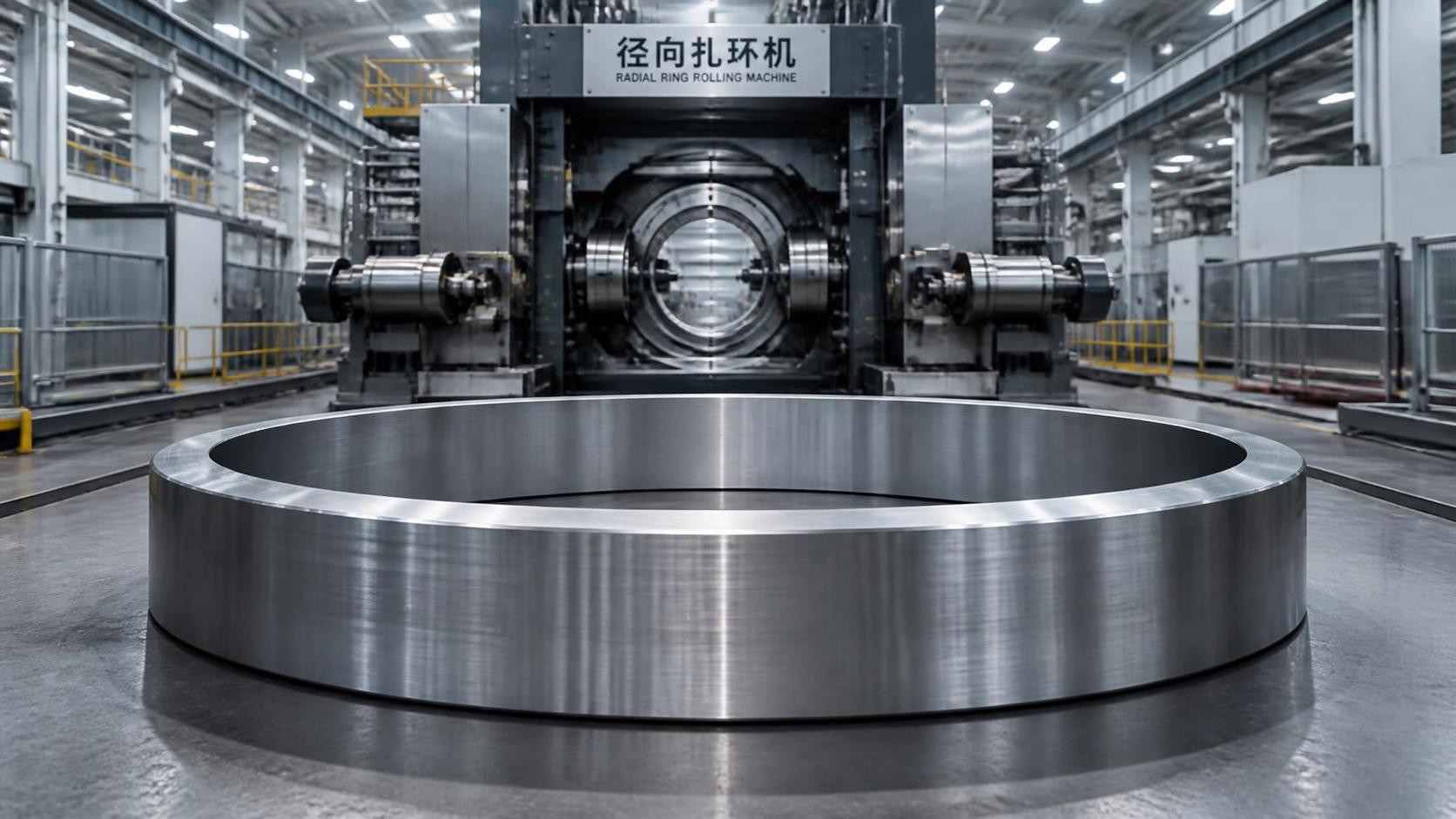
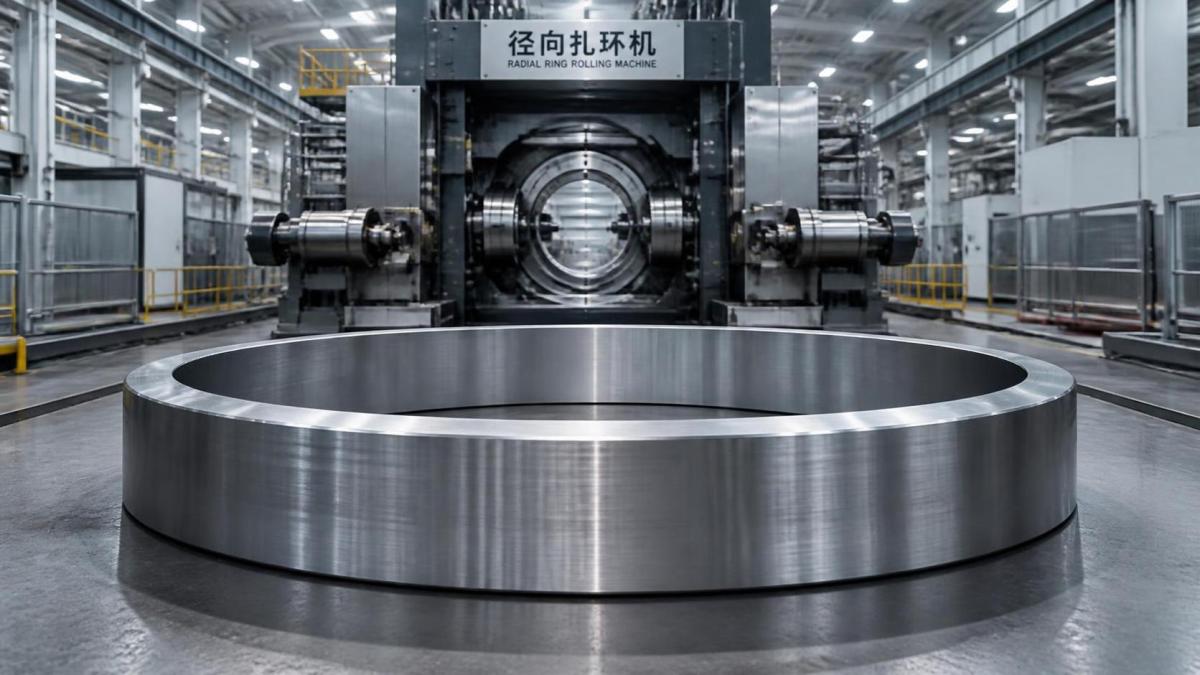
Seamless rolled ring forging begins with a solid metal blank that is heated, pierced, and expanded between specialized rolling tools.
As the ring grows in diameter, its wall thickness is reduced and its material is worked into the required cross-sectional profile.
Because the ring is formed from one continuous piece of material, no butt weld or circumferential fusion line is introduced.
The most important structural benefit is continuous grain flow following the ring circumference rather than terminating at a welded joint.
Grain flow is not merely a visual metallurgical feature. Its direction can influence resistance to fatigue, impact loading, and stress concentration.
In a properly designed forged ring, the material structure follows the component's primary load path more naturally than many fabricated alternatives.
This continuity helps distribute stresses around the circumference instead of concentrating risk at a discrete joint location.
For quality teams, the benefit is greater consistency. The inspection plan can focus on forging integrity, heat treatment, machining quality, and material certification.
It no longer needs to manage weld procedure qualification, welder performance, joint preparation, filler compatibility, and weld-specific repair records.
That reduction in process variables can simplify supplier control, incoming inspection, traceability reviews, and failure investigation when equipment operates in demanding conditions.
Reducing Crack Initiation Under Cyclic Loads
Fatigue cracks often begin at locations where stress is concentrated, surface quality is poor, or microstructural changes create a weak local region.
A weld toe, weld root, or heat-affected zone can become such a location, especially when cyclic stress repeatedly crosses the joint.
Seamless rolled ring forging removes the seam-related geometric transition and metallurgical boundary that can encourage crack initiation in fabricated rings.
It also avoids defects associated with insufficient fusion or entrapped contaminants, which may serve as internal starting points for fatigue damage.
This advantage is especially relevant in transmission systems, planetary gear assemblies, bearing races, flanges, and large rotating machinery components.
These parts may experience combined radial, axial, torsional, and thermal loads rather than a simple static force.
Under variable loading, the fatigue performance of the entire component depends heavily on the most vulnerable local feature.
Removing a weld does not replace good engineering design. Wall thickness, fillet radii, machining marks, heat treatment, and surface condition still matter.
However, it gives designers and safety managers a more uniform starting condition for controlling fatigue life across the ring.
When reviewing supplier capabilities, request evidence of grain-flow orientation, mechanical-property testing, and process control for the intended load direction.
Controlling Residual Stress and Distortion Risks
Welding concentrates heat in a narrow region. As that region cools, differential contraction can leave residual tensile stresses around the joint.
Residual tensile stress is important because it can combine with service loads, lowering the margin before cracks begin or grow.
Post-weld heat treatment can reduce this concern, but it adds processing time, cost, handling, and another stage requiring strict control.
Seamless rolled rings are heated during forging, but their thermal history is generally managed as part of a complete forming and heat-treatment route.
The resulting stress condition is more uniform than a component containing a sharply localized weld thermal cycle, assuming correct process control.
Uniformity can also reduce distortion risk during subsequent machining, particularly for large-diameter rings with tight face-runout or concentricity requirements.
This is valuable when the ring interfaces with bearings, seals, gears, housings, or bolted flange connections that demand reliable alignment.
Quality personnel should still confirm straightness, roundness, concentricity, wall-thickness distribution, and machining allowance after forging and heat treatment.
The key distinction is that these checks address the component as a continuous forging rather than compensating for the behavior of a welded assembly.
A stable process route supports more reliable capability studies and can reduce the inspection burden associated with individual weld acceptance criteria.
Why Material Continuity Supports More Predictable Performance
Operational safety depends not only on high nominal strength, but also on predictable performance from one component lot to the next.
Fabricated rings may involve base material, filler metal, and heat-affected material, each with potentially different microstructures and local properties.
Material continuity in a seamless ring reduces these transitions and gives engineers a more consistent basis for material selection and qualification.
This is particularly important when low-temperature toughness, elevated-temperature stability, corrosion resistance, or controlled hardness is required.
For example, wind turbine gearbox components must withstand fluctuating torque, vibration, weather exposure, and long maintenance intervals.
Marine equipment can face saltwater corrosion, impact loads, and limited access for inspection or replacement during operation.
Automotive and commercial vehicle driveline systems demand repeatable durability at high production volumes, often under weight and cost constraints.
In each case, a seamless ring does not guarantee suitability by itself. Steel grade, cleanliness, heat treatment, and final machining remain decisive.
Still, eliminating the welded joint reduces one variable that otherwise must be verified repeatedly through qualification and production monitoring.
That makes seamless construction particularly attractive where failure consequences include safety incidents, warranty exposure, unplanned shutdowns, or expensive field repairs.
Inspection Planning: What Quality Teams Should Verify
A move to seamless rolled ring forging should be supported by an inspection strategy that verifies both material integrity and functional requirements.
Begin with documented traceability from raw material heat number through forging, heat treatment, machining, final inspection, and shipment.
Material certificates should confirm chemical composition, mechanical properties, heat-treatment condition, and applicable standards or customer specifications.
Ultrasonic testing is often useful for identifying internal discontinuities, particularly in larger rings or components intended for critical service.
Magnetic particle inspection can help identify surface and near-surface cracks in ferromagnetic materials after appropriate surface preparation.
For nonmagnetic alloys, dye penetrant inspection may be selected where surface-breaking defects are a concern and the surface finish permits testing.
Dimensional inspection should cover outside diameter, inside diameter, height, wall thickness, roundness, flatness, and critical datum relationships.
Where the ring will be machined into a gear-related part, verify machining allowances and material distribution before expensive downstream operations begin.
Process audits should also review heating control, deformation ratio, rolling parameters, quenching or cooling practice, and heat-treatment furnace records.
Reliable quality results come from a controlled production system, not simply from describing a component as seamless or forged.
Questions to Ask Before Specifying a Seamless Forged Ring
First, confirm whether the part geometry, diameter range, wall thickness, alloy, and annual volume are suitable for rolled ring production.
Very small, extremely thin, highly irregular, or low-volume parts may require a different manufacturing route for technical or economic reasons.
Next, define the actual service environment rather than relying only on a general material designation or historical part description.
Ask what loads the ring will see, how frequently they occur, where peak stresses arise, and what failure mode is unacceptable.
Clarify whether the component requires fatigue data, impact toughness, hardness limits, corrosion protection, non-destructive testing, or special documentation.
Specify the final machining state because machining can expose subsurface material, alter surface finish, and affect dimensional stability after heat treatment.
Also review the supplier's ability to maintain consistency across lots, including tooling control, measurement systems, calibration, and corrective-action procedures.
For components such as Flange forgings, the interface conditions deserve particular attention.
Bolt-hole patterns, sealing faces, flange thickness, runout, and load transfer paths can influence whether forging advantages are realized in service.
A strong specification connects material integrity, geometry, inspection acceptance, and the real duty cycle instead of treating them as separate decisions.
Where Seamless Rings Deliver the Most Risk Reduction
The greatest value is usually found in applications where a ring component experiences high cyclic loading or where replacement costs are substantial.
Wind power gearbox rings, bearing-related components, transmission elements, and reducer parts are common candidates because they operate under repeated torque variation.
Marine machinery can also benefit when reliability is essential and access for repair is difficult, delayed, or operationally disruptive.
Industrial gear drives, heavy machinery, and automation equipment may use forged rings where stable geometry and long fatigue life support uptime targets.
Automotive applications require careful cost analysis, but high-volume forging can offer material savings and reduced finishing work in suitable designs.
Precision forging routes may also support near-net-shape production, reducing machining allowance and conserving raw material compared with traditional methods.
For procurement and safety teams, the relevant comparison is not simply forged versus welded. It is total lifecycle risk and cost.
Consider inspection requirements, scrap exposure, repairability, production lead time, energy use, warranty consequences, and the financial impact of a field failure.
A lower purchase price for a welded assembly may not represent lower overall cost when qualification, inspection, and operational risks are included.
Conversely, seamless forging should be selected because it fits the duty, not because it is assumed to be universally superior for every ring geometry.
Building a Practical Supplier Qualification Decision
Supplier qualification should combine technical documentation with direct evidence that the manufacturer can repeatedly meet the required performance level.
Review manufacturing equipment, process flow, quality staffing, calibration practices, test methods, and control plans for comparable product families.
Ask for representative inspection reports, material certificates, non-destructive testing records, and dimensional capability data from previous production lots.
For critical components, conduct first-article approval and define clear requirements for deviation control, concession handling, and corrective-action response time.
It is also useful to review how the supplier controls subcontracted processes such as heat treatment, testing, coating, or specialized machining.
A qualified partner should be able to explain which parameters are controlled, why they matter, and how nonconforming material is contained.
Manufacturers serving automotive, wind power, mechanical transmission, and marine markets often need flexible capabilities across forging and machining stages.
Integrated production can reduce handoff risk because forging dimensions, heat-treatment behavior, and machining requirements are coordinated within one process chain.
Quality and safety managers should prioritize transparency, traceability, and repeatability over broad claims about strength or production capacity.
The objective is a ring component with verified integrity, stable properties, and a process history that supports confident release decisions.
Conclusion: Eliminate the Seam, Then Control the Entire Process
Seamless rolled ring forging reduces weld-related failure risks by removing the joint where fusion defects, heat-affected-zone variation, and residual stress can concentrate.
Its continuous grain flow and more uniform material structure can improve fatigue resistance, load distribution, and consistency in demanding ring applications.
For quality-control and safety managers, the main benefit is not a simplistic promise of zero defects or unlimited service life.
It is the ability to eliminate a significant failure variable while applying clearer control over material quality, forging integrity, heat treatment, and dimensions.
The best decision comes from matching the process to actual loads, failure consequences, geometry, inspection requirements, and total lifecycle cost.
When those factors point toward a continuous ring structure, seamless rolled ring forging offers a practical and defensible route to lower weld-related risk.
Please give us a message