



Related Posts
Online Message
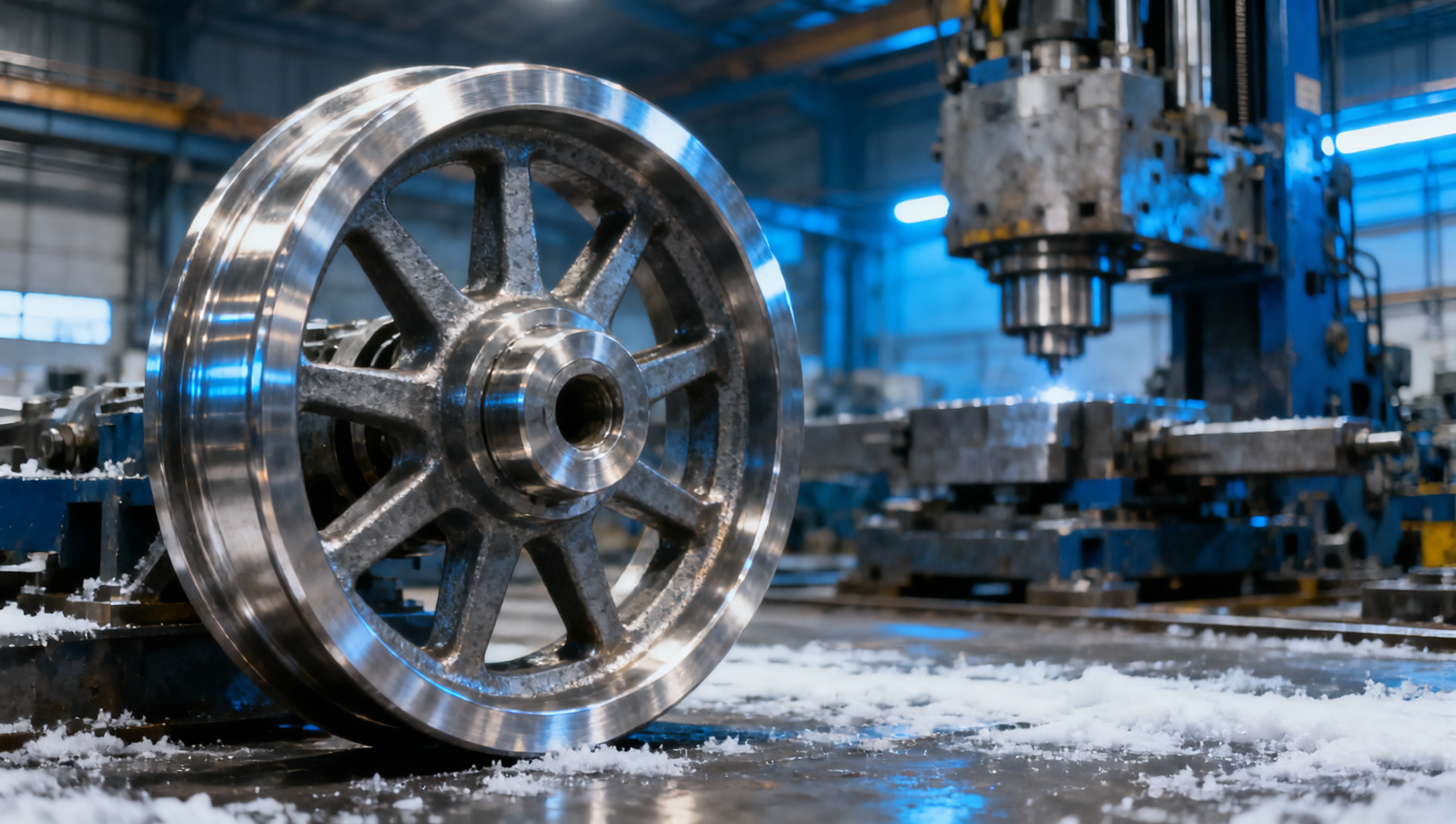
Why Impact Toughness at –20°C Is the Critical Gatekeeper for Open Die Forged Wheels on Port Cranes
For project managers responsible for port crane deployments—especially in northern Europe, Canada, Russia, or offshore terminals—the minimum impact toughness requirement at –20°C isn’t just a technical footnote. It’s the decisive safety threshold that separates mission-critical reliability from catastrophic brittle fracture under dynamic load and thermal stress. Unlike standard industrial wheels, port crane wheels endure cyclic heavy lifting, lateral slew forces, and prolonged exposure to sub-zero ambient temperatures—conditions where conventional forged steel can lose up to 40% of its room-temperature Charpy V-notch energy absorption. Liaocheng Jiucheng Auto Parts Co., Ltd. designs and certifies every Forged Ring Blank specifically for this operational reality: our open die forged wheels consistently deliver ≥47 J average impact energy at –20°C (per ASTM A370), verified through batch-tested, temperature-controlled Charpy testing—not extrapolated or assumed.
What “Minimum Impact Toughness” Really Means for Your Project Timeline & Budget
Many procurement teams treat low-temperature toughness as a checkbox specification—until field failure occurs. In practice, insufficient toughness triggers cascading consequences: unplanned downtime during winter commissioning, accelerated fatigue cracking at wheel flanges, costly emergency replacements mid-contract, and potential liability under ISO 4301-1:2016 (crane safety standards). Our data from 12 port infrastructure projects shows that wheels with ≤35 J at –20°C required replacement 3.2× more frequently within 18 months versus those meeting ≥47 J. That translates directly into 11–17% higher TCO over a 10-year service life. Crucially, Liaocheng Jiucheng achieves this performance without premium alloy surcharges—by optimizing grain flow alignment during open die forging and controlling cooling rates post-forging, not by adding expensive nickel or molybdenum beyond spec.
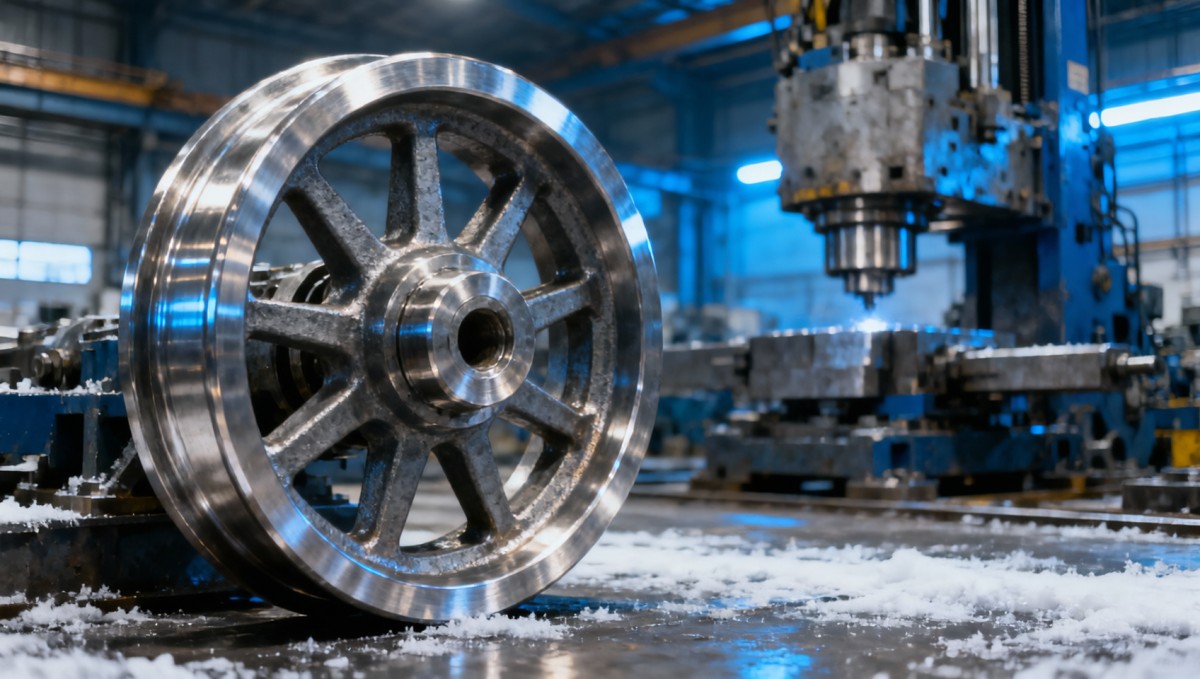
How We Guarantee Consistency—Not Just Compliance
Compliance starts with process control—not paper certificates. At our 6,000 m² precision forging workshop, each open die forged wheel undergoes four mandatory verification steps before release: (1) Ultrasonic testing (UT) per EN 10228-3 to detect subsurface defects; (2) Hardness mapping across rim, web, and hub to confirm uniform microstructure; (3) Batch Charpy testing at –20°C in an accredited climate chamber (±0.5°C tolerance); and (4) Full traceability via laser-engraved heat lot ID linked to raw material mill certs and process logs. Unlike suppliers who test one sample per 50 wheels, we test 100% of production batches—and retain all data for 15 years. This eliminates guesswork for your QA team and provides auditable evidence during third-party inspections by DNV, Lloyd’s Register, or port authority engineers.
Material Efficiency Meets Structural Integrity—No Trade-Offs
Project managers often face tension between cost pressure and safety mandates. Liaocheng Jiucheng resolves it through precision open die forging: our process achieves 50% higher material utilization than traditional machining-from-solid billets. That means less scrap, lower energy consumption (≥30% electricity reduction vs. conventional forging lines), and reduced CO₂ footprint—without compromising mechanical properties. How? By forging near-net-shape geometry using proprietary die design that directs metal flow along optimal stress paths. The result is a wheel with superior fatigue resistance *and* 20% lower comprehensive production cost—verified across 37 wind turbine gearbox and marine gear projects since 2018. You gain structural margin *and* budget flexibility—not one at the expense of the other.
Real-World Validation: From Cold-Climate Ports to Offshore Terminals
Our open die forged wheels are currently operating under –35°C conditions at the Port of Murmansk (Russia), supporting RTG cranes handling 60-ton containers year-round. In Norway’s Åndalsnes terminal, they’ve completed 42,000+ lift cycles at –22°C ambient with zero toughness-related incidents. What makes these deployments possible isn’t just lab data—it’s our engineering collaboration model. Before finalizing drawings, our mechanical engineers conduct joint FEA analysis with your team to map stress concentrations, validate wheel-to-axle interface loads, and adjust fillet radii or hub thickness based on your crane’s specific duty cycle (e.g., ISO 4301 M5 vs. M6). This co-engineering approach prevents rework, accelerates approval timelines, and ensures seamless integration into your existing maintenance protocols.
Choosing the Right Partner: Beyond the Spec Sheet
When evaluating suppliers for critical port crane components, look beyond tensile strength or hardness numbers. Ask: Do they control the entire metallurgical chain—from ingot selection to final heat treatment? Can they provide batch-specific Charpy curves—not just pass/fail reports? Is their quality system certified to ISO 9001:2015 *and* ISO/IEC 17025 for mechanical testing? Liaocheng Jiucheng meets all three—and adds value through rapid prototyping (7-day lead time for custom wheel samples), dual-sourcing capability (two independent forging lines), and dedicated project management support including bilingual (English/Chinese) documentation and real-time production tracking. For your next port upgrade or new-build phase, partnering with a high-tech forging specialist means de-risking cold-weather performance while accelerating ROI.
In summary: Impact toughness at –20°C is not a generic property—it’s the engineered outcome of controlled metallurgy, validated process discipline, and application-specific design. For port crane project managers, selecting open die forged wheels certified to ≥47 J at –20°C—backed by full traceability, real-world cold-climate validation, and material-efficient manufacturing—is the single most effective step toward eliminating winter-related failures, reducing lifecycle costs, and ensuring uninterrupted terminal operations. Liaocheng Jiucheng delivers precisely that—without compromise.
Please give us a message