



Related Posts
Online Message
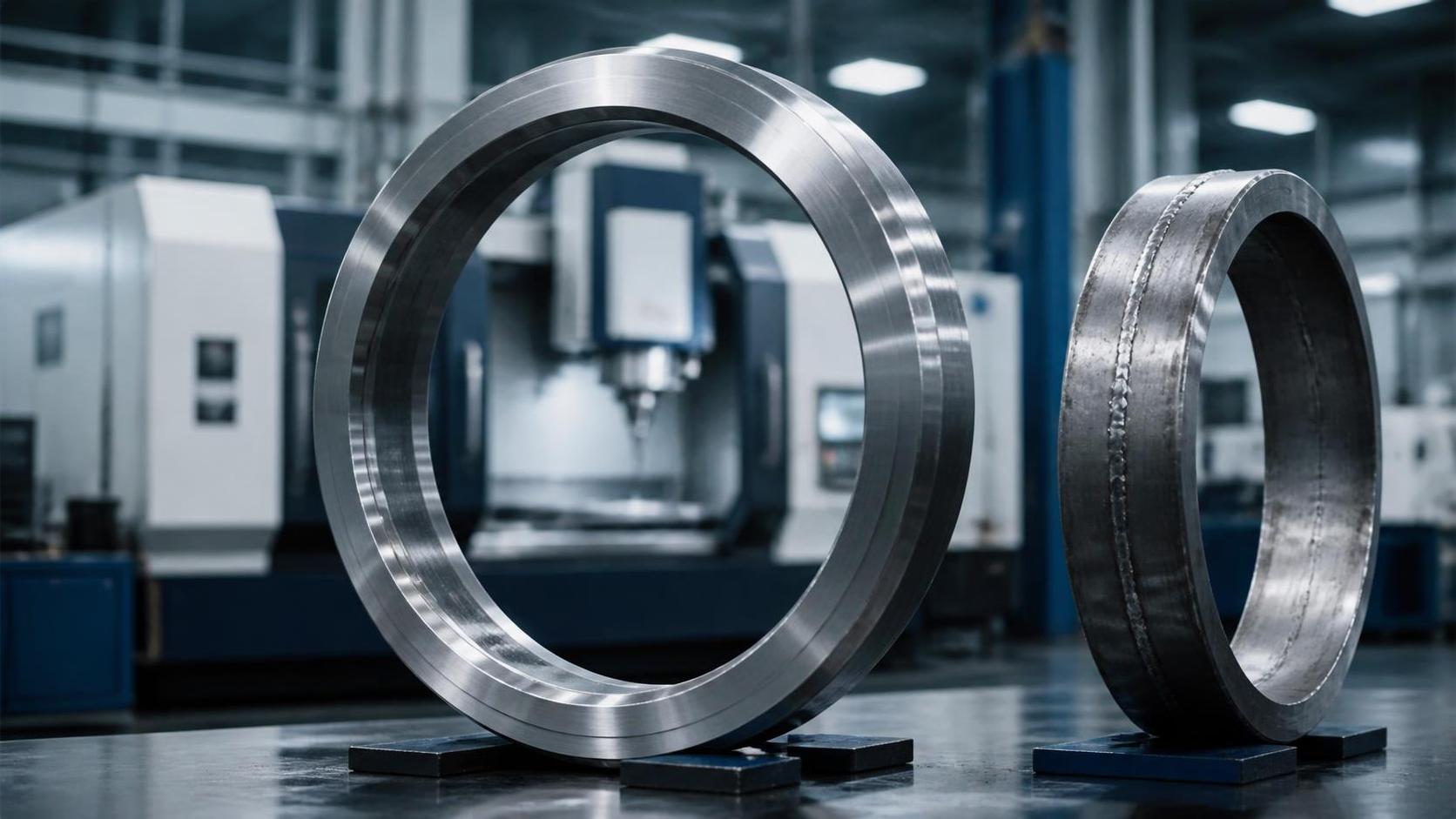
Seamless Rolled Rings: When They Outperform Welded Rings in Critical Service
Introduction: In critical-service applications, ring integrity directly affects safety, uptime, and lifecycle cost. Seamless Rolled Rings often outperform welded rings by eliminating weld seams that can become stress concentrators, fatigue-initiation points, or corrosion risks under demanding loads.
For technical evaluators in automotive, wind power, marine, and industrial transmission systems, material continuity and dimensional control are central specification concerns. The right ring design must balance load capacity, manufacturability, inspection requirements, lead time, and total ownership cost.
The practical question is not whether seamless rings are universally superior. It is whether a weld-free forged structure provides enough reliability, fatigue resistance, and lifecycle value to justify selection for the intended service condition.
What Technical Evaluators Need to Decide First
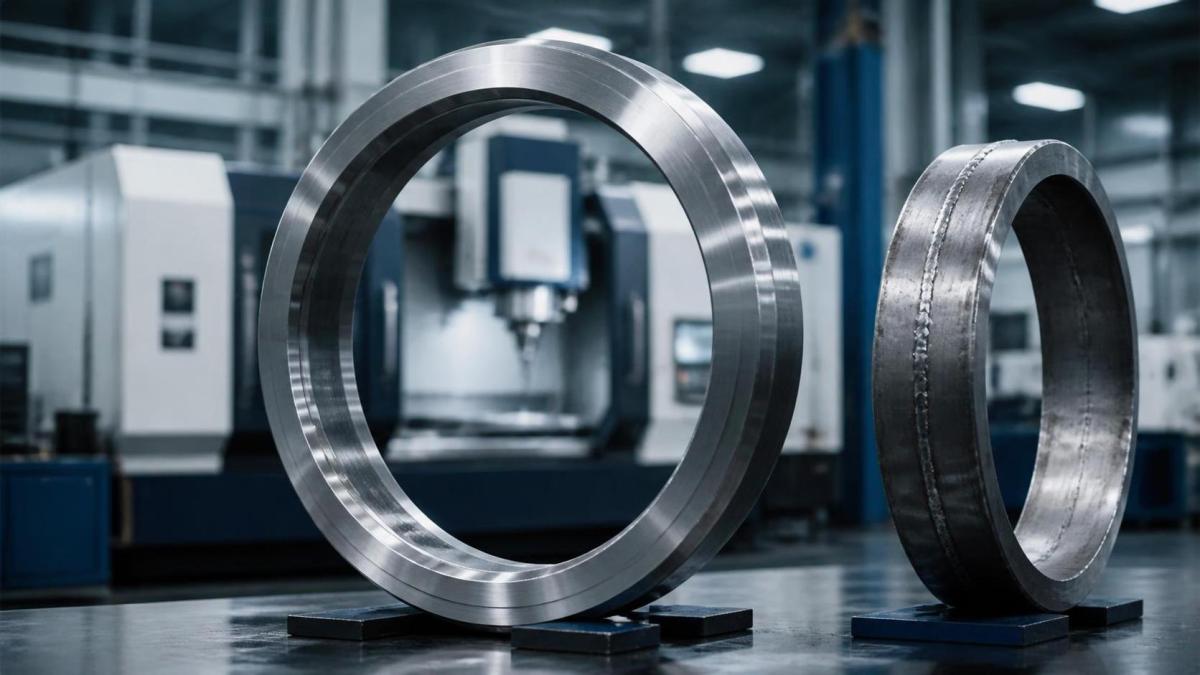
Technical evaluators usually search for Seamless Rolled Rings when a component operates under cyclic loading, torque variation, elevated pressure, temperature changes, vibration, or corrosive exposure. These conditions make local material discontinuities significantly more consequential.
The first decision should focus on the failure consequences. A noncritical support ring may tolerate a welded construction, while a gearbox, bearing, flange, coupling, or rotating assembly may require higher structural confidence.
Welded rings are manufactured by forming plate, bar, or strip material into a circular shape and joining the ends. Their performance therefore depends partly on weld quality and heat-affected-zone control.
Seamless rings begin as forged preforms, then expand through ring rolling. The process produces a continuous circumference without a fusion joint, allowing grain flow to follow the ring geometry more effectively.
This continuous structure is particularly valuable where repeated stress passes through the full circumference. Instead of crossing a localized weld region, loads are distributed through a more uniform forged material condition.
Specification teams should also evaluate whether the ring will be machined after forging. A generous machining allowance, stable material quality, and controlled geometry can reduce downstream manufacturing uncertainty and inspection burden.
It is useful to distinguish nominal strength from service reliability. A welded ring may meet static-load requirements, yet still introduce higher uncertainty in fatigue performance, corrosion behavior, or distortion control.
For this reason, the best selection process starts with service conditions rather than fabrication cost alone. Load spectrum, consequence of failure, operating environment, and inspection access should guide the initial decision.
Why Weld Seams Can Become Critical-Service Weak Points
A weld seam is not automatically defective or unsuitable. Properly designed and qualified welds can perform well in many structures. However, they introduce manufacturing variables that seamless construction avoids.
The weld metal, fusion boundary, and heat-affected zone can have different microstructures from the parent material. Those differences may affect hardness, toughness, residual stress, corrosion behavior, and fatigue response.
Residual tensile stress is especially relevant in rotating or pressurized equipment. When combined with cyclic service loads, it may accelerate crack initiation at locations that would otherwise experience lower local stress.
Geometric transitions near a weld can also act as stress concentrators. Even small surface irregularities, reinforcement profiles, undercut, or incomplete blending may influence fatigue life under repeated loading.
Inspection helps manage these risks, but inspection does not remove the weld-related zone itself. Radiography, ultrasonic testing, magnetic particle inspection, and penetrant testing confirm quality within defined detection limits.
Critical applications may require post-weld heat treatment, weld procedure qualification, consumable traceability, operator certification, and more extensive nondestructive examination. These controls add time, documentation, and production complexity.
Corrosive environments can create another challenge. If surface coatings are damaged or the material-environment combination is unfavorable, localized corrosion may preferentially develop near metallurgical or geometric discontinuities.
Marine equipment, offshore systems, chemical handling assemblies, and outdoor wind-power installations often face moisture, salt exposure, temperature cycling, and difficult maintenance conditions. These factors increase the value of uniform material continuity.
For rings exposed to frequent torque reversals, high rotational speed, or fluctuating bearing loads, eliminating a weld seam can simplify the reliability argument. It reduces one major area requiring special qualification and monitoring.
How Seamless Rolled Rings Improve Structural Performance
The defining advantage of Seamless Rolled Rings is circumferential continuity. Because there is no welded joint, the ring avoids fusion-zone variability and retains a more consistent material path around its full diameter.
During controlled forging and rolling, the metal structure can be refined and consolidated. Proper process design supports improved density, grain orientation, and mechanical consistency compared with many fabricated ring alternatives.
Grain flow is important because forged material can follow the ring contour. This orientation supports resistance to loads that circulate around the component, including hoop stress, torque transfer, and repeated radial loading.
Fatigue performance is often the strongest reason to choose a seamless ring. Fatigue cracks generally start at defects, notches, inclusions, surface damage, or material transitions where local stresses are amplified.
A seamless forged structure does not eliminate all fatigue risks. Surface finish, machining marks, heat treatment, design fillets, inclusions, and assembly preload still require careful engineering control.
However, removing the weld seam narrows the number of high-risk variables. This can make fatigue design more predictable, especially when the ring supports highly loaded gears, bearings, shafts, hubs, or couplings.
Dimensional stability is another practical advantage. Rolled rings can be produced close to the intended geometry, reducing excessive machining and helping maintain consistent wall thickness, concentricity, and stock allowance.
Near-net-shape forging can also improve material utilization. Less waste material means lower raw-material consumption, shorter machining cycles, and fewer opportunities for distortion caused by removing large volumes of stock.
For evaluators comparing lifecycle economics, these benefits should be considered together. A higher unit forging price may be offset by reduced machining effort, lower inspection demands, longer service intervals, and fewer failures.
Where Seamless Rings Deliver the Clearest Advantage
Seamless construction is most compelling when ring failure could stop production, damage expensive equipment, create safety exposure, or require difficult field replacement. These applications demand more than minimum acceptable strength.
Wind-power gearboxes are a strong example. Their components encounter variable torque, long duty cycles, vibration, changing weather conditions, and expensive maintenance access, particularly in offshore or remote installations.
Ring forgings may be used in bearing supports, transmission elements, coupling structures, flanges, and gear-related assemblies. Reliable material behavior helps maintain alignment and load transfer throughout extended operating periods.
Automotive and commercial-vehicle systems also benefit where high-volume reliability is required. Differential components, transmission structures, hubs, gear supports, and drivetrain interfaces must withstand frequent load changes without premature cracking.
Marine transmission equipment faces another demanding combination of torque, vibration, moisture, and corrosion. In these systems, a seamless ring can support more robust durability targets and reduce weld-related qualification concerns.
Industrial reducers, mining equipment, heavy machinery, and automated production systems often operate under shock loading. Their components may experience sudden torque spikes that expose weaknesses not visible in static calculations.
Pressure-related flanges and rotating equipment can also justify seamless construction when leakage, deformation, or cracking would create operational or safety consequences. Material continuity supports a stronger engineering basis for critical interfaces.
For flange applications, buyers should consider forged ring geometry alongside bolting loads, sealing surfaces, pressure cycles, and corrosion allowance. Suitable Flange forgings can provide a reliable starting point for machined critical interfaces.
Conversely, welded rings may remain appropriate for low-stress structures, prototypes, oversized low-volume fabrications, or applications with accessible inspection and limited consequences of failure. Selection should remain service-specific.
How to Compare Seamless and Welded Ring Options
A sound comparison should begin with functional requirements rather than a generic preference for one process. Document the load path, maximum stress, stress cycles, operating temperature, environmental exposure, and expected service life.
Next, identify whether the design has a single-point failure concern. If a crack at one circumferential location could lead to sudden separation, loss of torque transmission, leakage, or bearing displacement, seamless construction deserves priority.
Review the relevant material standard and required properties. Yield strength alone is insufficient for critical service. Toughness, elongation, hardness range, cleanliness, fatigue performance, and heat-treatment response may be equally important.
Compare dimensional requirements in realistic manufacturing terms. Specify outside diameter, inside diameter, axial height, wall thickness, concentricity, roundness, machining allowance, and any critical datum relationships required after final processing.
Welded rings may require extra attention to ovality and distortion. Welding heat can alter shape, and post-weld correction can increase processing steps or complicate the preservation of precise final geometry.
For seamless rings, confirm the supplier's available rolling range, press capacity, material grades, heat-treatment capability, machining equipment, and inspection methods. Capability must match the actual ring size and tolerance plan.
Production volume also matters. For repeated components, forging tooling and process development may be justified by material savings, shorter machining time, and consistent quality. Low quantities may favor different economics.
Ask for the full cost picture instead of only the purchase price. Include material yield, machining hours, inspection, heat treatment, scrap exposure, field-service risk, warranty impact, and expected replacement cost.
The evaluation should conclude with a documented rationale. When service conditions are severe, the reliability margin offered by a seamless forged ring is often easier to defend than a welded solution requiring extensive special controls.
Quality Controls That Matter When Specifying Rolled Rings
Seamless manufacturing only delivers its intended value when process controls are disciplined. Technical evaluators should request evidence of material traceability from incoming stock through forging, heat treatment, machining, and final inspection.
Chemical composition verification is essential because alloying elements influence hardenability, toughness, weldability where relevant, corrosion resistance, and final mechanical properties. Certificates should be linked clearly to each production batch.
Forging temperature control matters because inadequate heating can reduce formability, while excessive heating may promote grain growth or oxidation. Consistent thermal practice supports predictable structure and downstream heat-treatment response.
Ring rolling parameters should be selected to achieve stable geometry and sufficient deformation. Process consistency supports uniform wall thickness and helps reduce internal variability across the circumference and cross-section.
Heat treatment must be matched to the design requirement. Normalizing, quenching and tempering, annealing, or stress relieving may be used depending on the material grade, final hardness target, and machining sequence.
Nondestructive testing should be risk-based. Ultrasonic testing can help identify internal discontinuities, while magnetic particle or penetrant testing can reveal surface-breaking indications on suitable materials and finished surfaces.
Dimensional inspection should include more than diameter measurements. Verify height, wall variation, roundness, concentricity, face flatness, and machining allowance, particularly where the ring will become a gear or bearing-related component.
For high-consequence applications, establish acceptance criteria before production begins. Requirements for test frequency, sampling plans, documentation, marking, and deviation control should be explicit in the purchase specification.
A capable supplier combines forging knowledge with machining awareness. This is valuable when the ring becomes a precision transmission component, because forging allowances and grain structure affect final machining efficiency and part performance.
How to Write a Better Purchase Specification
A stronger specification reduces ambiguity between the design team and the manufacturer. Start by defining the component function, critical surfaces, load conditions, operating environment, and any known failure modes from previous designs.
State the required material grade or approved alternatives, then define required mechanical properties in the relevant condition. Include hardness limits, impact values where applicable, and heat-treatment condition rather than relying on material names alone.
Provide a clear drawing with forged dimensions and finished dimensions. Separating these requirements prevents misunderstandings about machining allowance, stock removal, tolerance ownership, and the point at which final inspection applies.
Specify whether the ring must be seamless. This should be written as a functional requirement for critical service, rather than assumed from a general part description or informal purchasing communication.
Include required inspection methods and acceptance standards. State whether ultrasonic testing, magnetic particle inspection, dimensional reports, material certificates, heat-treatment charts, or first-article approval are necessary for release.
Where fatigue is important, call out surface-finish requirements and prohibited discontinuities on critical machined areas. A seamless ring still requires good design and finishing practices to achieve its potential lifecycle advantage.
Consider identifying the intended machining route. Components requiring gear cutting, spline machining, bore finishing, or flange-face machining benefit when the forging supplier understands the final reference surfaces and stock requirements.
For long-term programs, request process consistency rather than only sample approval. Stable raw-material sources, documented process windows, controlled tooling, and repeatable inspection practices are essential for reliable serial production.
A well-written specification makes supplier quotations easier to compare. It also reduces the risk that a lower-cost offer reflects reduced testing, insufficient allowance, different heat treatment, or an unsuitable fabrication route.
Making the Selection Based on Lifecycle Risk
The decision between seamless and welded rings should ultimately reflect lifecycle risk. If the ring is easy to inspect, inexpensive to replace, lightly loaded, and noncritical, welded construction may be commercially reasonable.
If the ring transfers major torque, retains pressurized interfaces, supports rotating masses, or operates in an inaccessible environment, Seamless Rolled Rings usually provide a more dependable engineering foundation.
They are especially valuable when fatigue loading, vibration, corrosion exposure, or high consequence of failure increases the cost of uncertainty. The absence of a weld seam is not merely a manufacturing detail.
It is a design and reliability decision that can influence inspection scope, machining efficiency, maintenance intervals, warranty exposure, and confidence in long-term field performance across demanding applications.
Technical evaluators should therefore compare material continuity, process control, inspection evidence, dimensional capability, and total lifecycle cost as one connected decision. A credible supplier should support this evaluation with clear documentation.
For automotive, wind-power, marine, and industrial transmission components, the strongest choice is often the one that reduces hidden risk before the equipment enters service. Seamless rings frequently meet that requirement.
Please give us a message