



Related Posts
Online Message
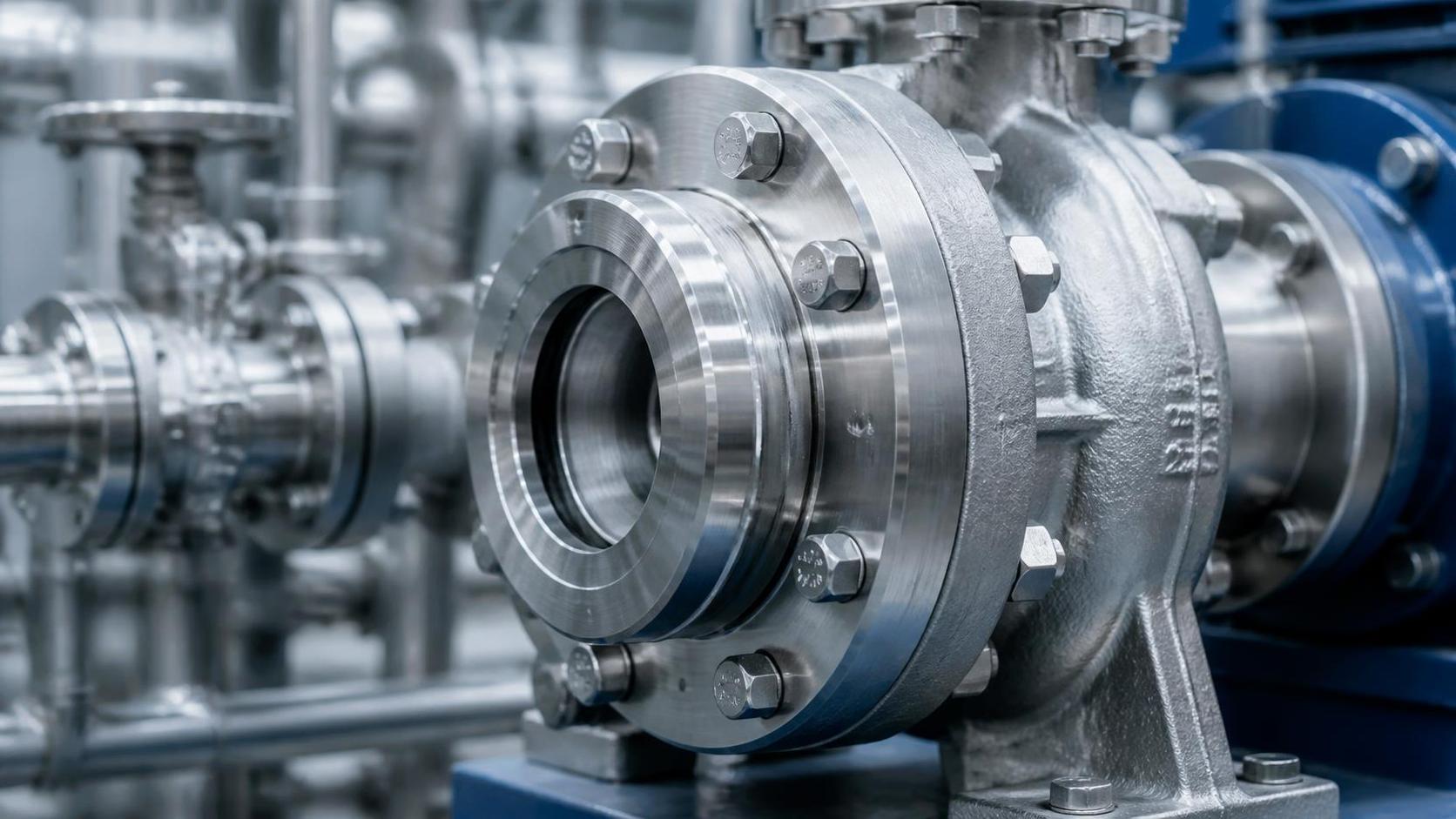
A forged ring can look correct on a drawing and still become the weak point in corrosive process equipment. This often appears during a material review for pump casings, pressure-retaining connections, agitator hubs, valve components, or rotating assemblies: the basic requirement says “stainless steel,” but the actual service includes chlorides, cleaning chemicals, elevated temperature, stagnant liquid, pressure cycling, and occasional upset conditions.
The difficulty is that corrosion does not usually announce itself as a simple material failure. A ring may show staining near a gasket, shallow pits in a machined groove, cracking around a highly stressed transition, or roughened surfaces after a cleaning cycle. Once installed, replacement can mean shutdown work, alignment checks, seal replacement, and renewed inspection of mating components. Grade selection therefore needs to begin with the real exposure condition rather than with a familiar stainless designation.
Start with the service condition, not the grade name
The same forged ring may behave very differently depending on where it sits in the equipment. A ring exposed to continuously flowing neutral water has a different risk profile from one that traps chloride-bearing liquid behind a flange face. A component immersed in a reducing acid needs a different alloy logic from a part exposed to oxidizing media. Temperature matters because many corrosion mechanisms accelerate as process temperature rises, while tensile stress can turn an otherwise manageable environment into a stress-corrosion cracking concern.
Before comparing grades, define the operating window in practical terms:
- Process fluid, contaminants, cleaning agents, and possible carryover chemicals.
- Normal and abnormal temperature ranges, including steam-out, heat tracing, and cleaning cycles.
- Chloride content or other halides, even if they are only present intermittently.
- Whether the ring sees flowing liquid, splash exposure, vapor, condensation, deposits, or stagnant crevices.
- Pressure loading, thermal cycling, torque transfer, vibration, and residual assembly stress.
- Surface condition requirements after forging, machining, pickling, passivation, or welding.
A material selection becomes more reliable when these details are attached to the component location. “Chemical service” is too broad to select a grade. “Warm chloride-containing wash water retained in a bolted crevice during shutdown” is a condition that can be assessed.
Where common stainless choices begin to diverge
For many general industrial applications, austenitic stainless grades are the first options considered. They are familiar, widely machined, and suitable for numerous mildly corrosive environments. However, common availability should not be mistaken for universal chemical resistance.
304 and 304L: suitable only when the exposure is genuinely moderate
304 stainless steel is often selected for equipment exposed to atmospheric moisture, mild industrial fluids, food-related process conditions, and many non-chloride aqueous services. For forged rings, it can be a reasonable choice when the environment is clean, temperatures are moderate, and crevice formation is controlled.
Its limitations appear in chloride-bearing liquids, wet deposits, seawater influence, and areas where a gasket or mechanical joint holds concentrated residue. Pitting may begin locally and remain difficult to detect until a sealing face or critical wall section is affected. The low-carbon version, 304L, is generally preferred where welding is involved because it reduces susceptibility to sensitization associated with certain thermal cycles. Low carbon does not, however, convert 304L into a chloride-resistant grade.
For a forged ring with no welding, 304L may still be chosen for consistency with adjoining welded equipment, but the decision should be based on the assembly and corrosion environment rather than a default preference.
316 and 316L: a practical step up for many wet process duties
316 stainless steel contains molybdenum, which improves resistance to localized attack in many chloride-containing environments compared with 304. This is why 316L is frequently considered for forged rings in process equipment, marine-adjacent installations, pharmaceutical cleaning systems, and components exposed to more demanding wash-down conditions.
Yet 316L is not a blanket answer for chlorides. Higher chloride concentration, increased temperature, stagnant conditions, and stressed geometries can still lead to pitting, crevice corrosion, or chloride stress-corrosion cracking. A forged ring installed beneath a gasket, inside a clamp connection, or near an evaporation zone deserves more scrutiny than an openly exposed ring with regular drainage.
Use 316L when the environment is within its resistance range and fabrication considerations favor an austenitic low-carbon alloy. Do not select it solely because the word “marine” or “chemical” appears in the project description.
Duplex stainless steels: when strength and chloride resistance must work together
Duplex stainless steels, commonly represented by grades such as 2205, combine austenitic and ferritic microstructures. They are often considered when a forged ring must carry higher mechanical loads while also resisting chloride-related localized corrosion more effectively than standard 300-series stainless grades.
This combination can be particularly useful for rings used in pressurized process systems, pump or compressor assemblies, subsea-adjacent equipment, chemical transfer machinery, and applications where wall thickness or deformation control matters. Higher strength may allow a designer to reconsider section geometry, but any design change should be checked against stiffness, sealing requirements, fatigue loading, and machining allowance.
The trade-off is that duplex material processing needs tighter control. Forging temperature, reduction practice, cooling, solution annealing where applicable, and metallurgical verification influence phase balance and corrosion performance. Excessive exposure to unsuitable temperature ranges can form detrimental phases that reduce toughness and corrosion resistance. A drawing that merely states “duplex stainless” is incomplete unless it also establishes the governing material specification, heat treatment condition, inspection requirements, and acceptance criteria.
Super duplex and higher-alloy alternatives
Where chloride exposure is severe, temperatures are elevated, or seawater-like conditions are expected, super duplex or higher-alloy stainless materials may enter the evaluation. These grades can provide greater resistance to pitting and crevice corrosion, but their selection should be tied to a defined corrosion assessment rather than an assumption that “more alloy” resolves every issue.
They may be unnecessary for an application with controlled fluid chemistry and good drainage, while still being inadequate if a highly aggressive medium, incompatible gasket material, or trapped deposit creates an extreme local condition. Cost, procurement lead time, forging capability, machinability, and joining procedures also become more influential as alloy complexity increases.
Precipitation-hardening stainless: strength is not the same as corrosion suitability
Precipitation-hardening grades such as 17-4PH are often considered for high-strength shafts, hubs, and mechanically demanding rings. They can be useful where torque, fatigue resistance, or dimensional stability drives the design. Their corrosion resistance can be acceptable in some environments, but they should not automatically replace 316L or duplex stainless in aggressive chloride service.
Heat treatment condition is central to their behavior. Strength, toughness, dimensional movement, and corrosion response are all linked to the selected aging treatment. When a ring must withstand both corrosive fluid exposure and high cyclic stress, the engineering review should compare the actual corrosion mechanism against the required mechanical properties instead of selecting based on strength alone.
The overlooked risks are often in geometry and surface condition
Many corrosion problems that are blamed on grade selection actually begin at the interface between material, shape, and fabrication. Forged rings are commonly machined into flanges, bearing seats, threaded forms, seal lands, retaining features, or gear-related interfaces. Each feature can create conditions that differ from the bulk process environment.
Crevice corrosion is a typical example. A tight joint under a gasket may retain solution after operation stops. Evaporation can increase local salt concentration. If oxygen access differs between the crevice and surrounding surface, the passive film can become unstable in the confined region. A more corrosion-resistant grade helps, but improved drainage, appropriate gasket selection, smooth contact surfaces, and maintenance access may be equally important.
Surface finish also deserves attention. Forging scale, embedded contamination, grinding marks, machining tears, and heat tint from nearby welding can reduce practical corrosion resistance. Post-processing should be specified according to the service requirement. Depending on the application, this may include scale removal, controlled cleaning, pickling, passivation, surface roughness limits, and protection from carbon-steel contamination during handling.
For rotating equipment, the ring material cannot be reviewed in isolation. A related Drive Shaft may introduce torque, bending, fretting, or assembly loads that alter the stress state at the ring interface. In such arrangements, corrosion selection and mechanical fit review should happen together, especially where liquid ingress or condensate can reach splines, shoulders, or retaining features.
A useful comparison method during material review
Instead of asking which stainless grade is “best,” compare candidate grades against the failure mechanisms that are credible for the component. This produces a clearer decision trail and avoids approving a material based on habit.
Where published corrosion data is used, ensure the test environment resembles the service condition. Immersion data in a clean laboratory solution may not represent a crevice under a gasket, intermittent drying, or a mixed chemical stream. If uncertainty remains high, corrosion testing, material specialist review, or qualification samples may be more useful than making a broad assumption from a grade datasheet.
What to put on the forged ring specification
A purchase description should do more than name an alloy. A capable Stainless Forged Rings Manufacturer needs enough information to control the forging route and provide material evidence that is meaningful for the application. The exact requirements vary, but a robust specification commonly identifies the material grade and governing product standard, ring dimensions and machining allowance, required heat treatment condition, mechanical property requirements, traceability expectations, non-destructive examination where required, surface condition, and any corrosion-related testing agreed for the service.
For duplex materials, include requirements related to heat treatment and metallurgical condition rather than relying on chemistry alone. For austenitic rings used near welds or in corrosive cleaning service, clarify whether low-carbon material is required and whether post-fabrication cleaning or passivation is part of the component route. If the ring includes a sealing surface, specify the finish range and protect that feature during packing and transport.
It is also worth checking whether the drawing creates avoidable corrosion traps. Sharp internal corners, blind pockets, poorly drained horizontal surfaces, and inaccessible gasket lands can undermine the benefit of moving from 304 to a more resistant grade. A small geometry adjustment sometimes reduces risk more effectively than an expensive alloy upgrade.
When grade selection should be escalated
Routine service can often be addressed with established material practice. Escalate the review when the fluid composition is variable, chloride levels are uncertain, the component will see elevated temperatures, cleaning chemicals differ from process chemicals, or failure would affect containment or safety. The same applies when a ring combines a severe corrosive environment with high tensile stress, cyclic loading, or a tight crevice geometry.
In these conditions, the selection should involve the process owner, equipment designer, materials specialist, and forging source early enough to align alloy choice with forging, machining, inspection, and finishing. Changing the grade after tooling, machining routes, or mating parts are fixed can create unnecessary delay and may introduce new fit or galvanic-corrosion concerns.
The reliable choice is rarely the most familiar grade and rarely the highest-alloy option by default. It is the grade whose corrosion behavior, mechanical capability, forged condition, and surface treatment match the actual location of the ring in the equipment. When those details are documented before production, the stainless forged ring becomes a controlled engineering component rather than a material assumption.
Please give us a message