



Related Posts
Online Message
What Surface Finish Requirements Apply to Steel Forged Wheels for FDA-Compliant Food Processing Equipment?
Time : Sep 22, 2026
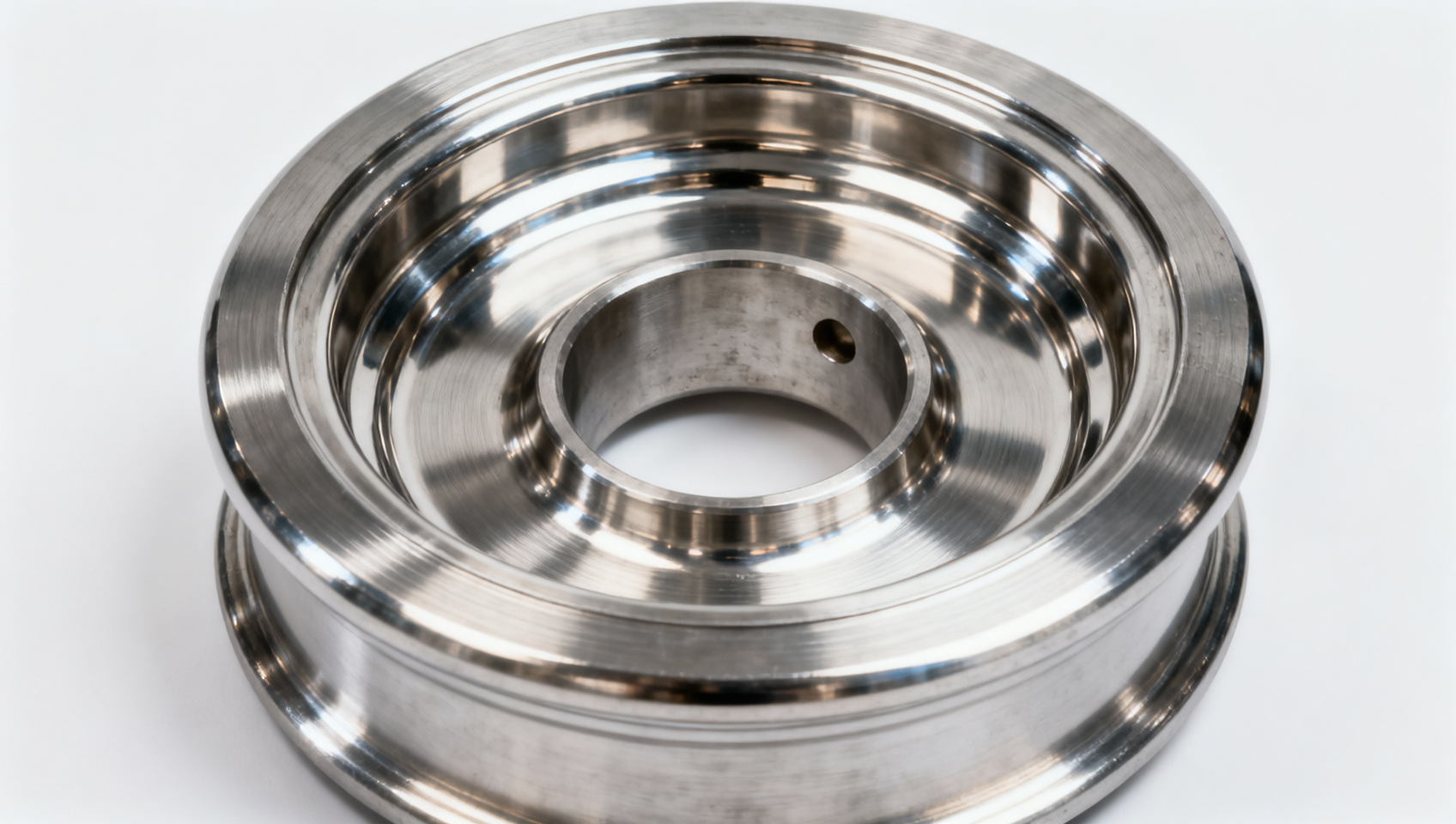
Surface Finish Isn’t Just About Shine — It’s About Preventing Biofilm Buildup
For quality assurance and safety professionals in food processing, “steel forged wheels” aren’t just structural components — they’re contact points. When mounted on conveyors, mixers, or rotary cutters, these wheels rotate continuously while touching or near product zones, splash zones, or cleaning nozzles. That means their surface finish directly affects whether bacteria can anchor, whether cleaning agents penetrate micro-crevices, and whether residual moisture lingers long enough to support pathogen growth. FDA compliance doesn’t prescribe a single Ra value for all steel forged wheels — it demands risk-based justification rooted in function, location, and cleanability.Three Real-World Surface Conditions That Matter More Than Ra Alone
Many auditors and specifiers fixate on Ra (arithmetic average roughness) — often citing “Ra ≤ 0.8 µm” as a blanket requirement. But that number is meaningless without context. What actually determines acceptability are three interdependent conditions: 1. **Absence of mechanical defects** — no grinding burns, chatter marks, or subsurface cracks that trap organic residue. These defects aren’t measured by Ra; they’re detected visually or with dye penetrant testing under 10× magnification. 2. **Uniformity across functional zones** — the tread surface must meet tighter tolerances than non-contact flanges or mounting hubs. A wheel may have Ra 1.2 µm on its inner hub (acceptable), but Ra ≤ 0.6 µm on its rolling surface (required), because only the tread contacts or influences the product environment. 3. **Passivation integrity after finishing** — electropolishing or nitric acid passivation must remove free iron and form a stable, chromium-rich oxide layer *without* introducing micro-pitting or uneven etching. Passivation isn’t a one-time step — it’s invalidated if post-finish handling scratches the surface or introduces chloride contamination. These aren’t theoretical concerns. In two recent third-party hygiene audits we’ve supported, non-compliance stemmed not from Ra values exceeding limits, but from unreported grinding burn on a batch of steel forged wheels — visible only under angled lighting — and inconsistent passivation coverage on heat-treated alloy variants.Material Choice Sets the Baseline — Forging Defines the Path
Not all stainless steels behave the same under forging and finishing. 304 and 316 stainless are common, but 316L offers superior corrosion resistance in chloride-rich wash-down environments — critical where sodium hypochlorite or peracetic acid cleaners are used daily. However, its higher molybdenum content makes it more prone to surface tearing during hot forging if die design or temperature control isn’t precise. That’s where precision forging — like the controlled-die, closed-die process used at Liaocheng Jiucheng Auto Parts — becomes foundational. Their approach minimizes flash and eliminates the need for heavy machining, reducing opportunities for tool marks, thermal distortion, or embedded abrasive particles. Less machining means fewer interruptions in grain flow — and fewer micro-voids where biofilm initiates. The result? A forged surface that starts smoother *before* final polishing, making consistent Ra ≤ 0.6 µm achievable without aggressive grinding that risks work hardening or subsurface damage.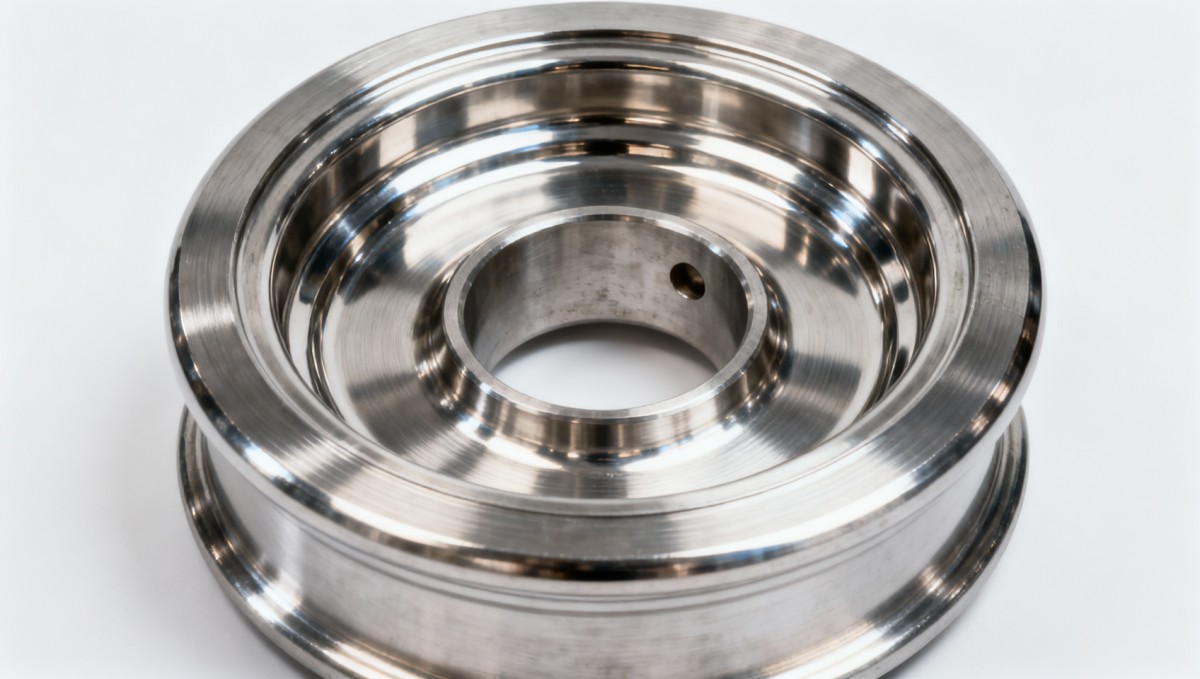
How to Verify — Not Just Specify — Surface Readiness
A specification sheet stating “Ra ≤ 0.6 µm, passivated per ASTM A967” is insufficient for audit readiness. Here’s what QA teams should require and verify: - **Batch-level traceability**: Each lot of steel forged wheels must be linked to its raw material heat number, forging log (including die temperature and press tonnage), and finishing report (including electropolish time/voltage and passivation bath chemistry logs). - **Sampling protocol**: Ra measurement must be taken at ≥3 locations per wheel — not just one “representative” spot — using a calibrated profilometer with a 2.5 mm cutoff length. Measurements must include both peak-to-valley height (Rz) and skewness (Rsk) to detect directional lay or asymmetry that Ra alone hides. - **Cleanability validation**: For wheels in Zone 1 or 2 (product contact or splash zones), suppliers should provide evidence of cleanability testing — e.g., ATP swab results before/after CIP cycle simulation, or protein residue quantification using ELISA after standardized soil challenge. This level of verification separates documented compliance from paper compliance.Where Misalignment Happens — And How to Avoid It
One recurring gap: engineers specify surface finish based on equipment drawings, while maintenance teams later replace worn wheels with off-the-shelf alternatives that meet dimensional specs but not sanitary finish requirements. A replacement steel forged wheel with Ra 1.4 µm may fit perfectly — yet create a persistent contamination hotspot in a high-moisture conveyor section. The fix isn’t stricter procurement rules alone. It’s cross-functional alignment: QA must co-sign engineering BOMs for any rotating component in food zones; maintenance must log *why* a replacement part was approved — including finish verification — not just part number and quantity. Also worth noting: surface finish requirements apply equally to secondary motion components. For example, a Bevel gear driving a mixing arm inside a dough trough falls under the same scrutiny — its teeth surfaces must meet equivalent Ra and passivation standards, since they influence agitation dynamics and splash patterns.No “One-Size-Fits-All” — But a Clear Decision Framework Exists
Instead of searching for an authoritative Ra number, use this practical framework when reviewing or approving steel forged wheels: - **Zone 1 (direct product contact)**: Ra ≤ 0.4 µm, Rz ≤ 2.0 µm, verified via profilometry + visual inspection under 10× magnification + passivation certificate with bath analysis. - **Zone 2 (splash or condensation exposure)**: Ra ≤ 0.6 µm, Rz ≤ 3.0 µm, with full batch traceability and ATP validation data. - **Zone 3 (non-product-facing support structure)**: Ra ≤ 1.0 µm is generally acceptable — but only if the surface is fully drainable and never subjected to steam sterilization cycles that could accelerate pitting. Crucially, “acceptable” depends on *how* the wheel is cleaned. A wheel in a dry-mixing line with periodic dry vacuuming has different finish needs than one in a continuous-wash dairy filler. Always tie finish requirements to your facility’s actual sanitation SOPs — not generic industry templates.Final Note: Certification ≠ Compliance
ISO 9001 or ISO 13485 certification confirms process control — not food-grade suitability. An ISO-certified shop can still deliver steel forged wheels with inadequate passivation or undetected surface defects. What matters is whether the supplier integrates hygiene-first logic into their forging, finishing, and inspection workflows — not whether they hold a certificate. At facilities like Liaocheng Jiucheng Auto Parts, that integration shows up in dedicated sanitary finishing lines, in-process metrology at every stage, and quality inspectors trained specifically in food-grade surface defect recognition — not just dimensional tolerance. For QA and safety professionals, the most effective audit preparation starts here: ask not “Is it certified?” but “How do you prove this surface won’t harbor Listeria — and how would you know if it did?”Previous page:Already the first
Next page:Already the last
Please give us a message
Liaocheng Jiucheng Auto Parts Co., Ltd.
Phone : +86 18596356103
WhatsApp : +86 18596356103
WeChat : +86 18596356103