



Related Posts
Online Message
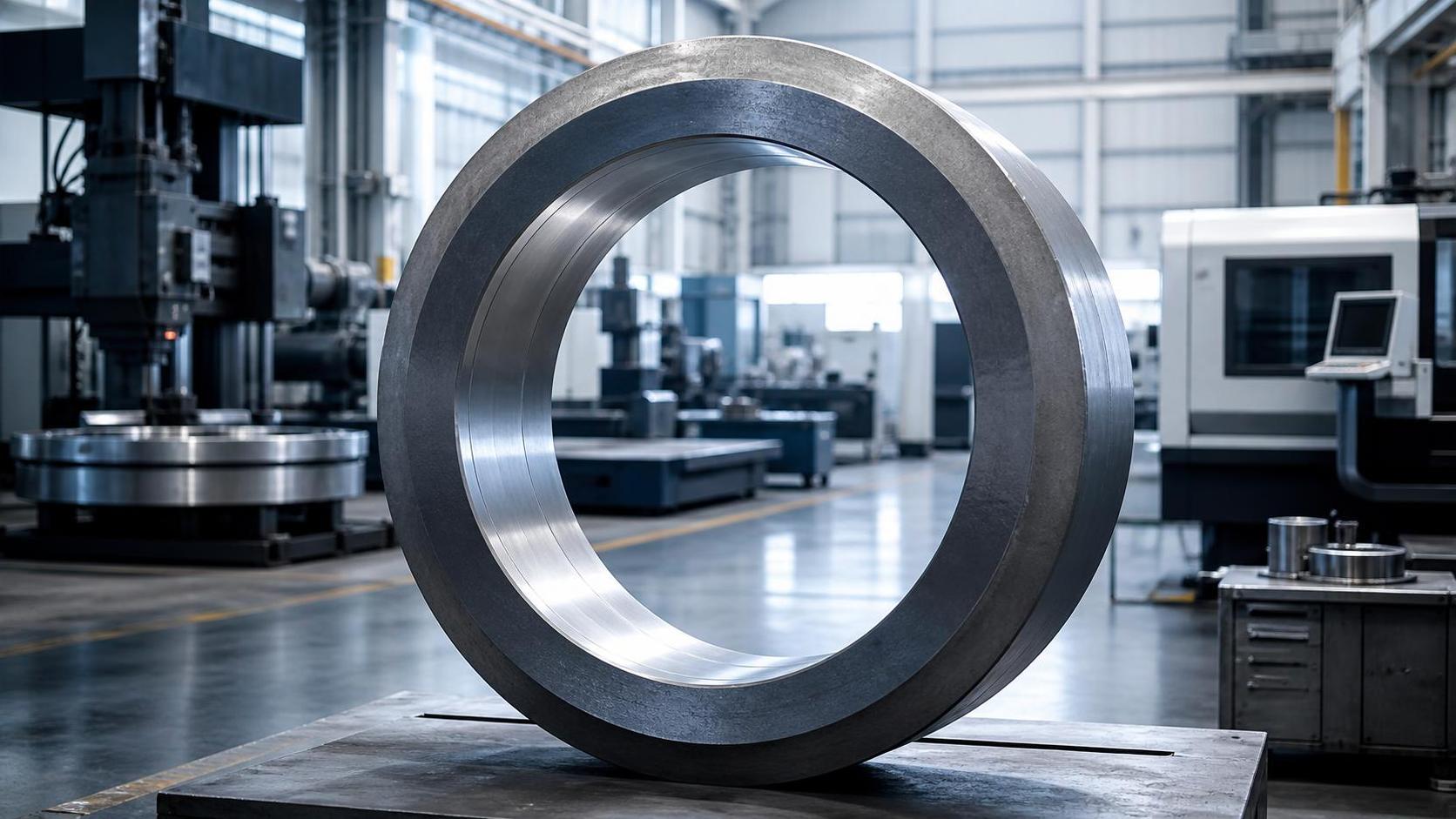
What Mandrel Forged Rings Are Best Suited for Large-Diameter Components?
For large-diameter components in wind power, marine machinery, and heavy-duty transmissions, selecting Mandrel Forged Rings determines strength, machining cost, schedule reliability, and long-term operating performance.
For project leaders, the strongest choice is rarely simply the largest ring available. It is a properly specified forged ring with controlled material quality, adequate reduction, stable dimensions, and documented inspection.
Large rings perform best when their forging route matches actual service loads, component geometry, machining strategy, and required delivery volume. Early specification decisions prevent costly redesigns, excessive stock removal, and qualification delays.
Start With the Component’s Operating Demands
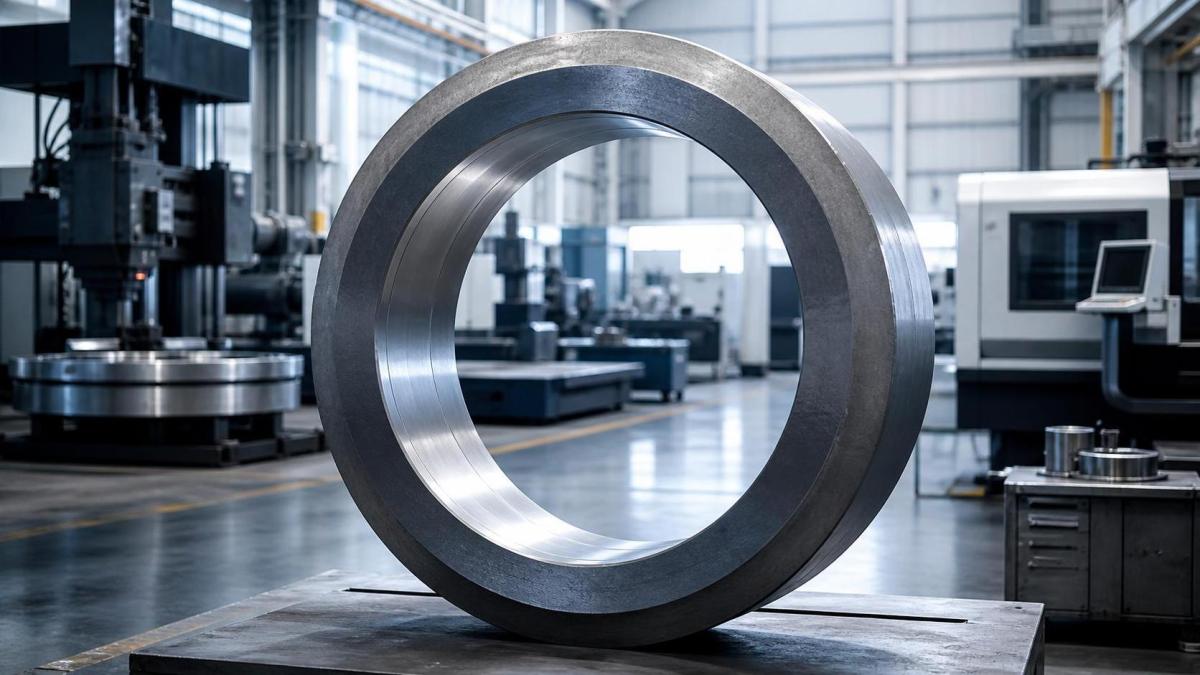
Before comparing suppliers, project teams should define what the finished component must withstand. Diameter alone does not determine the best forging solution; torque, fatigue loading, temperature, corrosion, and assembly conditions matter.
Mandrel forged rings are particularly suitable when a component needs a continuous circular structure, high radial integrity, and better material utilization than machining a ring from solid plate or bar.
Typical applications include wind turbine gearbox rings, large bearing seats, marine transmission elements, reducer housings, flanges, slewing-related components, and heavy-duty mechanical drive assemblies requiring durable circular profiles.
For wind power projects, the critical concern is usually fatigue life under fluctuating torque. Marine projects may prioritize corrosion resistance, shock loading, certification requirements, and reliable performance across temperature variations.
Heavy industrial transmissions often require strong tooth-supporting ring sections, precise concentricity, and controlled hardness. In these cases, the forging must support both mechanical processing and subsequent heat treatment.
Project managers should identify whether the ring carries torque directly, supports gear teeth, locates bearings, transmits axial loads, or serves as a structural connection. Each function changes the specification priorities.
A ring with high cyclic loading needs more than nominal tensile strength. It requires clean steel, reliable grain flow, limited inclusions, consistent heat treatment response, and inspection methods suited to fatigue-sensitive service.
Where the ring will be welded into a larger assembly, chemical composition and weldability become central. For machined gear applications, hardenability, distortion control, and carburizing compatibility may take precedence instead.
Choose Ring Geometry That Balances Strength and Machining Cost
The best large-diameter mandrel forged ring begins with a realistic geometry. Outside diameter, inside diameter, wall thickness, height, section transitions, and machining allowance should be considered together rather than independently.
Thin-wall, large-diameter rings demand careful control because they can ovalize during forging, heat treatment, transport, or machining. These designs need tighter process discipline and appropriate handling plans.
Thicker sections generally offer more thermal stability, but they create different risks. Cooling rates can vary across the section, affecting microstructure, hardness distribution, residual stress, and final dimensional consistency.
Uniform cross-sections are usually the most economical to forge. If flanges, steps, grooves, or localized heavy sections are required, teams should confirm whether they will be forged near-net-shape or machined afterward.
Near-net forged geometry can reduce material waste and machining time. However, excessive complexity may increase tooling, setup time, process risk, and unit cost, especially for lower-volume project requirements.
A practical rule is to forge the expensive volume reduction and retain machining allowance only where precision, surface finish, tooth geometry, bores, or mating interfaces demand cutting operations.
Project leaders should request a forging drawing separate from the finished-part drawing. This document should show stock allowances, process radii, reference surfaces, expected ovality, and any restrictions on machining zones.
For large components, dimensional tolerances should be assigned according to function. Applying tight tolerances everywhere creates unnecessary cost without improving assembly performance or reducing meaningful operational risk.
Ask suppliers how they control roundness after forging and heat treatment. A suitable answer should address measurement equipment, straightening capability, cooling practice, machining references, and documented tolerance history.
Understand Why the Mandrel Forging Process Matters
Mandrel forging expands a pierced preform over a mandrel while controlling wall thickness and diameter. This process develops a circular grain-flow pattern that benefits ring-shaped components under demanding service loads.
Compared with fabricating rings from welded plate, properly forged rings can offer more uniform structural continuity. They also avoid weld-zone concerns that may complicate fatigue evaluation or downstream heat treatment.
Compared with cutting a ring from a large solid block, mandrel forging usually improves material efficiency. It can also lower machining demand by bringing the component closer to its required dimensions.
Material utilization is a commercial issue, not just a manufacturing detail. Reduced waste lowers raw-material exposure, transport weight, machining hours, energy consumption, and the cost of handling scrap.
The process is most valuable when sufficient deformation is achieved. A supplier should be able to explain reduction ratios, starting billet selection, piercing practice, reheating control, and how these influence final properties.
Large-diameter rings should not be selected solely from catalog capacity. A machine may accommodate the diameter but still be unsuitable for the required wall section, steel grade, tolerance, or production consistency.
For critical projects, confirm the maximum and typical operating dimensions separately. Typical production capability often provides a more reliable indicator of process maturity than a theoretical equipment maximum.
Controlled mandrel forging can help project teams reduce rough-machining allowance. The benefit is especially meaningful when large rings require expensive CNC turning, gear cutting, boring, or multi-stage heat treatment.
Companies serving automotive gears, wind power gearboxes, mechanical equipment, and marine applications can often align forging and machining decisions early, improving the relationship between ring quality and finished-part performance.
Select Materials According to Load, Environment, and Heat Treatment
Material choice should follow the actual duty cycle. Carbon steels, alloy structural steels, case-hardening steels, and specialized grades each support different combinations of strength, toughness, machinability, and surface-hardening requirements.
For high-torque transmission rings, alloy steels with reliable hardenability are often preferred. They can provide a strong core while supporting carburizing, quenching, tempering, or induction hardening where needed.
Case-hardened ring gears require close alignment between chemistry and heat-treatment capability. Carbon potential, grain growth control, distortion behavior, and effective case depth should be evaluated before production release.
For large marine components, material selection may also involve corrosion exposure, low-temperature toughness, class requirements, and repair constraints. These considerations should be stated clearly in the procurement specification.
Wind power applications frequently demand material traceability and repeatable fatigue performance. Project teams should require mill certificates, heat numbers, chemistry limits, mechanical-property results, and agreed sampling procedures.
Steel cleanliness is especially important for cyclically loaded rings. Non-metallic inclusions can become fatigue initiation points, making clean steel practices and inspection requirements relevant to lifecycle performance.
Do not specify a premium grade automatically. A more expensive steel may add value only when the operating load, heat treatment, or customer approval standard actually requires its additional performance capability.
Conversely, choosing a lower-cost grade without considering hardenability or toughness can shift cost downstream. Failures may emerge as excessive machining distortion, rejected heat-treatment batches, or reduced field reliability.
The right approach is to connect material grade with final function, hardness range, test requirements, and economic consequence. That creates a defensible sourcing decision rather than a grade selected by habit.
Specify Quality Controls That Protect the Project Schedule
Large forged rings often become schedule-critical because they feed multiple later operations. A late or rejected forging can affect machining, heat treatment, assembly, testing, shipment, and customer commissioning.
Quality planning should therefore begin before the purchase order. Define inspection points for incoming steel, forging dimensions, surface condition, ultrasonic testing, heat treatment, hardness, metallography, and final documentation.
Ultrasonic testing is valuable for detecting internal discontinuities in large sections. Its acceptance criteria should reflect the component’s service criticality, material thickness, machining allowance, and applicable customer or industry standards.
Surface inspection should also be explicit. Magnetic particle testing, dye penetrant testing, visual inspection, or machining-stage checks may be needed depending on alloy type, final surface condition, and loading profile.
Dimensional reports should include the features that matter operationally: outside diameter, bore diameter, height, roundness, concentricity, wall variation, and datum relationships required by the next manufacturing stage.
Ask how nonconforming results are handled. A capable supplier should provide traceable records, root-cause analysis, disposition controls, and clear approval procedures before any rework is accepted.
For critical programs, a first-article process is useful. It validates the forging route, confirms machinability, identifies heat-treatment movement, and establishes realistic allowances before full production quantities are released.
Experienced suppliers can also help create a control plan that distinguishes critical characteristics from routine dimensions. This reduces inspection noise while keeping attention on the features most likely to affect final performance.
Jiucheng’s integrated precision forging and mechanical processing capabilities are relevant here because early machining feedback can expose whether a ring design has sufficient stock, stable geometry, and practical manufacturing margins.
Evaluate the Supplier Beyond Press Capacity
Press capacity and ring diameter range matter, but they are only starting points. Project leaders should assess engineering responsiveness, material sourcing, inspection resources, machining coordination, and experience with comparable applications.
A supplier with forging and machining knowledge can identify manufacturability issues earlier. This is valuable when a large ring eventually becomes a gear-bearing component, reducer element, flange, or transmission assembly.
Ask for evidence of process repeatability, not only photographs of completed parts. Useful evidence includes inspection reports, quality certifications, material traceability examples, production flow descriptions, and representative dimensional capability data.
Communication discipline is equally important for project execution. The supplier should clarify drawing ambiguities, confirm revision control, provide realistic lead times, and identify technical risks before material is committed.
Capacity planning should include more than forging equipment. Check raw-material availability, tooling lead time, heat-treatment slots, machining throughput, inspection availability, packaging methods, and transportation provisions for oversized rings.
For gear-related assemblies, coordinate ring forgings with downstream tooth production. A forged blank intended for an Spur gear should preserve adequate stock around tooth-bearing areas while controlling distortion risks.
Suppliers that serve automotive, wind power, mechanical, and marine customers may offer broader application knowledge. However, project teams should still validate that experience against the specific diameter, grade, and loading condition.
Energy efficiency and material savings can also matter in supplier selection. Better material utilization and reduced turning may lower total project cost while supporting procurement targets for resource efficiency.
Compare Total Cost Instead of Unit Price Alone
The lowest forging quotation is not necessarily the lowest project cost. Large-diameter components accumulate cost through material, machining, heat treatment, inspection, freight, rework, inventory, and schedule disruption.
A near-net mandrel forged ring may cost more than a rougher blank initially. Yet it can reduce turning time, cutting-tool consumption, machine occupancy, and scrap generated during subsequent processing.
Evaluate quoted machining allowance in financial terms. Every unnecessary millimeter around a large diameter represents substantial material volume, removal time, energy use, and potential distortion during machining.
Quality risk should be included in the comparison. A lower-cost supplier without dependable traceability or inspection capacity can create expensive exposure when a part fails qualification after downstream value has been added.
Freight is another overlooked factor. Large rings require suitable packaging, support against deformation, corrosion protection, lifting provisions, and transport planning that prevents handling damage between production stages.
For repeat programs, compare the cost of process stabilization. Investment in tooling, pre-production trials, and dimensional learning may be justified when it reduces future variability across recurring deliveries.
For one-off or low-volume projects, flexibility may matter more than high-volume automation. The supplier should be able to adapt the forging route without imposing impractical tooling or batch-size requirements.
A clear total-cost model allows project managers to explain the decision internally. It links technical specifications to measurable outcomes such as lower machining hours, fewer defects, shorter lead times, and better lifecycle value.
Use a Practical Selection Checklist Before Releasing the Order
First, confirm the finished component’s operating loads, environmental conditions, fatigue expectations, interfaces, and applicable standards. These inputs determine whether a mandrel forged ring is appropriate and how it should be specified.
Second, establish the target geometry, including diameter range, wall section, height, transitions, machining allowance, and critical datums. Request supplier feedback before freezing the final forging drawing.
Third, select the material and heat-treatment route together. Define chemistry expectations, mechanical properties, hardness, case depth where relevant, microstructure requirements, and certification documentation.
Fourth, agree on inspection methods and acceptance criteria. Include dimensional reporting, non-destructive testing, surface evaluation, traceability, first-article requirements, and a process for addressing deviations without delaying decisions.
Fifth, assess the supplier’s demonstrated ability to manufacture similar parts. Review typical capacity, quality-system effectiveness, machining coordination, engineering support, delivery performance, and ability to package oversized products properly.
Finally, compare total delivered value rather than forging price alone. Consider material efficiency, machining savings, lead-time reliability, risk of rejection, logistical needs, and the economic impact of ring performance over its service life.
Conclusion: Match the Ring to the Real Project Risk
The best Mandrel Forged Rings for large-diameter components are those engineered around the finished application, not selected from diameter alone. Geometry, deformation quality, material, inspection, and machining strategy must work together.
For wind power, marine machinery, and heavy-duty transmission projects, prioritize controlled grain flow, suitable alloy selection, realistic machining allowances, verified dimensional stability, and traceable quality records throughout production.
When project leaders evaluate these factors early, mandrel forging becomes more than a sourcing decision. It becomes a practical way to lower lifecycle risk, control downstream cost, and improve confidence in critical large-scale components.
Please give us a message