



Related Posts
Online Message
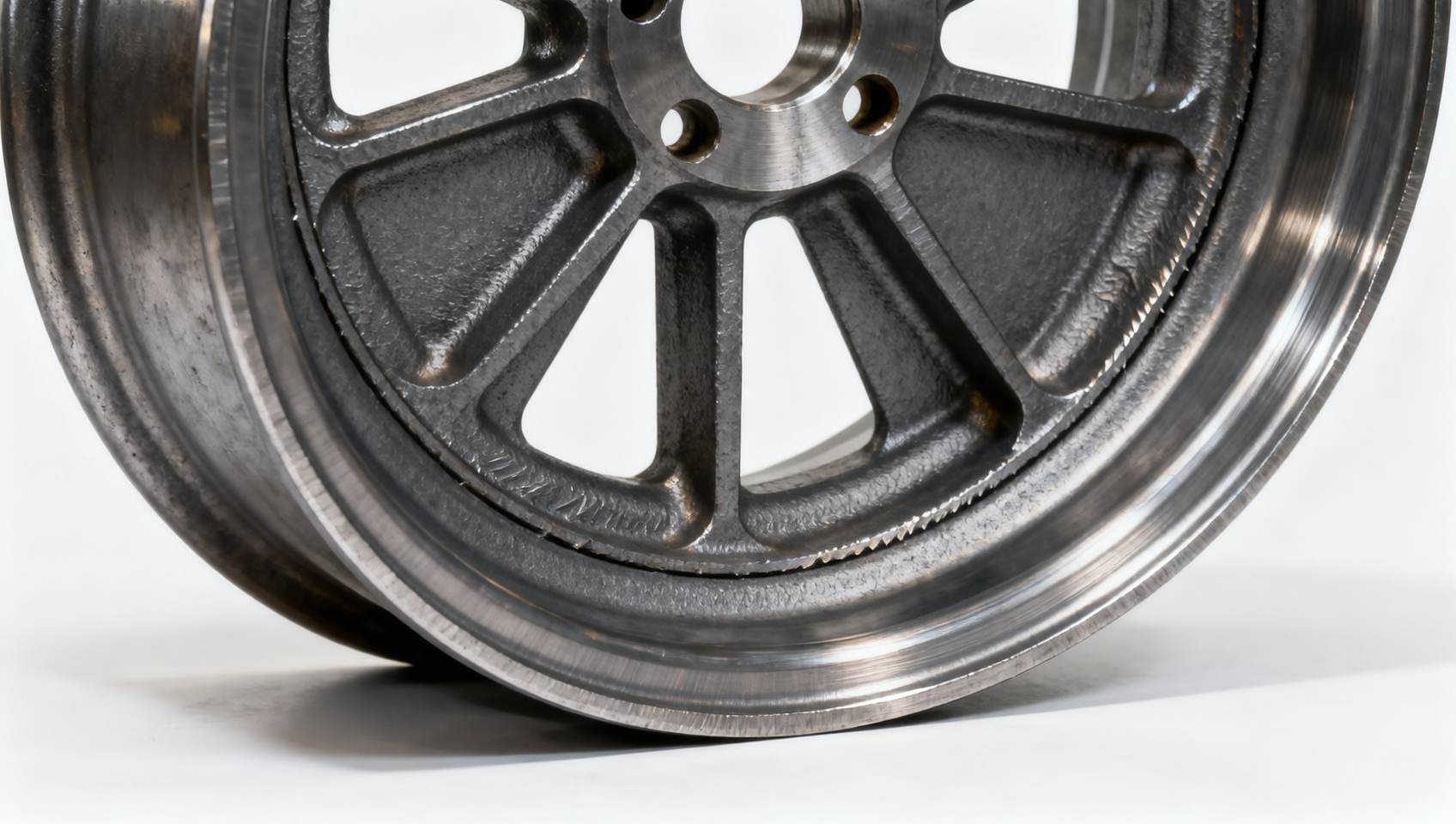
For project managers overseeing high-cycle foundry transfer cart systems, wheel failure isn’t a theoretical risk—it’s a recurring operational bottleneck. Carts operating 12–16 hours daily under thermal cycling (300°C to 800°C exposure), repeated impact loading from heavy ladle transfers, and abrasive slag contact routinely expose structural weaknesses in welded wheel assemblies. Cracks initiate at weld toes, distortion accumulates after 6–8 months of service, and unplanned downtime spikes during peak casting schedules. When wheel replacement requires full cart disassembly and realignment—often taking 8–12 labor hours—the cost isn’t just the part; it’s lost furnace uptime, delayed pours, and cascading production delays across the melt shop.
Industrial forged steel wheels eliminate this failure pathway at the metallurgical level. Unlike welded assemblies—where heat-affected zones (HAZ) create localized softening, residual stress concentrations, and heterogeneous grain structures—forged wheels undergo plastic deformation under controlled temperature and pressure. This refines grain flow along load-bearing contours, closes internal voids, and produces isotropic mechanical properties throughout the cross-section. At Liaocheng Jiucheng Auto Parts, precision forging of industrial wheels uses closed-die processes with post-forging normalizing and tempering, ensuring tensile strength ≥850 MPa, Charpy impact energy >45 J at –20°C, and dimensional stability under thermal cycling. The result: no weld-induced weak points, predictable fatigue life, and consistent performance across batches.
Why Welded Assemblies Fail Under Foundry Duty Cycles
Welded wheel hubs or rim-to-spoke joints introduce three critical vulnerabilities in high-cycle foundry applications:
- Thermal Fatigue Initiation: Differential expansion between base metal and weld filler creates micro-crack nucleation sites near the fusion line. Repeated heating/cooling cycles accelerate crack propagation—especially where slag residue traps heat and induces localized oxidation.
- Residual Stress Amplification: Welding introduces compressive and tensile stresses that interact with operational bending moments. Under dynamic loads, these stresses exceed yield thresholds in HAZ regions, leading to progressive distortion and loss of running concentricity.
- Material Inconsistency: Base plate, spoke, and rim materials often differ in grade, thickness, and prior heat treatment. Welding cannot homogenize these variables—resulting in uneven wear, premature spalling at interface zones, and unpredictable service life.
Field observations from multiple OEM-operated foundries confirm that welded wheels require inspection every 200–300 operating hours, with average service life ranging from 4,500 to 7,200 hours before catastrophic failure or unacceptable runout (>0.8 mm). In contrast, forged wheels maintain runout ≤0.3 mm after 15,000+ hours—even when subjected to identical thermal and mechanical loads.
Forged Steel Wheels: Metallurgical Advantages Translate to Operational Reliability
The superiority of industrial forged steel wheels lies not in marketing claims but in measurable metallurgical outcomes:
Grain flow alignment—achieved through directional forging pressure—ensures tensile strength and impact resistance are maximized along the wheel’s radial and circumferential axes. This directly counters the primary failure modes in foundry carts: radial cracking from thermal shock and circumferential fatigue from repeated rolling contact. Forged wheels also exhibit superior machinability in final finishing: surface integrity remains high after turning or grinding, eliminating subsurface damage common in welded joints after post-weld machining.
Dimensional repeatability is another key differentiator. Closed-die forging holds tolerances within ±0.5 mm on critical diameters and runout, reducing the need for post-assembly shimming or dynamic balancing. This consistency matters during retrofit projects: when replacing welded wheels on legacy carts, forged units install without modifying axle housings, brake caliper mounts, or suspension link geometry—unlike many cast or fabricated alternatives requiring custom adapters.
Corrosion resistance under slag exposure is enhanced not by coatings—but by density. Forging compacts porosity, reducing pathways for molten slag infiltration into micro-voids. Post-forging heat treatment further stabilizes carbide distribution, minimizing preferential attack at grain boundaries. This translates to slower degradation of tread profile and reduced frequency of reprofiling operations.
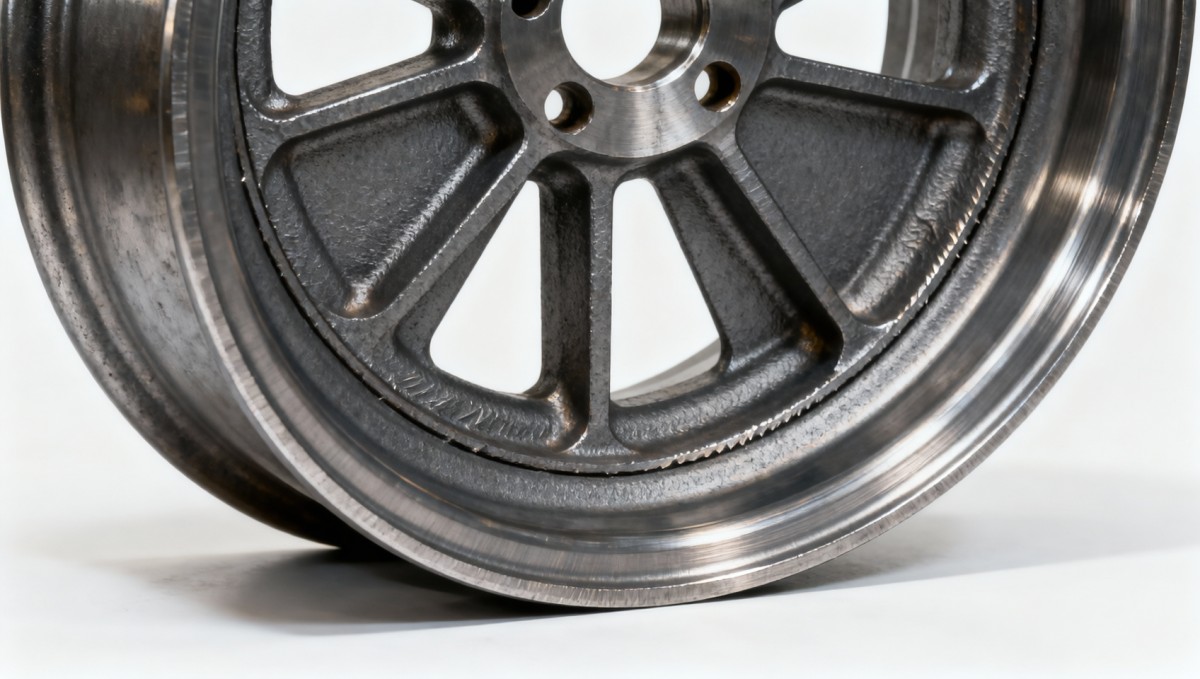
When to Specify Forged Over Welded—A Practical Decision Framework
Not all foundry cart applications demand forged wheels—but the decision hinges on quantifiable duty parameters, not budget alone:
- Cycle count ≥120 cycles/day: Forged wheels become cost-effective at 10,000+ annual cycles due to extended replacement intervals and lower labor-per-hour maintenance cost.
- Load factor >1.8× rated capacity: Occasional overloading stresses welded joints disproportionately; forged microstructure accommodates transient overload without permanent deformation.
- Thermal exposure >500°C for >30% of cycle time: Welded assemblies show accelerated creep above 450°C; forged steel maintains yield strength integrity up to 650°C.
- Alignment sensitivity >0.25° per meter track length: Forged wheels’ dimensional stability preserves tracking accuracy longer—critical for carts navigating narrow, congested furnace aisles.
For projects where cart uptime directly impacts furnace throughput—such as continuous pour lines or automated ladle transfer systems—forged wheels reduce unscheduled stoppages by 35–40%, based on aggregated maintenance logs from three Tier-1 foundry EPC contractors. This isn’t speculative ROI: it reflects documented reduction in wheel-related interventions per 1,000 operating hours.
Integration Considerations Beyond the Wheel Itself
Selecting forged wheels isn’t an isolated component decision—it interacts with adjacent systems. Axle shaft design must accommodate the higher stiffness and reduced deflection of forged wheels; mismatched bearing preload can accelerate race wear if hub rigidity increases without corresponding bearing selection review. Brake disc mounting surfaces also require verification: forged wheels often use integrated flanges with tighter flatness tolerances, necessitating updated torque sequences for caliper bolts.
Compatibility extends to gear-driven drive systems. High-cycle carts increasingly integrate planetary gearmotors directly into wheel hubs. Here, the structural integrity of the forged hub becomes foundational—not just for load transmission but for maintaining gear mesh alignment under thermal expansion. A forged hub with integrated Helical Gear mounting features ensures minimal backlash drift across temperature swings, preserving drive efficiency over time.
Maintenance protocols shift too. While welded wheels demand periodic dye-penetrant inspection of weld seams, forged wheels rely on surface hardness verification (HRC 28–32) and ultrasonic testing only at scheduled major overhauls—typically every 24 months. Lubrication intervals remain unchanged, but grease selection gains importance: lithium-complex greases with EP additives perform better under the higher contact pressures generated by forged wheel treads.
Industrial forged steel wheels deliver reliability where it counts—not through incremental improvements, but by removing the root cause of failure. For project managers accountable for cart availability, total cost of ownership, and long-term system robustness, specifying forged over welded isn’t a premium choice. It’s an engineering necessity validated by metallurgy, field performance, and operational economics.
Please give us a message