



Related Posts
Online Message
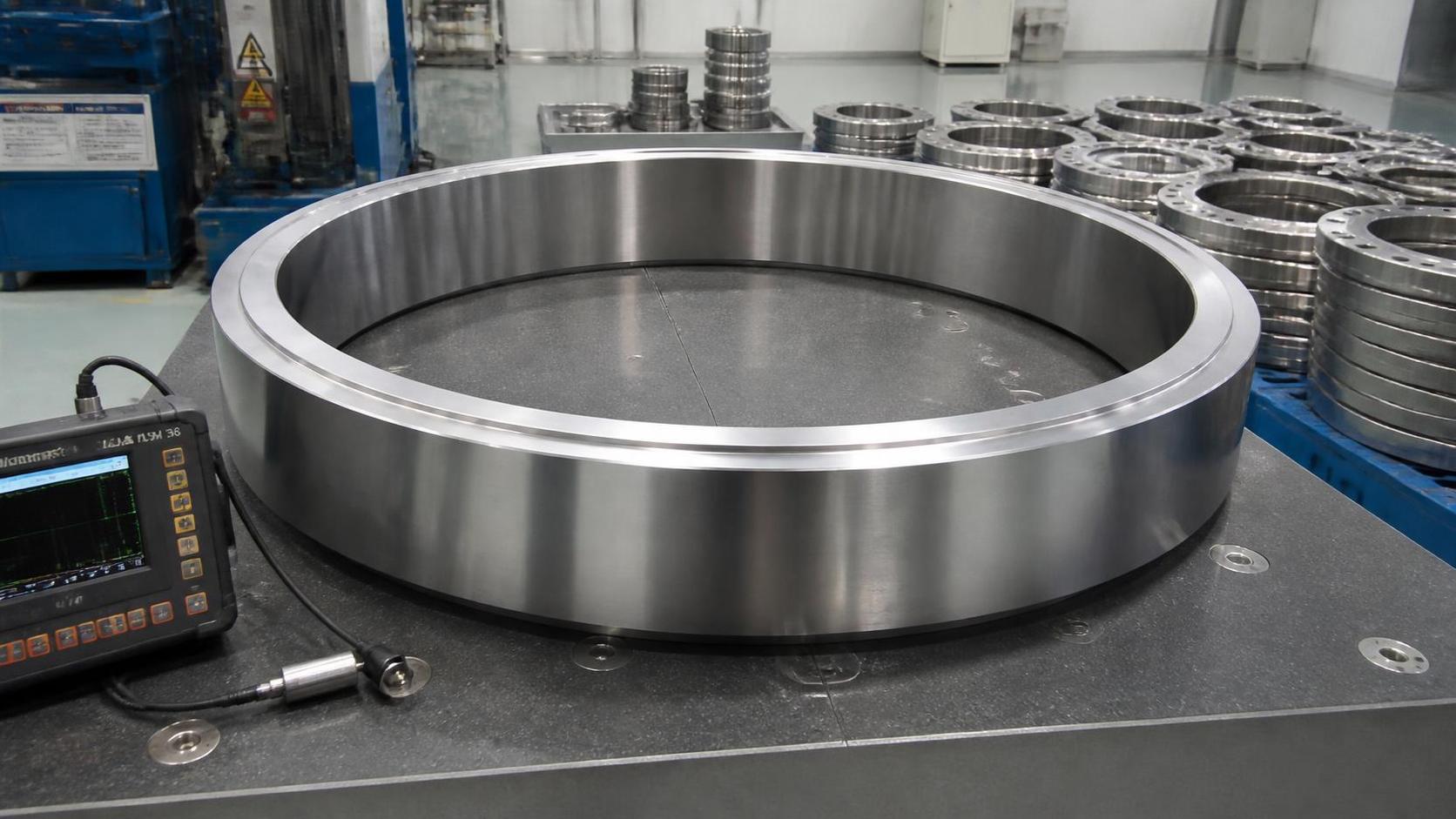
Why Seamless Stainless Forged Rings Reduce Leak and Fatigue Risks in Pressure Service
Introduction: In pressure-service equipment, a small material discontinuity can become a leak path, fatigue crack, shutdown event, or safety incident.
For project managers, the main question is practical: can the selected ring survive pressure cycles, corrosive media, temperature changes, and fabrication stresses without creating avoidable risk?
Seamless stainless forged rings are often the stronger choice because their continuous structure reduces weak points commonly associated with seams, welds, and inconsistent material flow.
A qualified seamless stainless forged rings manufacturer can also improve schedule reliability by supplying rings with controlled metallurgy, traceable material records, and machining allowances suited to project requirements.
What Project Managers Are Really Evaluating
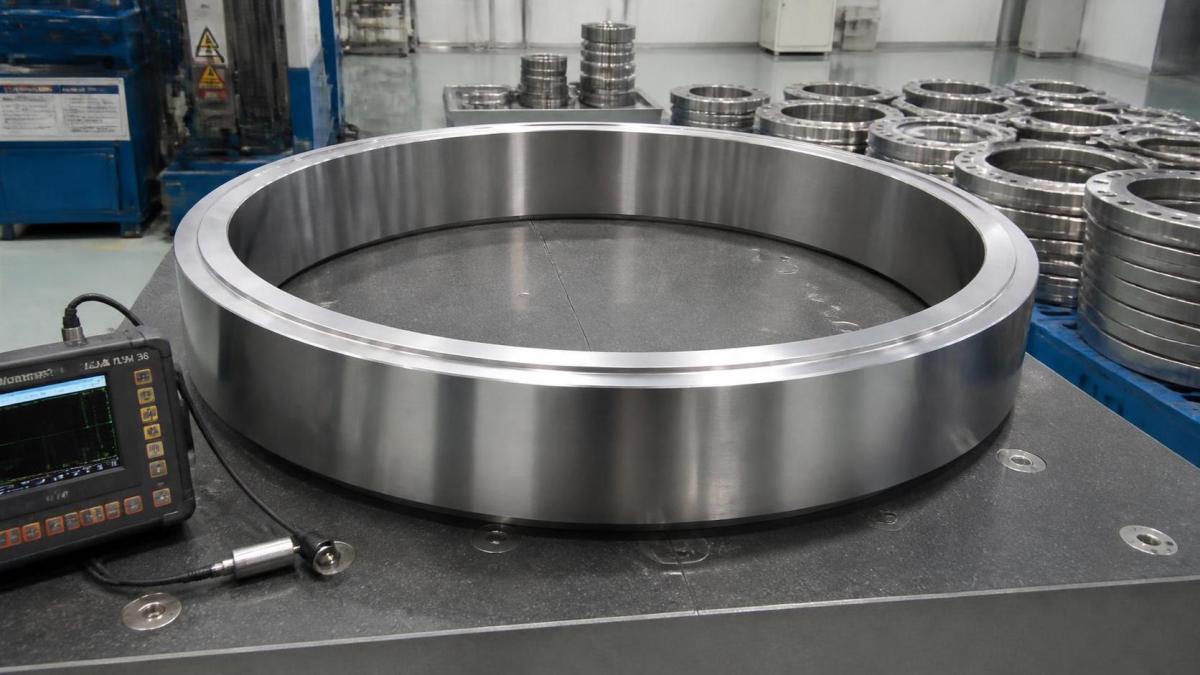
Search intent around seamless stainless forged rings is usually commercial and technical. Buyers want to understand whether forged rings justify their cost in demanding pressure-service applications.
They are rarely looking for a general metallurgy lesson. They need a sourcing decision framework that connects ring design, quality control, lifecycle risk, and project economics.
Project leaders typically focus on leak prevention, fatigue life, inspection requirements, delivery risk, dimensional consistency, documentation, and the consequences of an unplanned equipment outage.
The most useful comparison is not simply forged versus rolled or welded. It is whether a ring design removes credible failure mechanisms under actual operating conditions.
That evaluation should include pressure level, cycling frequency, medium chemistry, operating temperature, flange or vessel geometry, machining needs, and applicable material standards.
When these conditions are severe, the initial unit price becomes less important than the total cost of leakage, rework, maintenance interruption, warranty exposure, and replacement.
Why a Seamless Ring Has Fewer Potential Leak Paths
Pressure boundaries depend on continuous material integrity. Any seam, weld zone, inclusion cluster, porosity area, or machining defect can become a local stress concentration.
A seamless forged ring begins as solid stock and is shaped through controlled deformation. It does not rely on a longitudinal weld to complete its circular geometry.
This matters because weld regions can require additional process control, post-weld heat treatment, inspection, and corrosion assessment before they are suitable for pressure containment.
Even a well-executed weld may perform satisfactorily in many applications. However, it introduces a distinct metallurgical region that must be evaluated separately from the parent material.
Seamless construction simplifies the pressure-boundary concept by eliminating that longitudinal joint. It gives designers and inspectors one continuous ring structure to assess.
This does not mean every seamless ring is automatically leak-proof. Material grade, forging quality, surface condition, heat treatment, machining, and installation still determine final performance.
Nevertheless, removing a seam eliminates one common category of defect and reduces the number of variables a project team must manage during qualification.
Forging Improves Grain Flow and Mechanical Continuity
The key technical advantage of forging is controlled plastic deformation. Proper forging consolidates the material and aligns grain flow with the ring’s intended load path.
In a forged ring, grain flow can follow the circular shape rather than being interrupted by a cut-and-weld configuration or poorly oriented material structure.
This continuous grain pattern helps the ring resist circumferential stresses generated by internal pressure. It can also improve toughness and reduce vulnerability to crack propagation.
Pressure equipment rarely experiences perfectly steady loading. Startup, shutdown, pressure testing, valve operation, thermal expansion, vibration, and process fluctuations create repeated stress cycles.
Repeated loading is where local discontinuities become costly. Small flaws can grow incrementally, especially when cyclic hoop stress repeatedly opens and closes microscopic crack tips.
A forged structure does not eliminate fatigue design requirements. Instead, it provides a more dependable starting point by reducing internal discontinuities and strengthening material continuity.
For critical rings, project specifications should still define required mechanical properties, heat treatment condition, grain size expectations, ultrasonic testing scope, and acceptance criteria.
How Forged Rings Help Control Fatigue Risk
Fatigue failures are dangerous because they can develop long before visible distortion appears. A component may meet static strength requirements yet still fail after repeated service cycles.
Fatigue performance depends heavily on stress concentration, surface finish, residual stress, material cleanliness, corrosion exposure, and the number and severity of loading cycles.
Seamless stainless forged rings reduce risk by avoiding a longitudinal weld region, which may contain geometric transitions, residual stresses, or microstructural differences requiring special attention.
Forging can also improve resistance to crack initiation when the process is correctly designed for the ring size, reduction ratio, material grade, and final service condition.
Machining remains important. Sharp tool marks, excessive roughness, undercut corners, and uncontrolled transitions can undermine the benefits gained from a high-quality forged blank.
Project managers should require clear agreement between forging supplier and machining provider. Critical sealing faces, radii, bores, and transitions need suitable tolerances and finish requirements.
Where fatigue exposure is high, design teams should consider finite element analysis, cyclic pressure data, corrosion-fatigue conditions, and inspection intervals as one integrated risk plan.
Stainless Steel Adds Corrosion Resistance, but Grade Selection Still Matters
Stainless steel is selected because its chromium-rich passive layer improves resistance to many corrosive environments. However, “stainless” is not a complete material specification.
Different grades respond differently to chlorides, acids, seawater, high temperatures, hydrogen-bearing environments, and crevice conditions around bolted or gasketed joints.
Austenitic grades may offer useful corrosion resistance and formability, while duplex and super duplex grades can provide higher strength and improved chloride resistance in suitable services.
Martensitic or precipitation-hardening stainless grades may be considered where higher strength is needed, although corrosion performance and heat-treatment requirements must be evaluated carefully.
The correct material decision should begin with the process medium, concentration, temperature, oxygen level, contaminants, cleaning chemicals, and expected upset operating conditions.
For marine, chemical, offshore, pump, valve, and compressor applications, corrosion assessment should address pitting, crevice corrosion, stress-corrosion cracking, and galvanic compatibility.
A capable seamless stainless forged rings manufacturer should help clarify what can be supplied, but the final grade selection should remain aligned with engineering specifications and service standards.
Dimensional Accuracy Reduces Assembly and Sealing Problems
Leak prevention is not only a metallurgy issue. Ring geometry affects gasket compression, bolt load distribution, concentricity, sealing-face machining, and fit-up with mating components.
Inconsistent wall thickness or excessive out-of-roundness can complicate machining and create uneven load transfer once the assembly is pressurized or thermally cycled.
Forged rings can be produced with controlled stock allowances, allowing machinists to achieve finished dimensions without removing excessive material or encountering unexpected surface defects.
This is especially relevant for large rings, bearing-related components, pressure flanges, retaining rings, valve bodies, and custom mechanical interfaces with demanding concentricity requirements.
Project teams should define dimensions in functional terms. Critical features may include outside diameter, inside diameter, height, radial wall thickness, ovality, runout, and machining allowance.
It is also sensible to specify which dimensions are measured before machining and which acceptance criteria apply after final machining, heat treatment, or surface finishing.
Early technical alignment prevents a common sourcing problem: a ring meets an informal drawing interpretation but lacks sufficient stock for the customer’s final manufacturing process.
What Quality Controls Should Be Required Before Purchase
Quality documentation should match the consequence of failure. High-pressure or safety-critical components require more than a basic material statement and visual inspection report.
At minimum, buyers should confirm material grade, chemical composition, heat number traceability, heat treatment condition, dimensions, mechanical test results, and inspection status.
Depending on the application, non-destructive testing may include ultrasonic testing, magnetic particle testing, liquid penetrant testing, radiographic examination, or hardness verification.
Ultrasonic testing is particularly valuable for detecting internal discontinuities that may not be visible after forging or preliminary machining. Its scope should be defined clearly in the purchase order.
Acceptance criteria matter as much as the inspection method. A report saying “tested” is insufficient unless it identifies the standard, coverage area, calibration method, and result classification.
For stainless materials, project managers should also verify that processing avoids avoidable contamination from carbon steel tools, handling equipment, or unsuitable storage conditions.
When documentation must support regulated equipment, clarify requirements for material certificates, third-party inspection, witness points, traceability marking, and record retention before production begins.
How to Evaluate a Seamless Stainless Forged Rings Manufacturer
Selecting a supplier should involve more than comparing quotations. The supplier’s manufacturing route, engineering response, inspection capability, and delivery discipline affect the actual project risk.
Ask whether the manufacturer controls forging, heat treatment, rough machining, final machining, and testing internally or relies on external subcontractors for critical operations.
Integrated production can reduce handoff risk and improve communication, provided the company has defined process controls and experienced personnel across each production stage.
Liaocheng Jiucheng Auto Parts Co., Ltd. combines precision forging and mechanical processing capabilities for demanding gear, shaft, transmission, marine, and industrial component applications.
Its experience with precision forgings and reduced-machining production supports material efficiency, controlled processing, and practical coordination between forged blanks and finished mechanical requirements.
For project-specific rings, buyers should provide drawings, material grades, service conditions, estimated annual quantity, inspection expectations, and delivery milestones as early as possible.
A responsive manufacturer will identify missing technical information before production. That discussion is valuable because it exposes tolerance conflicts, unsuitable material assumptions, or unrealistic inspection requests.
When Seamless Forged Rings Are the Best Economic Choice
Seamless forged rings are usually justified when failure consequences are high, service conditions are cyclic, corrosion is significant, or pressure-boundary integrity is difficult to inspect after installation.
They are also valuable when equipment downtime is expensive. In process plants, marine systems, energy projects, and critical rotating machinery, outage costs may exceed component savings quickly.
The best procurement decision compares total installed cost rather than material price alone. Include qualification time, machining yield, rework probability, inspection cost, maintenance exposure, and replacement logistics.
A lower-priced alternative can become expensive when it requires extra weld qualification, more extensive inspection, additional machining, or a larger contingency allowance for potential defects.
Forged rings may also improve material utilization. Near-net forging can reduce unnecessary machining and scrap, especially for large or complex ring-shaped components made from costly alloys.
Jiucheng’s precision-forging approach emphasizes lower turning requirements, improved raw-material utilization, reduced energy use, and practical cost control for suitable production programs.
Still, forging is not automatically appropriate for every low-pressure or noncritical part. The manufacturing route should be proportionate to service risk and functional requirements.
A Practical Specification Checklist for Pressure-Service Rings
Before issuing a request for quotation, identify the component function and whether the ring forms part of a pressure boundary, supports a seal, carries load, or locates another part.
State the material specification precisely, including grade, approved equivalents, heat treatment condition, minimum mechanical properties, corrosion requirements, and any limits on hardness or ferrite content.
Define service conditions clearly: design pressure, operating pressure, test pressure, temperature range, pressure cycles, process medium, contamination risks, and anticipated transient events.
Include a controlled drawing with tolerances, surface-finish requirements, machining allowances, datum references, marking locations, and any restrictions on tooling marks or surface repairs.
Specify the required inspection plan. This may include dimensional inspection, chemical analysis, tensile testing, hardness testing, ultrasonic testing, penetrant testing, and third-party witness requirements.
Request manufacturing and delivery details that affect project execution, including lot size, lead time, packaging, preservation method, traceability, export documentation, and notification of process changes.
This level of specification reduces ambiguity. It enables the supplier to quote accurately and allows project managers to compare proposals based on risk, capability, and compliance.
Conclusion: Choose Continuity Where Pressure-Service Risk Is High
For pressure-service equipment, seamless stainless forged rings offer a credible route to lower leak and fatigue risk because they combine continuous geometry with forged material structure.
The strongest value comes from reducing avoidable failure mechanisms before equipment enters service. Seam elimination, controlled grain flow, appropriate grade selection, and verified inspection all support that goal.
Project managers should evaluate ring suppliers through total lifecycle risk, not purchase price alone. Material traceability, dimensional capability, testing scope, and production coordination are essential decision factors.
A dependable seamless stainless forged rings manufacturer can turn a ring from a procurement item into a controlled engineering component that supports safer operation and more predictable project outcomes.
When specifications reflect actual pressure, cycling, corrosion, and machining conditions, seamless forged stainless rings become a practical investment in equipment reliability, maintenance reduction, and long-term operational confidence.
Please give us a message