



Related Posts
Online Message
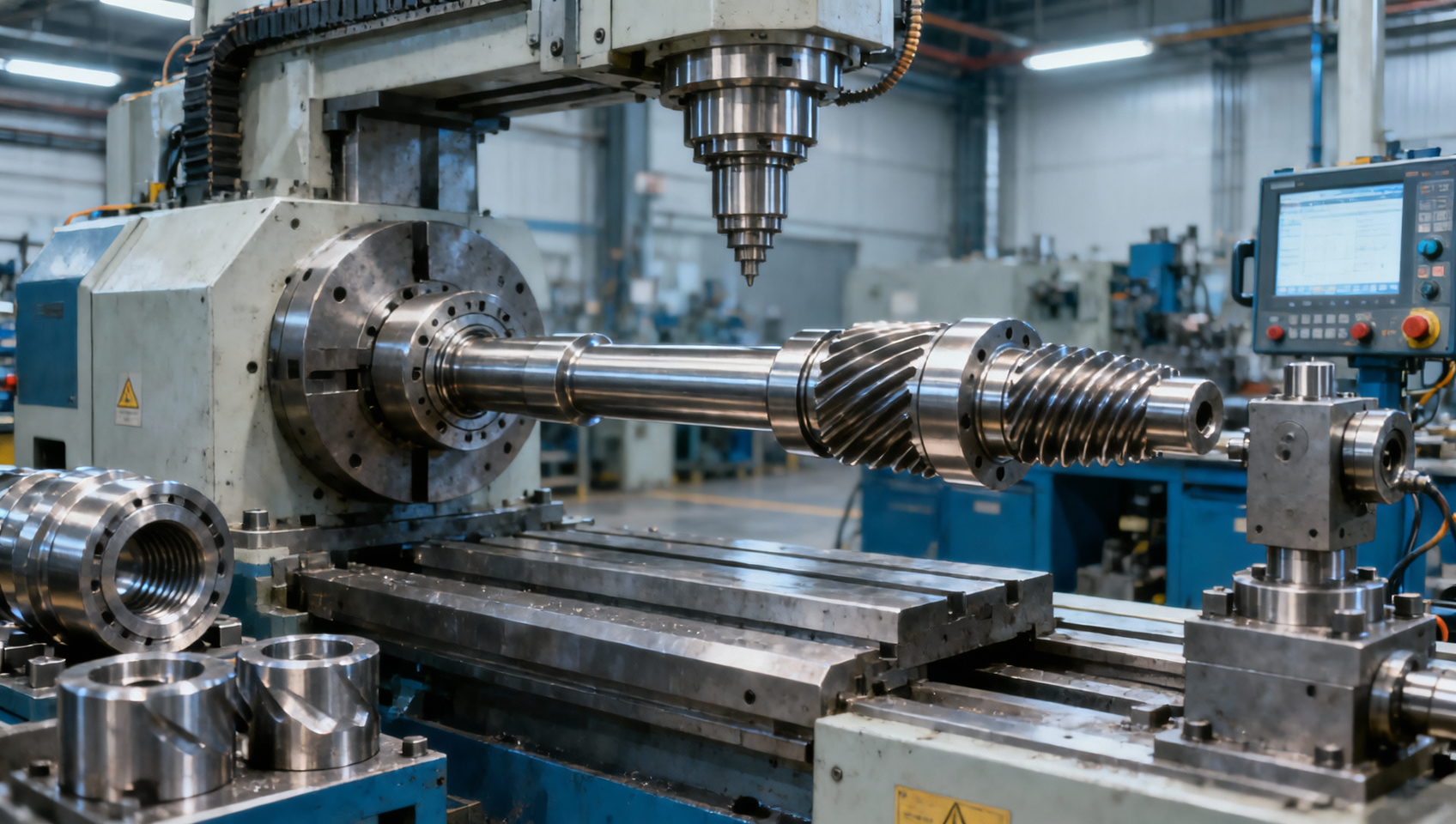
The total cost of custom drive shafts is shaped by far more than the unit price. For financial approvers, material grade, forging method, machining complexity, tolerances, testing, production volume, and lifecycle reliability all affect the final investment.
Understanding these cost drivers helps buyers compare supplier quotations accurately, reduce hidden expenses, and select drive shaft solutions that balance upfront budgets with long-term performance.
Start With the Cost Decision, Not the Lowest Quote
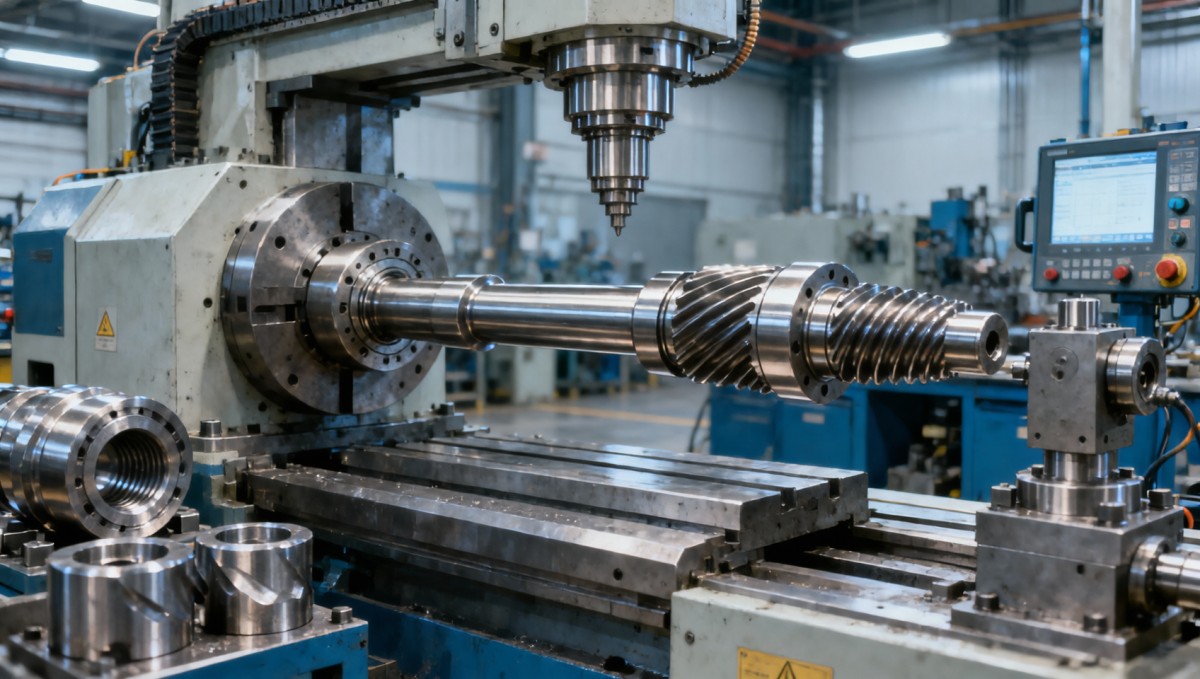
Financial approvers searching for custom drive shafts usually need to determine whether a quotation reflects genuine manufacturing value or simply excludes necessary quality, validation, and service costs.
The central question is not “Which supplier offers the lowest shaft price?” It is “Which option produces the lowest qualified cost over the operating life?”
A low initial quotation can become expensive when it causes premature wear, repeated machining corrections, delayed assembly, warranty claims, field failures, or emergency replacement purchases.
Conversely, the highest quotation is not automatically justified. Buyers should identify which specifications, processes, inspection steps, and logistics commitments create measurable commercial value.
For budget approval, a custom drive shaft should be evaluated as a controlled manufacturing investment rather than a simple commodity purchase.
That evaluation begins by separating nonrecurring development expenses from recurring unit costs. It also requires comparing expected reliability, delivery consistency, and downstream operational exposure.
In most procurement cases, the largest cost differences arise from material selection, blank manufacturing, machining time, tolerance requirements, heat treatment, quality assurance, and order quantity.
These factors interact. Tight tolerances may require better material consistency, more capable equipment, longer inspection cycles, and higher scrap allowances throughout production.
Approvers should therefore ask suppliers to explain the cost structure behind the quote instead of accepting a single total price without supporting detail.
Material Grade Sets the Baseline for Cost and Reliability
Material is often the first major cost driver because it determines the shaft’s strength, fatigue resistance, machinability, heat-treatment response, and suitability for its operating environment.
Carbon steel may be adequate for moderate-duty applications, while alloy steel grades are often needed where torque loads, impact resistance, wear, or fatigue life are critical.
Higher-grade steel costs more per kilogram, but raw-material price alone does not explain the final difference. Material availability, certification, and processing behavior also matter.
For example, a steel grade with stable chemical composition may reduce machining variation and heat-treatment risk, which can lower total manufacturing loss despite a higher purchase price.
Financial reviewers should confirm whether the quoted material includes mill certificates, traceability, incoming inspection, and the required mechanical-property verification.
These items can appear as separate charges or be embedded in the supplier’s unit price. Their absence may create quality and liability risks later.
Material utilization is equally important. A process that begins with excessive stock can waste costly alloy steel through cutting, turning, and chip disposal.
Precision forging can improve material utilization by creating a blank closer to the final geometry, reducing both raw-material consumption and machining removal.
When comparing custom drive shafts, request the finished weight, blank weight, estimated material yield, and grade specification. Those figures clarify whether material cost is being controlled intelligently.
Forging Method Changes Both Unit Economics and Performance
The manufacturing route for the shaft blank has a major influence on cost, especially for parts with splines, stepped diameters, flanges, nonstandard ends, or unusual load paths.
Machining a shaft entirely from bar stock is often practical for prototypes and small quantities, but it can require substantial material removal and longer machine cycles.
Forged blanks usually require more preparation, tooling, and process engineering. However, they can reduce waste and improve grain flow for demanding mechanical applications.
Open-die forging may suit large, simple, lower-volume parts. Closed-die or precision forging is more appropriate when repeatable geometry and higher production efficiency are required.
For shafts exposed to repeated torque reversal, shock loads, or heavy-duty transmission conditions, forging quality can directly affect lifecycle performance and failure risk.
Financial approvers should evaluate forging expenses against the expected production duration. Tooling costs can be spread across a stable forecast, making the recurring price increasingly competitive.
Special geometry can change the equation. Components such as Special-shaped forgings may reduce subsequent machining where the blank accurately follows the final shaft profile.
That benefit should be verified with a process comparison. Ask whether the forged geometry reduces machining hours, improves material yield, or eliminates separate welded components.
A supplier with precision-forging capability may also reduce dependency on multiple subcontractors, which can simplify quality control, communication, transport, and responsibility allocation.
Machining Complexity Is Usually the Largest Visible Cost Driver
After the blank is produced, machining often becomes the most visible cost component. Every turning, milling, drilling, broaching, grinding, and balancing operation adds time.
A straight shaft with standard journals is relatively economical. A shaft with splines, shoulders, threads, keyways, cross holes, oil passages, and precision bearing seats requires more setups.
Each additional setup introduces labor, fixture requirements, programming time, inspection effort, and the possibility of dimensional variation between referenced surfaces.
Spline shafts deserve particular attention because spline type, tooth count, module, pressure angle, fit class, and surface treatment can significantly affect manufacturing cost.
Internal splines, complex involute profiles, and high-strength materials may require broaching, shaping, grinding, or specialized milling equipment rather than conventional operations.
Financial teams should ask which dimensions are functional and which are inherited from legacy drawings. Over-specified features often create avoidable costs without improving system performance.
A value-engineering review can identify opportunities to standardize diameters, reduce unnecessary surface finishes, simplify transitions, or use tolerances that match actual assembly requirements.
However, cost reduction should never remove features that protect bearing fit, torque transfer, concentricity, or fatigue resistance. Engineering validation must precede any design adjustment.
The useful comparison is machining cost per qualified part, not machine-hour rate alone. A lower hourly rate has little value if cycle time, scrap, or rework is excessive.
Tolerances and Surface Requirements Create Nonlinear Costs
Tolerance requirements do not increase cost in a straight line. A modestly tighter diameter tolerance may be manageable, while an extreme requirement can demand grinding, sorting, and enhanced measurement.
Concentricity, runout, straightness, and coaxiality are especially important for drive shafts because they influence vibration, bearing wear, seal performance, and high-speed rotational stability.
Achieving these controls may require precision fixtures, center grinding, dynamic balancing, controlled clamping, and inspection equipment capable of repeatable measurement.
Surface finish also affects cost. Bearing journals, sealing surfaces, and spline flanks may need controlled roughness to prevent excessive wear or assembly damage.
A surface finish requirement should be tied to function. Requiring premium finishes on noncritical surfaces can add cycles without delivering meaningful operational benefit.
For financial approval, request a drawing review that identifies critical-to-function dimensions separately from general manufacturing dimensions. This creates a stronger basis for cost challenge.
Suppliers should also disclose whether tolerances are achieved through final machining, post-heat-treatment grinding, or selective inspection. These methods have different cost and risk profiles.
Parts subjected to distortion during heat treatment may need additional finishing operations. Ignoring this relationship can produce a quotation that appears attractive but is technically incomplete.
Clear tolerance priorities help suppliers select the correct process route while helping buyers avoid paying premium prices for requirements that do not affect field performance.
Heat Treatment and Testing Protect the Lifecycle Budget
Heat treatment can be essential for custom drive shafts requiring wear resistance, core toughness, fatigue strength, or stable mechanical properties under repeated loads.
Processes such as quenching and tempering, induction hardening, carburizing, nitriding, and stress relief have different costs, cycle times, distortion risks, and performance outcomes.
A hardened spline may improve wear life, but it may also require masking, controlled depth verification, post-treatment grinding, and additional inspection to protect dimensional accuracy.
Financial reviewers should avoid treating heat treatment as an optional surcharge without understanding the operating consequences of removing or changing it.
The proper question is whether the selected treatment delivers a lower cost per operating hour, lower replacement frequency, or reduced risk of a costly equipment outage.
Quality testing is closely linked to this calculation. Dimensional checks, hardness testing, magnetic-particle inspection, ultrasonic testing, metallographic evaluation, and balancing all add cost.
Yet inspection can be significantly cheaper than field failure. This is particularly true for automotive, wind power, marine, reducer, and heavy mechanical transmission applications.
A reliable quotation should specify what testing is included, the sampling plan, acceptance criteria, records provided, and responsibility for nonconforming parts.
Approvers should distinguish between routine quality assurance and special customer validation. Prototype testing, first-article approval, and third-party certification may be legitimate nonrecurring investments.
Production Volume Determines How Fixed Costs Are Recovered
Order volume strongly affects the total cost of custom drive shafts because tooling, programming, fixtures, inspection planning, and process development must be recovered somewhere.
For prototypes, low quantities, or irregular service parts, suppliers may allocate substantial engineering and setup expenses to each unit, increasing apparent unit cost.
For repeat programs, fixed costs can be amortized across larger volumes. This often makes a forged or automated manufacturing route more economical than extensive manual machining.
Buyers should provide realistic annual demand, release schedules, and expected program duration. Incomplete forecasts cause suppliers to price conservatively for uncertainty and capacity risk.
Blanket orders, agreed minimum quantities, and stable call-off plans can improve pricing because they support material procurement, capacity planning, tooling justification, and lower changeover frequency.
Volume should not be viewed only as a discount lever. It can also improve consistency by allowing suppliers to establish validated process windows and repeatable inspection routines.
Where demand is uncertain, a phased commercial structure may be appropriate. Separate prototype pricing, pilot pricing, and serial-production pricing prevent inaccurate comparisons between different stages.
Financial approvers should ask whether tooling ownership is included, whether maintenance is covered, and whether tooling charges are refundable, transferable, or retained by the supplier.
These contractual details can materially affect long-term sourcing flexibility, especially when a part becomes strategically important or production volumes change unexpectedly.
Supplier Capability Affects Hidden Cost and Delivery Risk
Supplier capability influences cost beyond the quotation. A manufacturer that controls forging, machining, heat-treatment coordination, and inspection can reduce handoffs and schedule uncertainty.
For buyers, the value lies in fewer interfaces to manage, clearer accountability, and faster root-cause analysis when a shaft does not meet requirements.
Manufacturing equipment, engineering depth, quality personnel, and documented process control should be reviewed alongside price, especially for safety-critical or high-load applications.
A capable supplier can advise on manufacturability before production begins. Early design feedback often prevents expensive changes after tools are built or parts reach assembly.
Lead time is also a financial factor. Late custom drive shafts can stop assembly lines, delay customer deliveries, increase expediting costs, and create unplanned inventory pressure.
Ask suppliers about raw-material sourcing, production capacity, backup equipment, inspection capability, and their normal response process for corrective actions or urgent replacement requirements.
Logistics terms should be included in total-cost calculations. Packaging, export documentation, freight, insurance, customs exposure, and delivery lead times can alter the apparent price advantage.
For international sourcing, communication quality matters as well. Clear technical documentation and responsive engineering support reduce the chance of incorrect interpretation and repeated revisions.
Supplier selection should therefore balance manufacturing capability, commercial transparency, quality assurance, delivery reliability, and the cost of managing exceptions throughout the relationship.
How Financial Approvers Should Compare Custom Drive Shaft Quotes
A practical comparison starts by normalizing every quotation. Ensure that each supplier is pricing the same drawing revision, material grade, quantity, heat treatment, testing scope, packaging, and delivery terms.
Then separate one-time charges from recurring charges. Tooling, development, fixtures, samples, first-article inspections, and special gauges should not be hidden inside a unit-price comparison.
Next, evaluate the recurring price using the expected annual volume and program life. A slightly higher unit price may be justified if it reduces scrap, downtime, and warranty exposure.
Review the supplier’s assumptions carefully. Prices may exclude material certificates, destructive testing, balancing, protective coatings, special packaging, or dimensional reports required by your operation.
Calculate a risk-adjusted total cost using likely operational consequences. Consider replacement lead time, line-stoppage exposure, service inventory, field repair labor, and customer quality penalties.
Also assess whether the supplier has proposed a manufacturable solution. Constructive suggestions on forging shape, machining allowance, tolerances, and material yield can indicate meaningful engineering competence.
Do not approve changes solely because they lower price. Confirm that engineering, quality, procurement, and service teams agree on the functional and commercial implications.
A disciplined quote review produces a defensible approval record. It shows why the selected source offers the best business value, rather than merely the lowest initial purchase price.
Conclusion: Approve for Qualified Lifetime Value
The total cost of custom drive shafts is driven by material, forging route, machining complexity, tolerances, heat treatment, testing, volume, logistics, and supplier capability.
For financial approvers, the most useful decision is based on qualified lifetime value. Compare complete scopes, identify fixed and recurring costs, and quantify operational risk before selecting a supplier.
A transparent, technically supported quotation helps control spending without weakening reliability. The strongest sourcing decision combines manufacturability, predictable quality, efficient material use, and dependable long-term delivery.
Please give us a message